
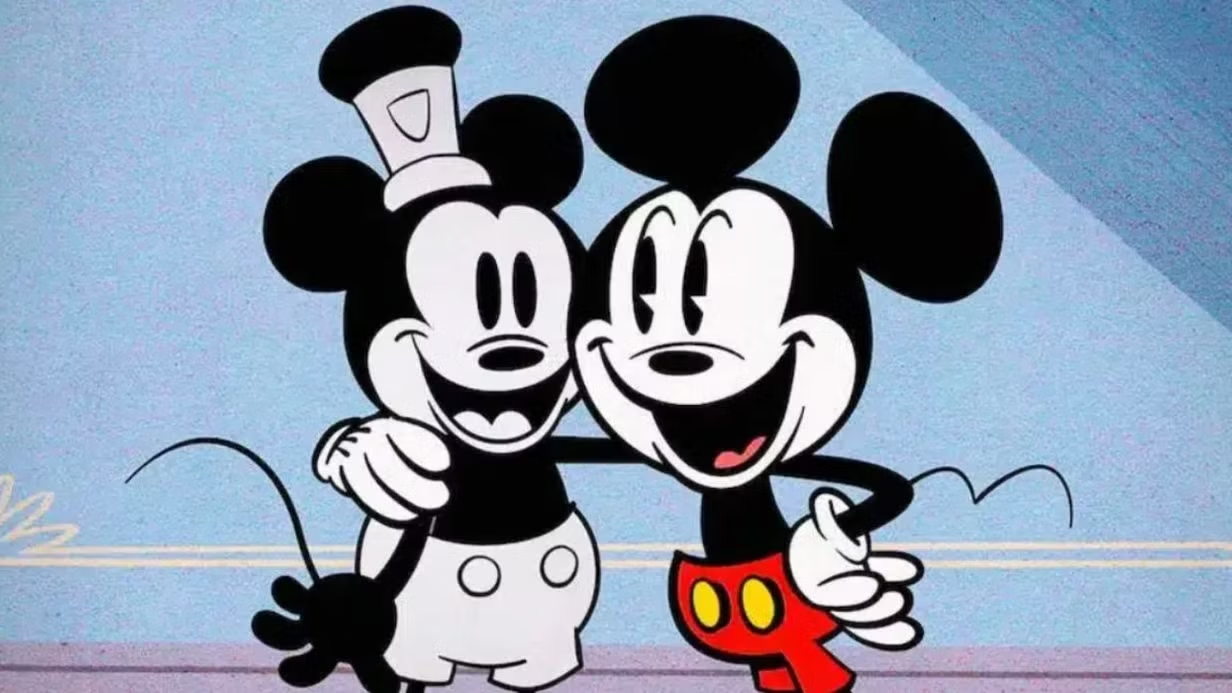
Disney has agreed to a wide-ranging partnership with OpenAI that will allow generative AI tools to use some of the company’s most recognizable characters, marking a significant shift in how major entertainment companies are approaching artificial intelligence. The deal includes a reported $1 billion equity investment by Disney in OpenAI and a three-year licensing agreement that grants controlled access to more than 200 characters spanning Disney Animation, Pixar, Marvel, and Star Wars.
Beginning next year, OpenAI’s video-generation app Sora will be permitted to generate short-form videos featuring characters such as Mickey Mouse, Cinderella, Ariel, Iron Man, and Darth Vader. While users have already been experimenting with AI-generated versions of famous characters since Sora’s launch, those creations existed in a legal gray area and often drew criticism from rights holders. This agreement represents the first time a major Hollywood studio has formally licensed such a large portion of its intellectual property for generative use.
Sora, which launched publicly in September, allows users to create video clips by describing scenes in text. Its rapid rise in popularity also highlighted the lack of clear rules around AI-generated depictions of copyrighted characters, as social media quickly filled with unofficial clips featuring familiar franchises. That response prompted concern from studios and trade groups, including the Motion Picture Association. Disney’s decision to formalize access suggests a preference for negotiated control rather than continued enforcement through takedowns alone.
The partnership extends beyond licensing. Disney will become one of OpenAI’s major enterprise customers and will deploy ChatGPT internally across teams. According to both companies, the collaboration includes joint development of tools, workflows, and internal processes intended to integrate generative AI into Disney’s creative and operational pipeline. Disney will also receive warrants allowing it to purchase additional equity in OpenAI, tying the companies together financially as well as strategically.
Both sides have emphasized limits on how the characters can be used. The agreement does not cover the likenesses or voices of real actors, and OpenAI says it will implement safeguards to restrict harmful, illegal, or misleading content. These controls are particularly important given Disney’s recent posture toward AI platforms. Over the past year, the company has taken a more aggressive stance on intellectual property enforcement, including legal action against Midjourney, a cease-and-desist letter to Character.AI, and a dispute with Google over alleged unauthorized use of Disney content in AI training.
Disney executives have framed the deal as a response to broader industry shifts rather than a wholesale endorsement of unrestricted AI creativity. The company has positioned the partnership as a way to extend its storytelling reach while retaining oversight, especially as generative tools become more accessible to consumers. OpenAI, for its part, has signaled that this agreement aligns with efforts to bring clearer licensing structures and more predictable guardrails to generative media.
The deal is likely to be closely watched by other studios, creators, and technology firms. For entertainment companies, it offers a potential template for monetizing intellectual property in an AI-driven landscape without fully relinquishing control. For OpenAI, it provides legitimacy and legal clarity at a time when generative tools are increasingly scrutinized by regulators and rights holders.
While the agreement does not resolve broader questions about authorship, originality, or the long-term impact of AI on creative labor, it does establish a precedent. Instead of treating generative AI solely as a threat, Disney is opting to participate directly, shaping how its characters appear in AI-generated media rather than leaving that activity entirely outside its influence.