
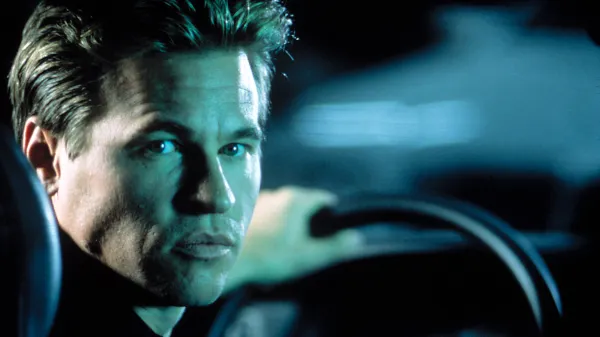
The use of AI to recreate actors on screen is moving from experimental to increasingly normalized, and a new project involving Val Kilmer illustrates how quickly that shift is happening. The late actor is set to appear in the upcoming drama As Deep As the Grave, despite having died in 2025 at the age of 65.
Kilmer had originally signed on to the film before his death from throat cancer, but was unable to participate in production. Rather than recast the role, director Coerte Voorhees chose to move forward using generative AI to recreate the actor’s presence. The production is being developed with the involvement of Kilmer’s estate, including his children, Mercedes Kilmer and Jack Kilmer, who have publicly supported the decision.
In the film, Kilmer will portray Father Fintan, a character described as both a Catholic priest and a Native American spiritual figure. According to Voorhees, the role was written specifically with Kilmer in mind, partly due to his long-standing interest in Native American culture and his claimed Cherokee heritage. The director has framed the use of AI as a continuation of Kilmer’s involvement rather than a replacement, arguing that the actor had expressed a strong desire to be part of the project.
As Deep As the Grave is based on the real-life work of archaeologists Ann and Earl Morris, who conducted excavations in the American Southwest during the 1920s. Their research focused on the Ancestral Puebloan civilization and involved collaboration with Navajo communities. The film has been in development for several years under its earlier title Canyon Del Muerto, with a cast that includes Tom Felton, Abigail Lawrie, Wes Studi, and Jacob Fortune-Lloyd.
The AI-generated version of Kilmer is expected to appear in a substantial portion of the film. The process involves training models on archival footage and images of the actor across different stages of his life to construct a digital performance. While this approach allows filmmakers to preserve a specific casting choice, it also raises familiar questions about consent, authorship, and the limits of posthumous performance.
This project is part of a broader pattern in the film industry, where AI tools are being used to modify or extend performances. In The Brutalist, directed by Brady Corbet, AI was used to refine Adrien Brody’s Hungarian accent. Meanwhile, actors such as Matthew McConaughey and Michael Caine have entered agreements allowing AI-generated versions of their voices to be licensed.
These developments suggest a growing acceptance of digital tools in performance, though not without tension. The distinction between enhancement and replacement remains unsettled, particularly when the subject is no longer alive to participate directly. Even with estate approval, the question of how closely an AI-generated performance reflects the original actor’s intent is difficult to resolve.
Kilmer’s return to the screen through AI reflects both a technical capability and an evolving set of industry norms. Whether audiences accept these recreations as a legitimate extension of an actor’s work, or view them as something fundamentally different, is likely to shape how widely such practices are adopted in future productions.