
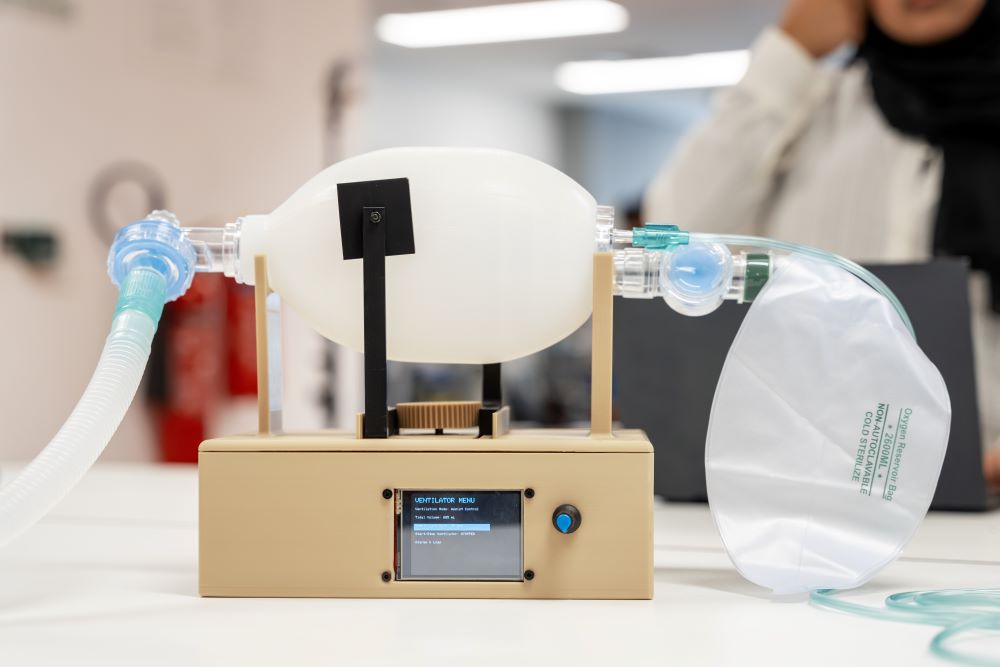
A team of engineering students from three UAE universities has won the 2025 UAE James Dyson Award for their invention, the Disaster Relief Backup Volume-Based Ventilator (DRBVV). The low-cost, portable ventilator was designed to address the shortage of reliable respiratory equipment in hospitals, rural clinics, and disaster zones, a problem that became especially visible during the COVID-19 pandemic.
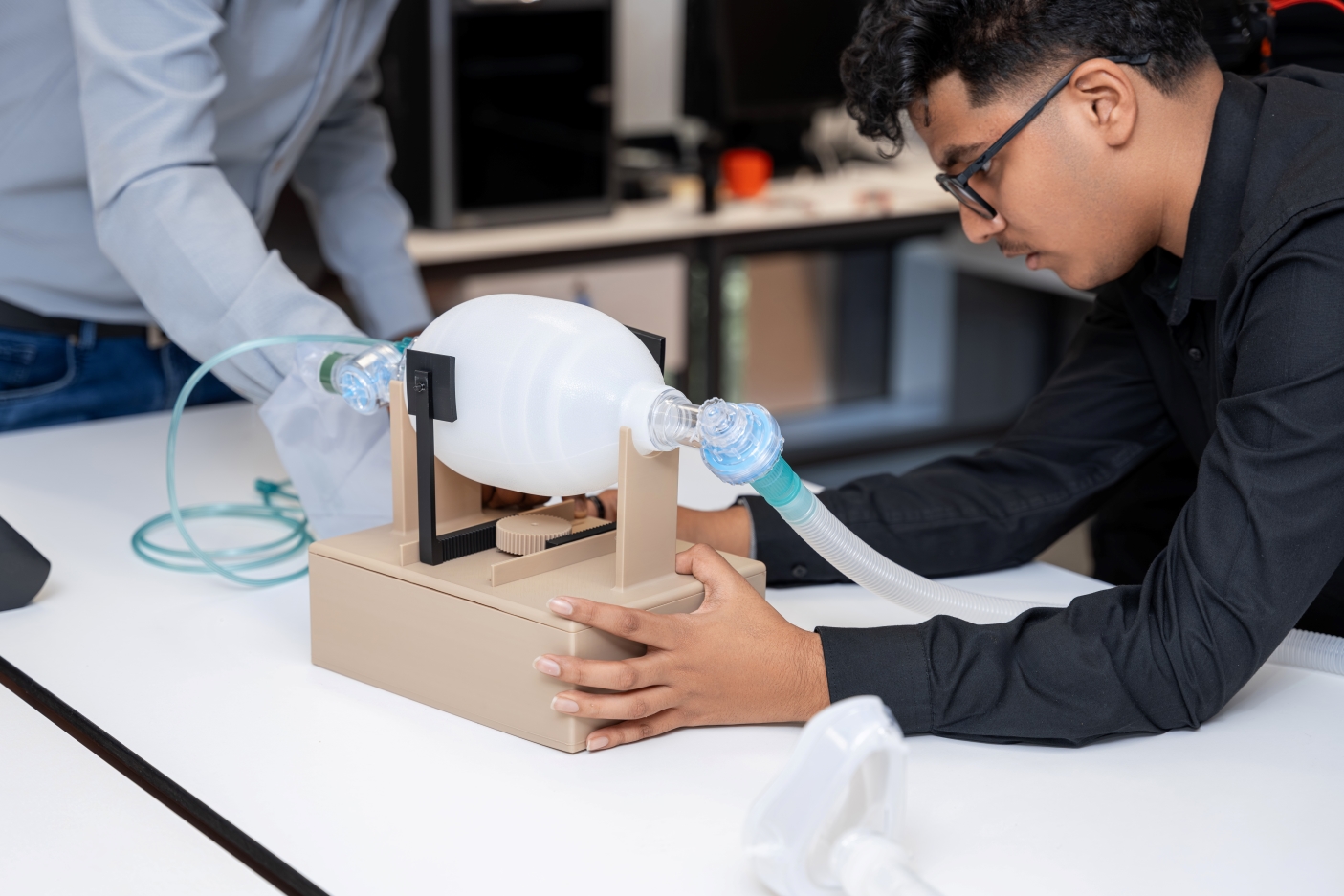
The winning team — Ahmed Mujtaba, Umer Farhan, Maleesha Chamodi Kottage Rajapaksha, Halimah Sameer, and Anush Dcosta — developed DRBVV under the University of Wollongong in Dubai, in collaboration with students from Heriot-Watt University and Middlesex University. Drawing inspiration from open-source ventilator projects, the group iterated through multiple prototypes using 3D-printed parts, rack-and-pinion mechanisms, and different electronics layouts to achieve a reliable system.
At its core, DRBVV automates the compression of an Ambu bag, a manual resuscitator commonly used in emergency care. The device combines precise motor-driven actuation with a touchscreen interface, a rotary control knob, and a low-cost ESP32 microcontroller for real-time adjustments and monitoring. Built-in alarms and battery integration make the ventilator adaptable for emergency use in resource-constrained environments. Testing on silicone lungs helped the team refine the device’s stability, respiratory accuracy, and durability.
Speaking about the award, team member Ahmed Mujtaba said the project was born out of frustration during the pandemic: “What started as a simple idea has evolved into a solution we hope can make a real difference in emergencies. Every setback, from failed tests to blown circuits, brought us closer to a working prototype.”
Judges praised the project for its practicality and scalability. Dr. Fadi Aloul, Dean of Engineering at American University of Sharjah and a James Dyson Award judge, highlighted the balance between “hands-on prototyping” and “a vision for scalable impactful solutions.”
The award brings the team £5,000 to support further development and places them on the international stage, where they will compete for the £30,000 global prize. The international Top 20 shortlist will be announced on October 15, with global winners revealed on November 5.
Two other UAE projects were named runners-up. Sakhi is a community-powered app that helps users locate safe public washrooms stocked with menstrual products, addressing a persistent health and accessibility challenge. Kalam is a modular, low-cost educational kit that introduces children to coding, electronics, and STEM learning through interactive activities, designed with under-resourced communities in mind.
Now in its eighth year in the UAE, the James Dyson Award continues to spotlight student-driven solutions to real-world problems. This year’s entries reflect a mix of healthcare innovation, community empowerment, and accessible education — showing how young engineers are tackling both global and local challenges with practical designs.