


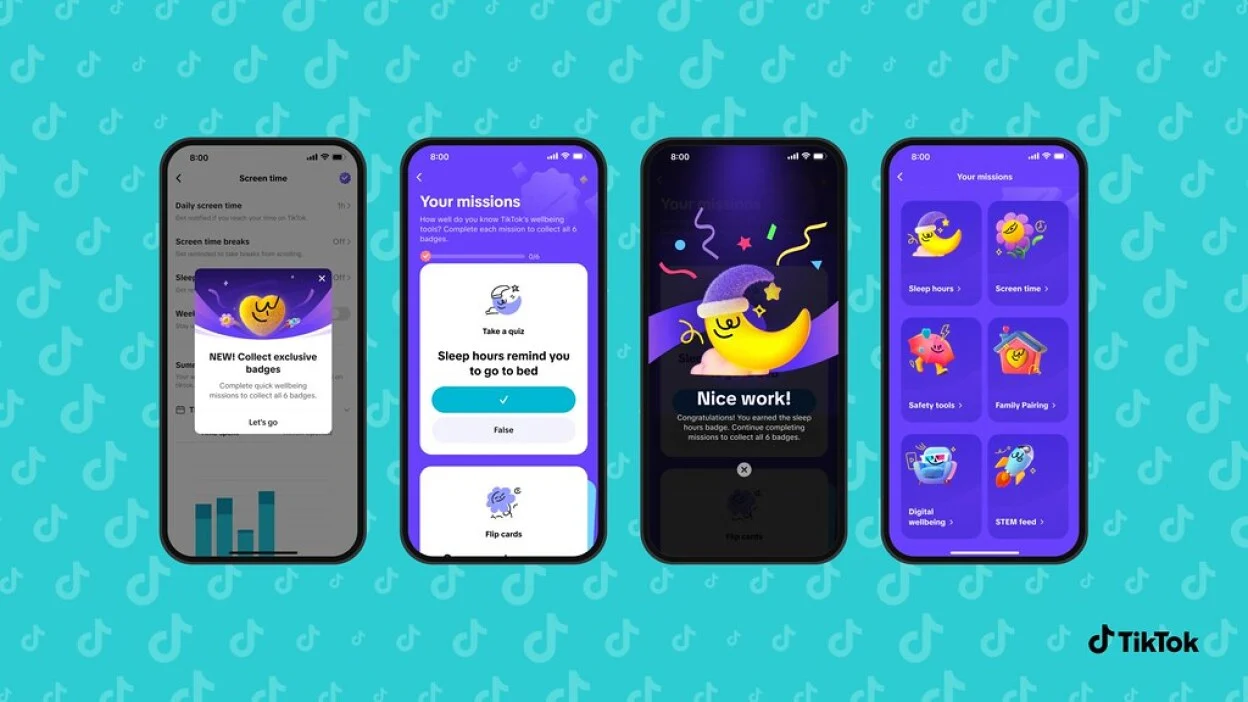
TikTok is rolling out a new set of safety and well-being tools aimed at giving parents more oversight of their teens’ activity and helping all users build healthier app habits. The update follows earlier expansions to the app’s Family Pairing system, adding more granular controls over content visibility, interactions, and time spent on the platform.
One of the most notable changes is the ability for parents to block specific accounts from interacting with their teens — a feature initially launching in Europe before a broader rollout. Teens will still be able to request that a blocked account be reinstated. Parents will also receive notifications whenever their child uploads a video, photo, or story that’s visible to other users. For teens over 15, parents can now view whether followers are allowed to download, duet, or stitch their videos.
The update extends to feed curation as well. Parents will be able to see how their teens have customized their For You Pages (FYPs) and can use the “Manage Topics” tool to filter out certain categories of content. These refinements aim to make supervision more transparent and adaptable, without removing a teen’s ability to shape their own viewing experience.
For general users, TikTok is adding “Well-being Missions,” a new gamified approach to managing screen time and digital habits. These missions award badges for completing daily tasks, starting with exploring TikTok’s existing digital well-being settings. The challenges will rotate over time, encouraging consistent engagement with healthy usage tools rather than relying solely on hard restrictions like timers.
TikTok says these changes are part of an ongoing effort to give users more control over their online routines. The company highlighted that features like Screen Time Management and Sleep Hours are being complemented with positive reinforcement, aiming to encourage long-term, sustainable habits rather than short-term cutbacks.
By combining enhanced parental oversight with app-wide well-being initiatives, TikTok is positioning these updates as a step toward safer and more mindful engagement — while still leaving space for creativity and connection.