
Modular smartphones have a long history of bold promises and limited follow-through. From ambitious attempts like Google’s shelved Project Ara to accessory-based systems that never moved beyond niche audiences, the idea of swappable hardware has struggled to gain mainstream traction. Now, TECNO is revisiting the concept with a different angle: make it thin enough that it doesn’t feel like a compromise from the start.
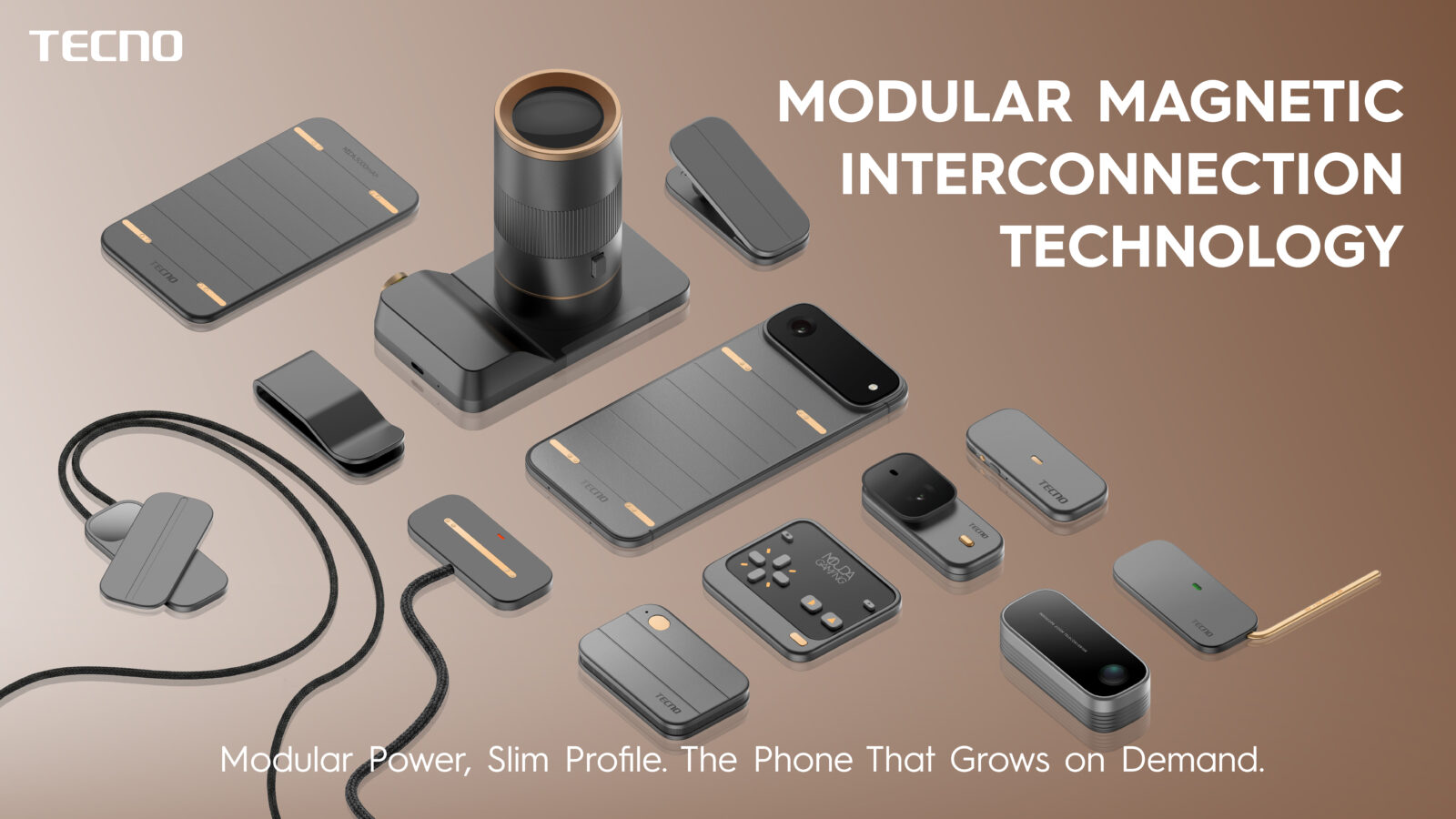
At MWC 2026, the company plans to showcase what it calls the world’s thinnest modular phone concept. The device measures just 4.9mm in its base form, positioning it among the slimmest smartphones currently proposed. Rather than building bulk into the chassis, TECNO’s approach centers on what it describes as Modular Magnetic Interconnection Technology, allowing hardware modules to snap onto the back of the phone without significantly increasing its thickness.
The core pitch behind the TECNO modular phone concept is simple: carry only the hardware you need. Instead of permanently housing larger batteries, advanced zoom optics, or specialty cameras inside the device, users would attach them as required. According to the company, even with modules connected, the overall profile remains competitive with conventional slab-style phones.
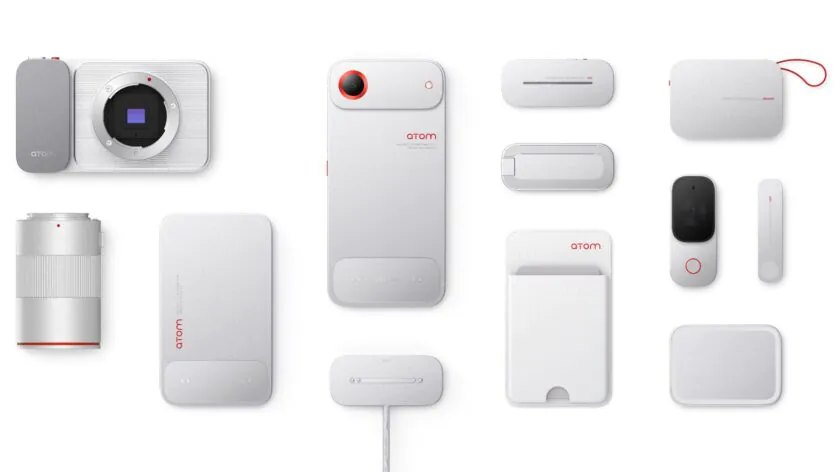
The concept ecosystem includes roughly ten modular accessories. Among them is a 4.5mm Power Bank module designed to extend battery life, effectively doubling usable capacity when attached. There’s also an Action Camera module intended for alternative shooting angles, and a Telephoto Lens module that turns the phone’s display into a live viewfinder for extended optical reach. These additions aim to provide situational flexibility without committing users to thicker hardware year-round.
This modular smartphone concept is being shown in two design variants. The ATOM edition features a minimal aluminum finish with restrained accents, while the MODA edition adopts a more stylized look aimed at tech enthusiasts. Functionally, both versions share the same modular system.
Despite the technical ambition, questions remain about practicality. Modular phones have historically struggled with durability, long-term ecosystem support, and consumer willingness to manage multiple accessories. There is also the challenge of convincing users that detachable hardware offers meaningful advantages over integrated improvements in battery life, camera performance, and processing power.
TECNO has not indicated that this ultra-thin modular phone is headed for commercial release. Instead, it appears positioned as a technology demonstration, potentially laying groundwork for future devices that incorporate aspects of the modular magnetic system. Whether this approach can succeed where earlier modular smartphone efforts fell short will likely depend on execution, pricing, and whether consumers see clear benefits over increasingly capable all-in-one devices.
For now, the TECNO modular phone concept serves as a reminder that the industry continues to experiment with form factors, even as most manufacturers double down on refining the standard smartphone template rather than reinventing it.