

At Mobile World Congress 2026 in Barcelona, TECNO used its showcase to explore a practical question facing the smartphone industry: how to deliver more on-device AI processing without making phones thicker, heavier, or thermally constrained. The company’s concept lineup, presented at Fira Gran Via from March 2 to 5, focused on modular hardware, edge AI, and experimental industrial design rather than finished commercial products.
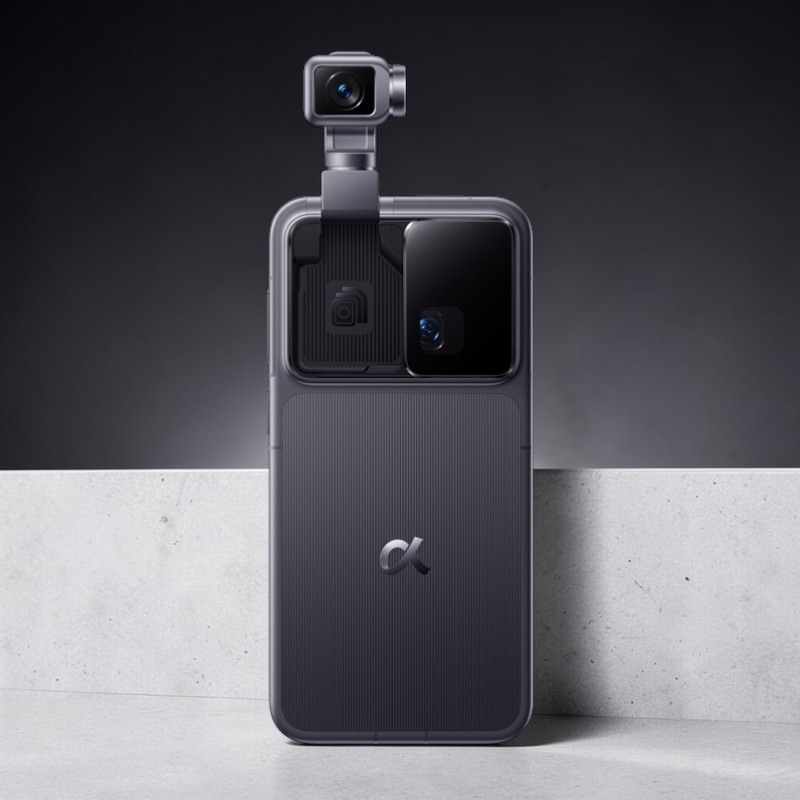
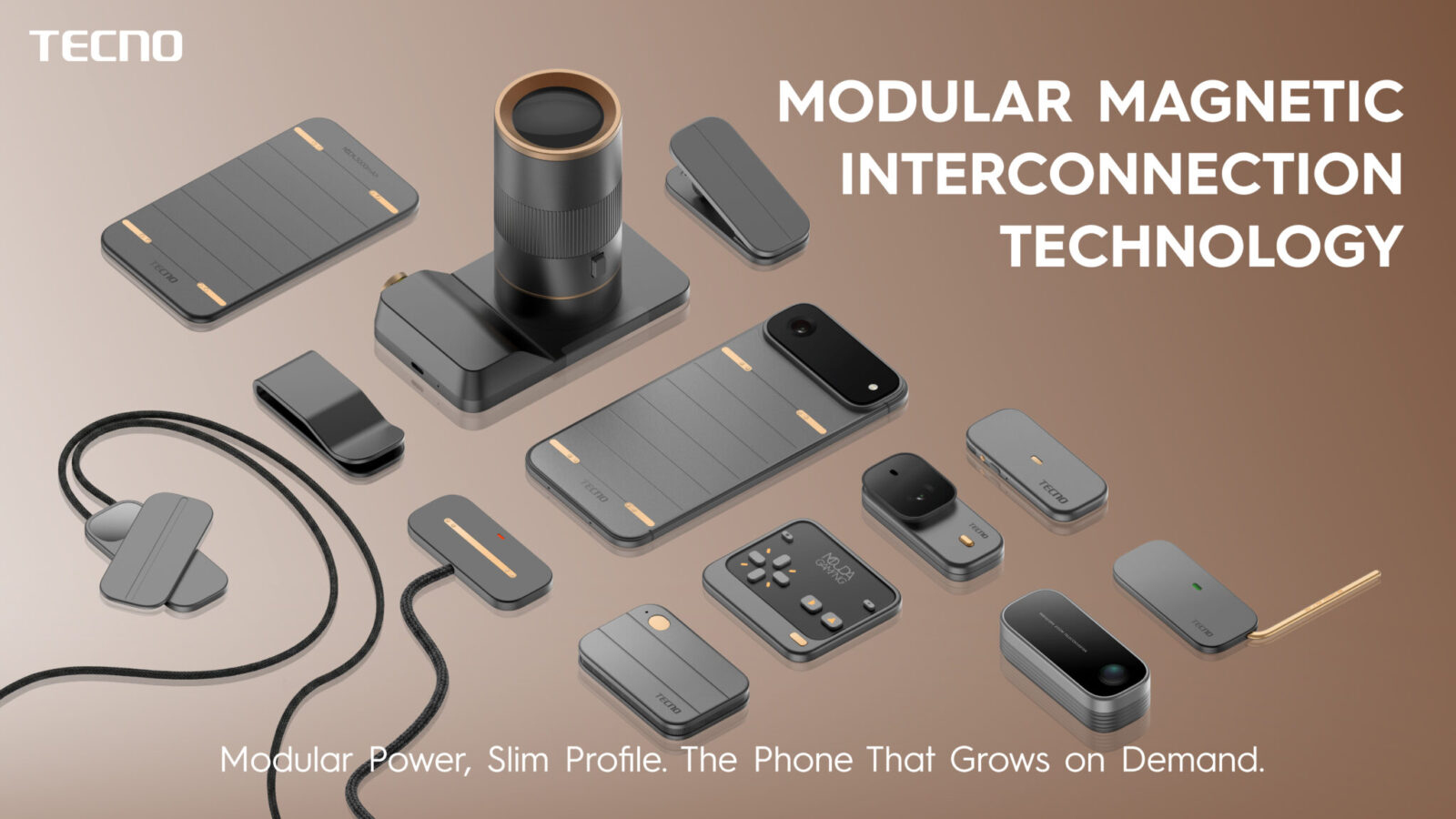
The central idea was Modular Magnetic Interconnection Technology, a system that allows users to attach hardware modules to the back of a phone using magnets. Instead of permanently integrating larger batteries, camera modules, or accessories into the chassis, the concept shifts those capabilities into optional snap-on components. Demonstrations included stackable battery packs, action camera units, and detachable telephoto lenses connected through what the company describes as intelligent connectivity.
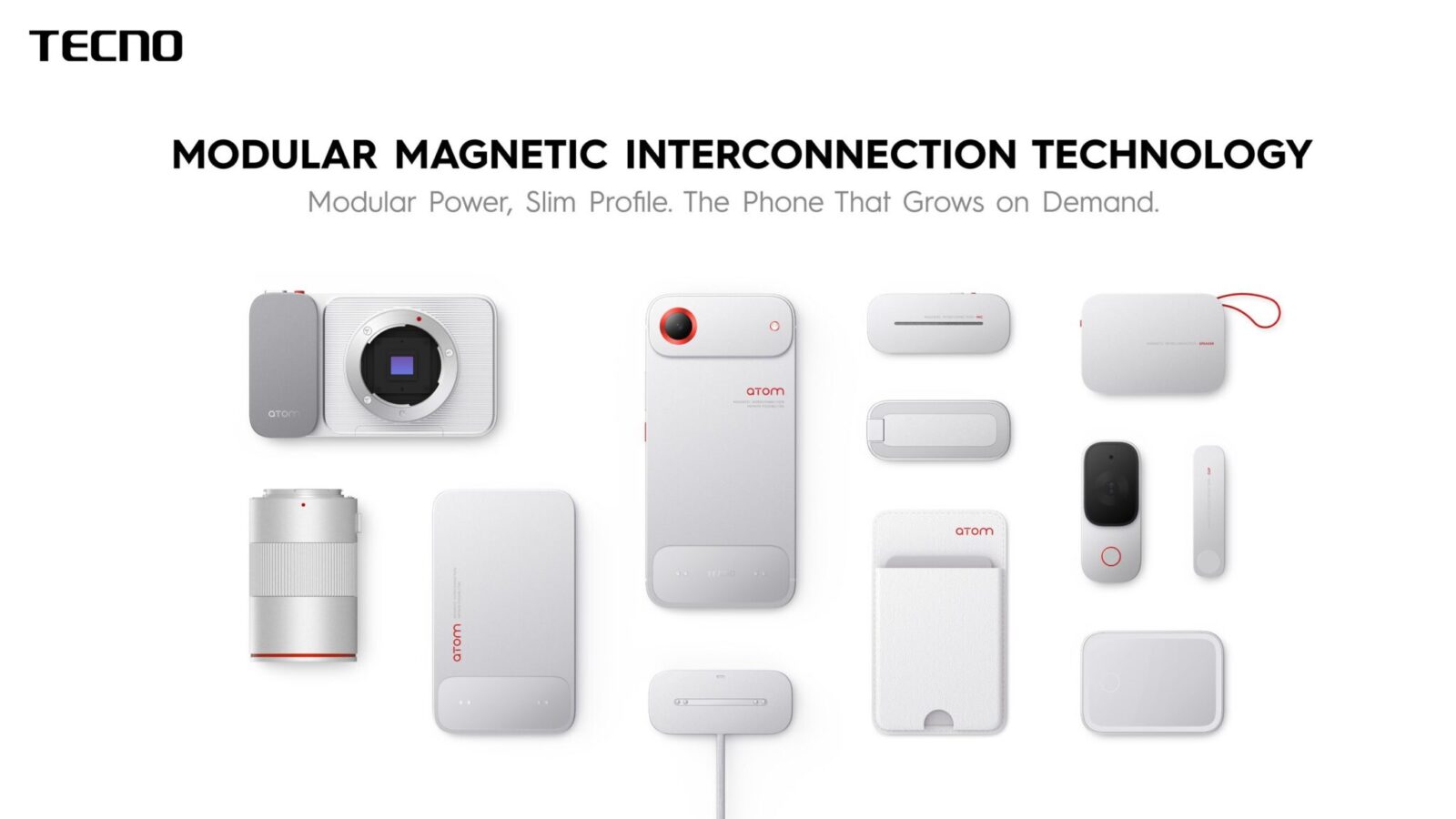
Two visual directions were shown. The ATOM edition leaned toward a restrained, minimal aesthetic, while the MODA edition adopted a more overtly technical, design-forward look. Both approaches reflect a broader industry conversation about modular smartphones, a space that has historically struggled with durability, ecosystem scale, and consumer adoption. Whether magnetic modularity can overcome those limitations remains an open question, but the concept addresses a real constraint: AI features increasingly demand hardware flexibility that sealed slabs do not easily provide.
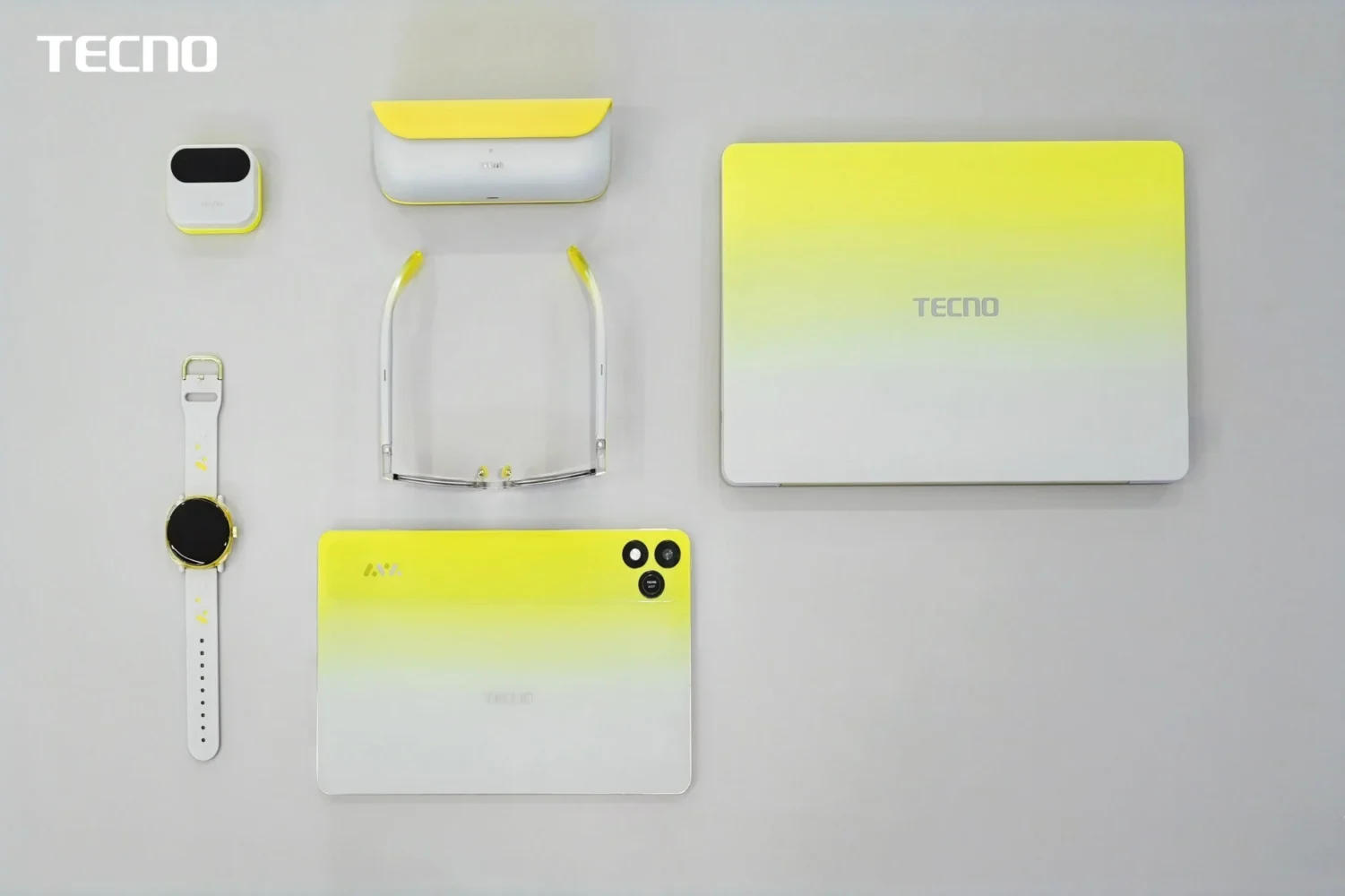
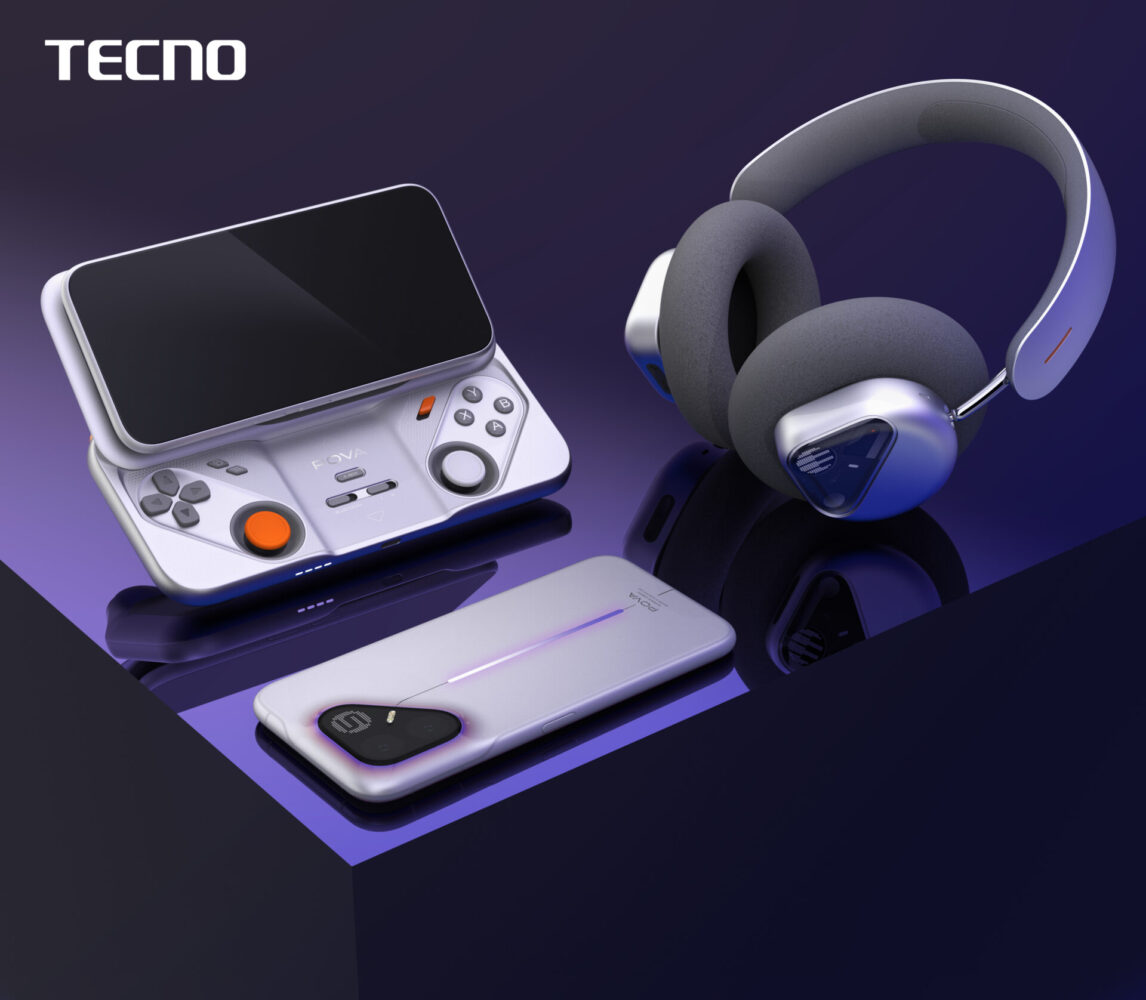
The POVA ecosystem expanded this thinking into gaming-oriented devices. POVA Metal was presented as a full-metal unibody 5G phone powered by a Snapdragon processor, emphasizing durability and structural rigidity. A companion POVA Controller Slide targets mobile FPS and MOBA players, offering adjustable viewing angles from 0 to 25 degrees and wireless charging support. Matching earphones featured dot-matrix lighting, reinforcing the ecosystem’s cohesive design language.
On the software side, TECNO highlighted its Edge-Side AIGC Preview Concept Technology, which runs AI generation directly on the device. By keeping AI processing offline, the system reduces latency and avoids dependence on cloud connectivity. Developed in collaboration with Arm, the company’s Style Transfer Preview technology reportedly delivers 30fps real-time previews while minimizing flicker and jitter. Model compression techniques allow the AI to function entirely offline while maintaining visual quality and stable performance, a key factor as privacy and responsiveness become central to edge AI smartphones.
Other experimental devices included AI EINK, which uses electronic ink for a paper-like rear panel that adapts colors based on camera input, and TECNO Slim 2, an ultra-thin concept with a 0.7mm narrow bezel. POVA Neon introduced ionized inert gas lighting to create a glowing back-panel effect, continuing the brand’s interest in lighting-based phone concepts.
The most technically ambitious device on display was the PHANTOM Ultimate G Fold concept, described as a tri-fold smartphone with a 9.94-inch display that folds inward twice. Measuring 11.49mm when folded and 3.49mm when unfolded, the inward-folding design is intended to protect the primary screen. The hinge uses 2,000 MPa ultra-high-strength steel, while the rear cover incorporates 0.3mm Titan Fiber material.
Taken together, TECNO’s MWC 2026 concepts suggest a company testing multiple answers to the same issue: how to reconcile edge AI performance, industrial design constraints, and user customization. None of these devices are confirmed for commercial release, but they offer insight into how smartphone makers are rethinking hardware architecture as AI processing moves from the cloud to the device.