


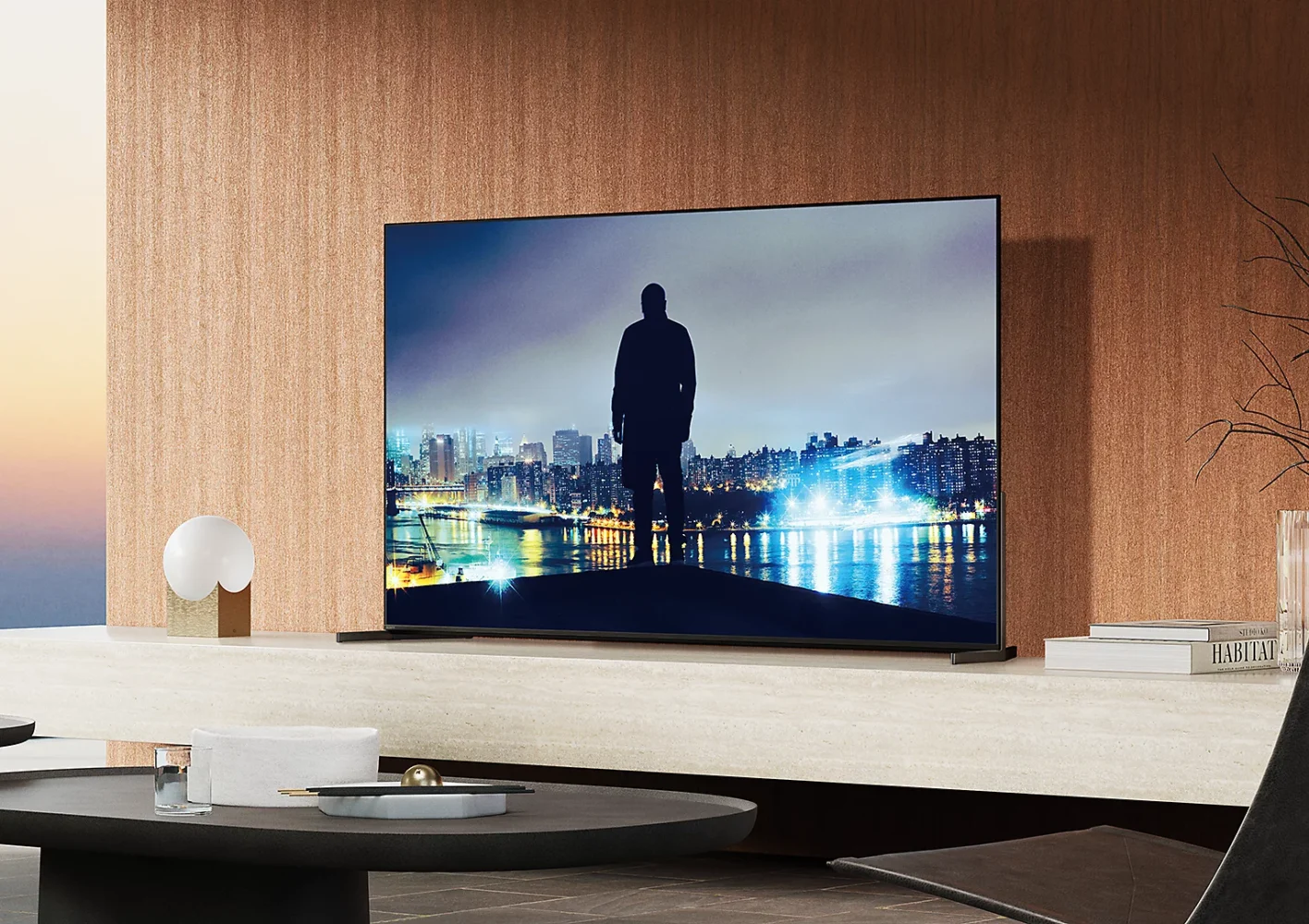
Sony has announced a new joint venture that significantly reshapes its long-standing television business, agreeing to transfer majority control of its home entertainment division to TCL. Under the proposed structure, TCL will hold a 51% stake in the venture, while Sony retains the remaining 49%. Although Sony is not fully exiting the category, the deal represents a clear shift away from the vertically integrated model that defined the company’s Bravia television lineup for decades.
The transaction is still subject to regulatory approval and is not expected to close until March 2027. Once finalized, the new entity will take responsibility for the full lifecycle of Sony’s television business, including product design, manufacturing, marketing, and global sales. Beginning in April 2027, Bravia-branded televisions will transition to using TCL-supplied display panels, replacing the components Sony has traditionally sourced or developed internally.
This move echoes Sony’s earlier retreat from hardware categories that became increasingly difficult to sustain at scale, most notably the sale of its VAIO laptop business in 2014 to Japan Industrial Partners. As with personal computers, the television market has become highly competitive on price, favoring manufacturers with extensive supply chains and manufacturing capacity. Chinese brands such as Hisense and TCL have steadily gained share by offering large, feature-rich panels at lower costs, putting pressure on traditional Japanese players.
For consumers, the joint venture could result in more competitively priced Bravia televisions, particularly in the mid-range segment. Sony’s image processing, motion handling, and upscaling technologies, long cited as strengths for streaming and console gaming, are expected to remain part of the product equation. That could mean Bravia sets optimized for platforms such as Netflix and Sony’s own PlayStation ecosystem, paired with TCL’s cost-efficient panel production.
Still, the transition is not without risk. Shifting to higher-volume manufacturing models can introduce variability, and Sony’s brand equity in televisions has historically rested on consistency and build quality rather than aggressive pricing. How well those standards are maintained in the first wave of jointly produced Bravia models will likely influence consumer perception.
Strategically, the deal allows Sony to reduce exposure to thin hardware margins while continuing to participate in the category through branding and technology. For TCL, association with the Bravia name may help support its ambitions to compete more directly with premium-focused rivals such as Samsung and LG. As with Sony’s earlier exits from commoditized hardware markets, the long-term outcome will depend on execution rather than intent. By 2027, the television landscape may look familiar on the surface, but the ownership and economics behind major brands will be markedly different.