


Sony’s latest addition to its open-ear lineup, the LinkBuds Clip, marks a clear shift away from the company’s earlier in-ear approach and toward a design that prioritizes comfort and stability over novelty. Instead of the donut-shaped driver that defined the original LinkBuds, the new model adopts a clip-style form factor that wraps around the outer ear. It is a design already familiar from competitors in the open-ear category, and Sony appears more interested in refining the concept than reinventing it.
The LinkBuds Clip attach to the ear using a soft, flexible band that connects a small speaker module at the front with a battery housing that rests behind the ear. Because nothing sits inside the ear canal, the earbuds allow outside sound to remain fully audible at all times. This makes them better suited for activities where awareness matters, such as walking in traffic, working in shared offices, or taking calls without feeling sealed off. Sony includes silicone fitting cushions aimed at users with smaller ears, suggesting the company is trying to address fit complaints that followed earlier LinkBuds models.
Visually, the earbuds lean into a softer aesthetic. Alongside black, Sony is offering pastel shades like lavender, green, and greige. The charging case mirrors the shape of previous LinkBuds cases and remains compact, though it still lacks wireless charging. Sony will again sell optional silicone covers for the case, allowing users to mix colors, but these accessories are sold separately and only through Sony’s own store.
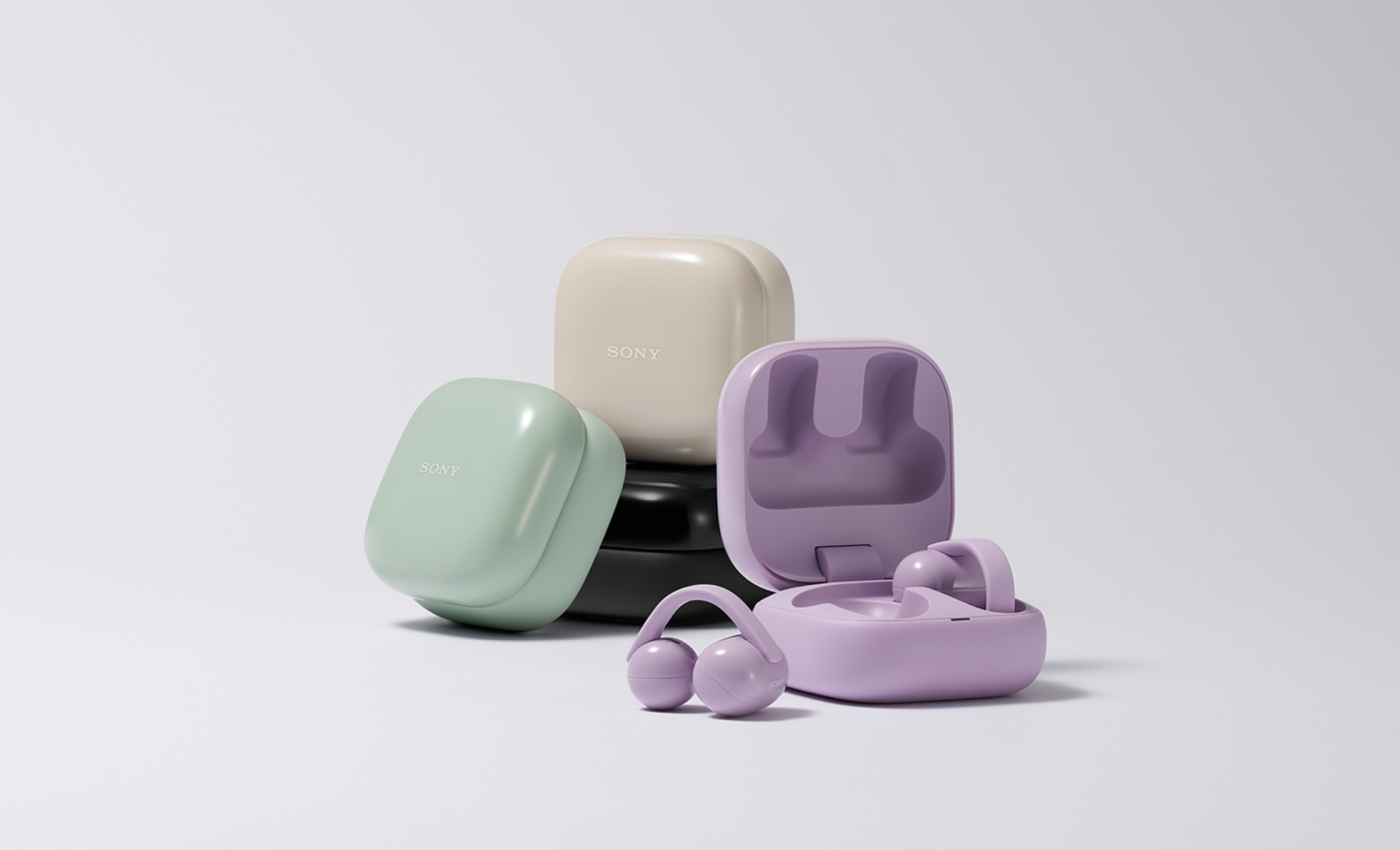
Battery life has been modestly improved. Sony rates the LinkBuds Clip at nine hours per charge, with a total of up to 37 hours when the case is included. A fast-charge feature adds about an hour of playback from a few minutes plugged in, which is useful for short top-ups. The earbuds carry an IPX4 rating, putting them in line with most fitness-friendly open-ear designs.
On the audio side, Sony is leaning heavily on software. A new voice-focused listening mode is designed to keep spoken content clear in noisy environments, while a sound leakage reduction mode attempts to limit how much audio escapes into quiet spaces. A future firmware update is expected to add adaptive volume control that automatically adjusts loudness based on ambient noise. Codec support is limited to SBC and AAC, with no support for newer standards like Auracast, which may disappoint users hoping for more future-facing features.
Controls are handled through taps rather than physical buttons, but customization is restricted to preset layouts in Sony’s app. Call quality could be one of the stronger points, with Sony combining AI-based noise reduction and a bone-conduction sensor to improve voice clarity. Early demos suggest meaningful improvements, though real-world performance will ultimately determine whether those claims hold up.
Priced at $229.99, the LinkBuds Clip sit firmly in the premium open-ear category. Rather than trying to compete with traditional in-ear earbuds, they target listeners who value comfort, awareness, and call quality, even if that comes with trade-offs in isolation and audio impact.