
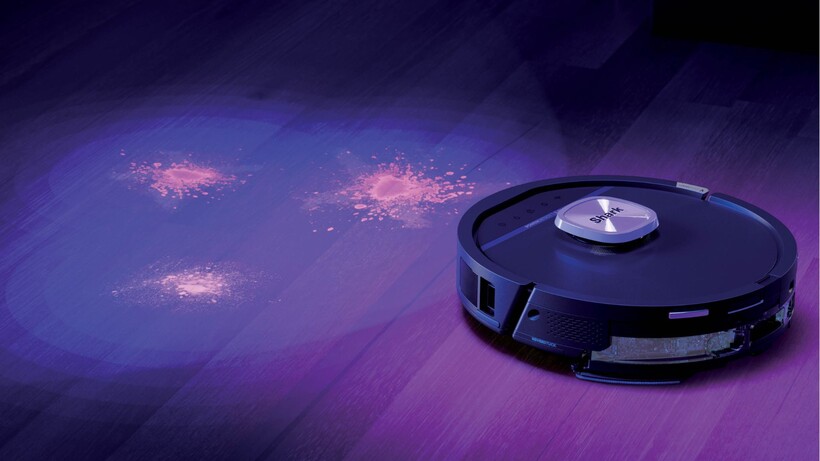
Shark has introduced a new robot vacuum and mop designed to address a common frustration with these devices: verifying that floors are genuinely clean rather than just superficially swept. The PowerDetect UV Reveal combines ultraviolet light detection with an RGB camera to identify residues such as dried spills, sweat, and pet accidents that remain invisible under standard lighting and often evade typical sensors.
At the core of its operation is the UV Stain Detect system, which scans hard floors to highlight hidden marks. The robot then provides visible light indicators so users can observe the process in real time. Once a spot is located, it switches to a targeted mopping routine that applies repeated back-and-forth scrubbing motions. According to the manufacturer, this approach delivers roughly seven times the scrubbing force of conventional flat-pad systems. After the initial pass, the device returns for a verification check to confirm removal before resuming its broader cleaning route.
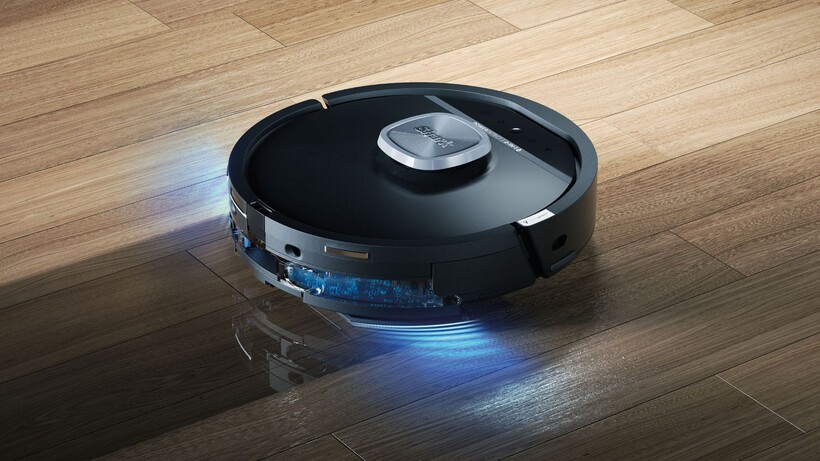
Navigation relies on an array of eight sensors that detect edges, floor transitions, and obstacles in real time. An onboard AI system called NeuroNav processes mapping and avoidance directly on the device, allowing it to maneuver around furniture and low objects even in dim conditions without constant app dependency. The model also incorporates standard vacuum suction for debris and pet hair alongside the mopping function.
Maintenance falls to the ThermaCharged NeverTouch Pro base station, which features a bagless design and applies heat-based sanitisation to the mop pad after each cycle. An anti-allergen seal aims to trap particles during emptying to limit their release back into the air. Battery capacity supports up to three hours of operation, sufficient for many average-sized homes in one session.
The PowerDetect UV Reveal enters a competitive segment of premium robot cleaners where features like self-emptying bases and improved mopping have become more common in recent years. Earlier Shark models introduced heat-based hygiene elements, and this version extends that focus by attempting to tackle verification—a step many competitors still handle through basic sensors or user inspection alone. Early testing from various outlets suggests the UV detection consistently spots overlooked stains on hard floors, though its effectiveness can vary with surface type and stain age, and it primarily targets dried rather than fresh or large liquid messes.
For households with hard floors, pets, or frequent invisible spills, the combination of detection and targeted scrubbing offers a practical evolution. However, potential buyers should weigh the cost against standard models if visible verification is not a priority.