

Samsung has unveiled its newest 200-megapixel camera sensor, the ISOCELL HP5 — a leap forward in mobile imaging that focuses on making smaller pixels smarter, not just denser. The new sensor features a 1/1.56-inch format and 0.5µm pixel size, slightly smaller than its predecessor, the ISOCELL HP3’s 0.56µm. While smaller pixels typically mean less light capture and potential image noise, Samsung says it has effectively “re-engineered” the way pixels handle light to deliver brighter, sharper results across all conditions.
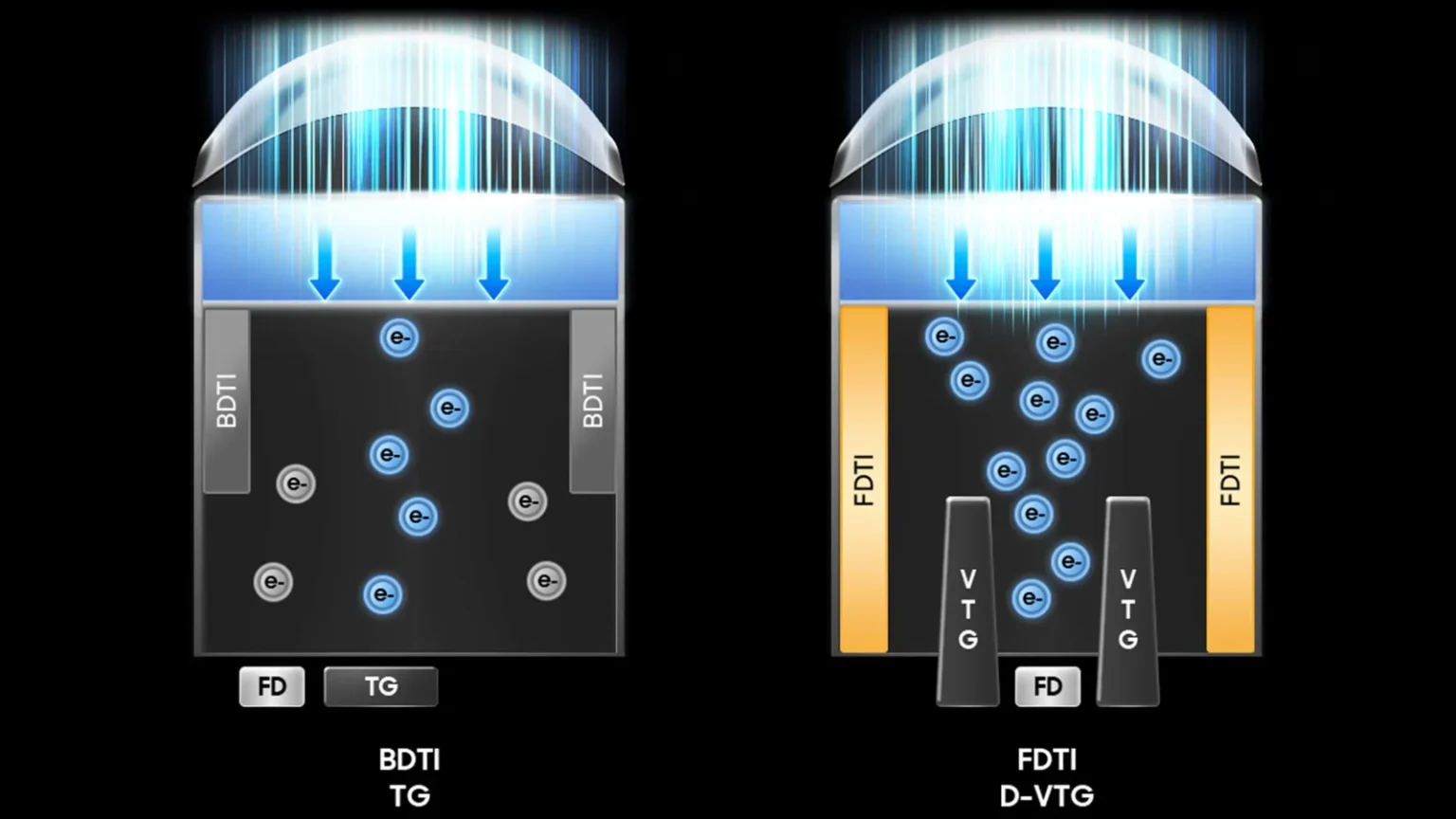
To overcome the usual limitations of miniaturization, Samsung’s HP5 sensor integrates several cutting-edge technologies. Front Deep Trench Isolation (FDTI) and Dual Vertical Transfer Gate (D-VTG) structures increase the number of electrons each pixel can hold before saturation — measured as Full Well Capacity (FWC) — which directly translates to better brightness and color accuracy. Combined with DTI Center Cut (DCC) for “conversion gain enhancements,” these refinements allow the sensor to capture more light while maintaining dynamic range and minimizing cross-talk between pixels.
The HP5 also employs a new High Transmittance Anti-refractive Layer that helps reduce light reflection on the sensor surface, ensuring maximum transmission through the lens to the pixel layer below. The result, Samsung claims, is improved performance in both low-light and well-lit environments — areas where smaller sensors often struggle.
On the performance side, the ISOCELL HP5 can process a full 200MP image in under two seconds using on-chip AI acceleration. It supports up to 2x in-sensor zoom when used with a wide lens and up to 6x zoom on a 3x telephoto, with improved HDR processing and frame-by-frame exposure optimization. For video, it supports 8K recording at 30 fps, 4K at 120 fps, and Full HD at 480 fps (the latter without autofocus).
Interestingly, despite being developed by Samsung, early reports suggest that the ISOCELL HP5 will debut in third-party flagships such as the Oppo Find X9 Pro and potentially other Chinese high-end smartphones. Samsung’s own Galaxy lineup, at least for now, is not expected to adopt the HP5 — a curious choice that hints at the company’s broader strategy to position its sensor division as a standalone technology supplier competing with Sony’s imaging units.
If the real-world results match Samsung’s claims, the ISOCELL HP5 could mark one of the most significant jumps in mobile camera tech in years — not through sheer megapixel count, but through smarter pixel engineering that pushes the limits of light capture and image processing speed.