


Rivian’s micromobility offshoot, Also, has introduced its first line of small electric vehicles, led by the TM-B e-bike — a design that takes clear aim at redefining how electric bicycles function and feel. The company also revealed the TM-Q pedal-assisted quad bike and the Alpha Wave helmet, positioning them as part of a broader ecosystem focused on compact, connected transport.

The TM-B (short for Transcendent Mobility – Bike) blends e-bike mechanics with an unconventional drive system that blurs the line between cycling and electric mobility. Instead of a traditional chain or mid-drive motor, it uses a proprietary “DreamRide” pedal-by-wire system. Riders generate electricity through pedaling, which feeds into the bike’s battery while a software-managed traction motor propels the rear wheel using a Gates Carbon belt. This separation of pedal effort and wheel propulsion is rare among e-bikes and could signal a new direction for drivetrain design if it proves reliable and intuitive in real-world use.

The TM-B offers two removable battery options: 538Wh and 808Wh, capable of roughly 100 miles of range under optimal conditions. Both can charge via USB-C — an unusually universal choice — at 240 watts, reaching full capacity in just over two to four hours depending on pack size. Each battery also doubles as a power bank for devices, with charge levels shown on a compact E Ink display.
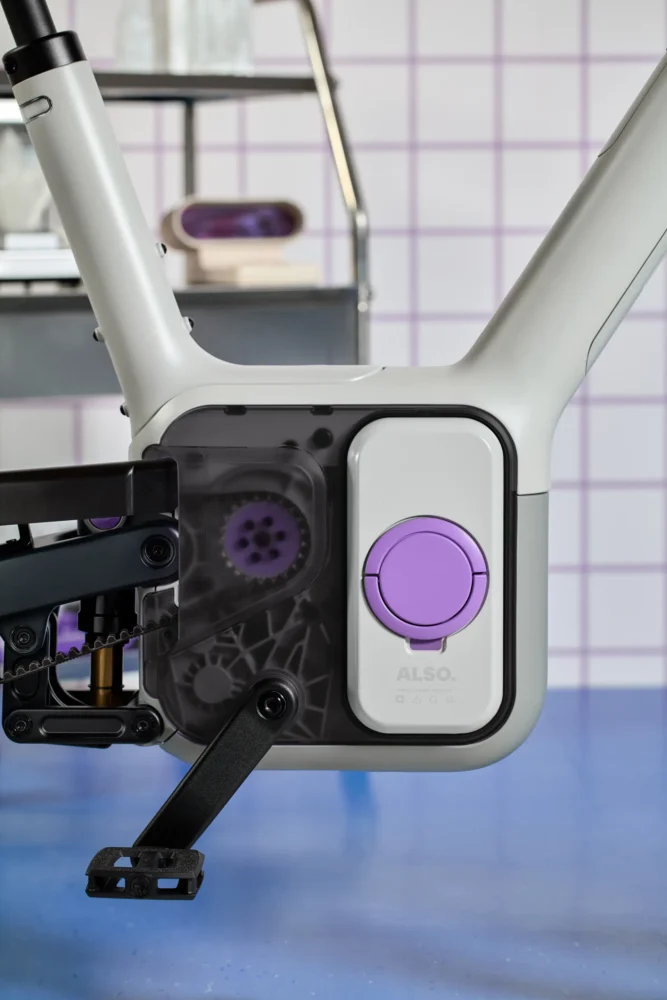
Rated as a Class 3 e-bike, the TM-B supports pedal-assisted speeds up to 28 mph and throttle speeds of 20 mph where permitted. Its claimed 180Nm of torque far exceeds typical e-bike figures, hinting at strong acceleration and load-carrying power. Hydraulic brakes, regenerative braking with up to 25 percent range recovery, and full suspension are included, all wrapped around a modular frame. The bike can be converted without tools into different configurations — from cargo carrier to passenger cruiser — with adjustable ergonomics to fit riders between 4’11” and 6’8″.

Security and connectivity are embedded into the design. A proximity-based locking system secures the frame and battery automatically, backed by tamper alerts and GPS tracking. The 5-inch touchscreen console manages ride settings and unlocks features like seat adjustment with a swipe.
The launch edition TM-B starts at $4,500 with deliveries planned for spring 2026, while a base model priced at $4,000 will follow later that year.
Alongside the bike, Also introduced the Alpha Wave helmet, featuring the company’s Release Layer System (RLS) for rotational impact mitigation, integrated lighting, and a four-speaker audio setup with noise-canceling microphones. The helmet syncs with the TM-B’s console, allowing control of music, calls, and navigation directly from the bike’s interface.


Also’s TM-Q extends the same design principles to a four-wheeled, pedal-assisted electric vehicle aimed at both delivery operations and private community transport. Its “bike-lane compliant” footprint suggests a focus on urban mobility where space and regulation constrain larger EVs.
The TM-B’s design and technical choices are likely to divide opinion. It’s a bold step in a sector that has seen few structural innovations in recent years, though practical testing will determine whether this hybridized approach delivers genuine improvements in ride quality and usability. Still, Rivian’s investment in micromobility through Also signals a strategic recognition that the future of electric transport won’t just belong to cars — it may belong to smaller, smarter, and more flexible vehicles like these.