

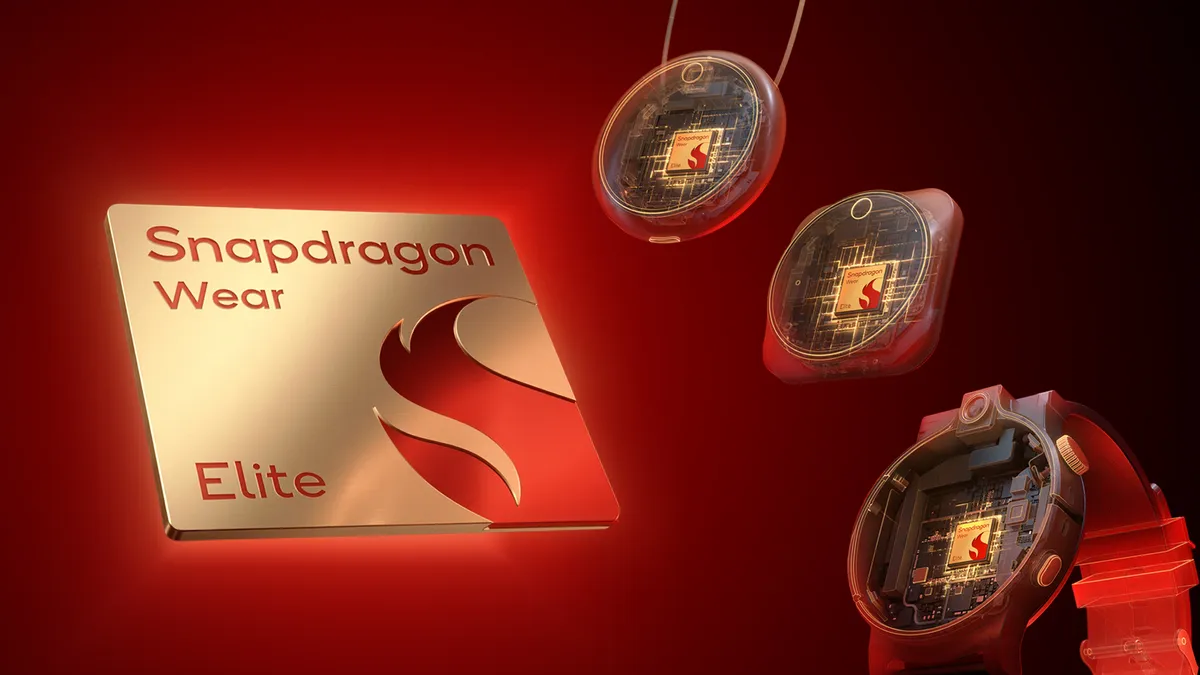
Qualcomm has introduced the Snapdragon Wear Elite platform at MWC 2026, signaling a broader push into AI-powered wearables that extends beyond traditional smartwatches. While Qualcomm chips already power devices such as the Google Pixel Watch 4 and smart glasses built on its AR silicon, the new Snapdragon Wear Elite is positioned as a more ambitious step toward always-on, on-device artificial intelligence across a wider range of form factors.
The Snapdragon Wear Elite platform is designed around four core priorities: on-device AI, battery efficiency, connectivity, and sustained performance. Central to the upgrade is a dedicated neural processing unit capable of running large language models directly on the device. This allows wearables to process voice commands, contextual cues, and certain AI tasks without relying continuously on cloud connections. In practical terms, that could support features like real-time transcription, contextual reminders, or adaptive assistant responses in devices as small as a pendant or pin.
Qualcomm says the platform has been in development for more than three years. The “Elite” branding, previously associated with its premium smartphone processors, is now being applied to wearables for the first time. The shift reflects how AI workloads are becoming central to the wearable category rather than an added feature.
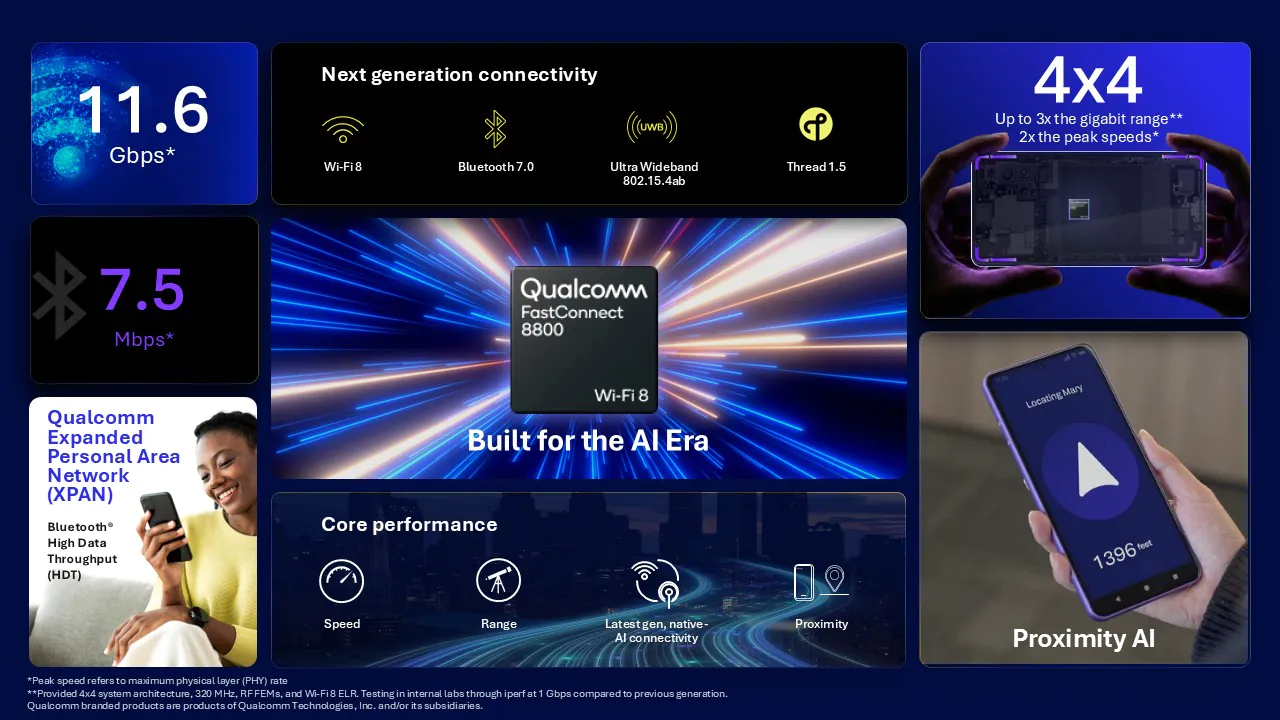
Connectivity options include low-power Wi-Fi, Bluetooth, L1 and L5 GPS, ultra-wideband, 5G, and GNSS. The goal is to maintain reliable device-to-device communication while limiting energy drain, a longstanding constraint in compact hardware. Qualcomm also claims improved power efficiency compared to prior generations, along with charging speeds up to twice as fast, though real-world performance will depend on manufacturer implementation.
Several major partners are already aligned with the platform. Samsung has confirmed that its upcoming Galaxy Watch, widely expected to be the Samsung Galaxy Watch 9, will adopt Snapdragon Wear Elite. Google has indicated that future Wear OS devices may benefit from the performance and battery gains enabled by the new silicon. Motorola has pointed to experimental concepts such as its AI pendant shown earlier this year, suggesting that Wear Elite could power hardware that does not resemble a conventional watch at all.
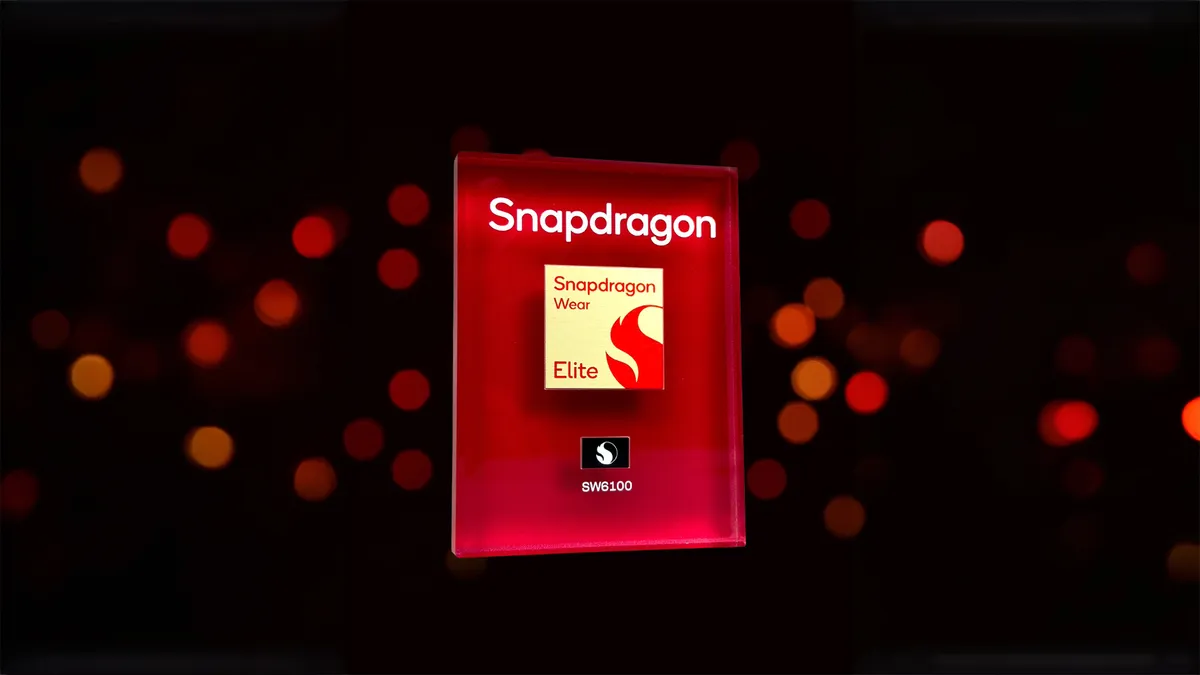
That broader ambition is key. Qualcomm appears to be positioning Snapdragon Wear Elite as a foundation for next-generation AI wearables, including smart glasses, pins, pendants, and other ambient computing devices. As companies explore alternatives to smartphone-centric experiences, on-device AI becomes critical for privacy, responsiveness, and battery management.
Snapdragon Wear Elite will coexist with Qualcomm’s existing wearable portfolio, including W-series and AR-series chips, rather than replace them outright. The distinction suggests that Qualcomm expects a diversification of wearable categories rather than a single dominant form factor.
The first devices powered by Snapdragon Wear Elite are expected in the coming months. Whether the platform meaningfully reshapes the wearable market will depend less on peak specifications and more on how manufacturers translate on-device AI into practical, everyday features that justify wearing yet another connected device. For now, Qualcomm is making a clear bet that the next phase of personal computing will be smaller, AI-driven, and increasingly independent of the cloud.