
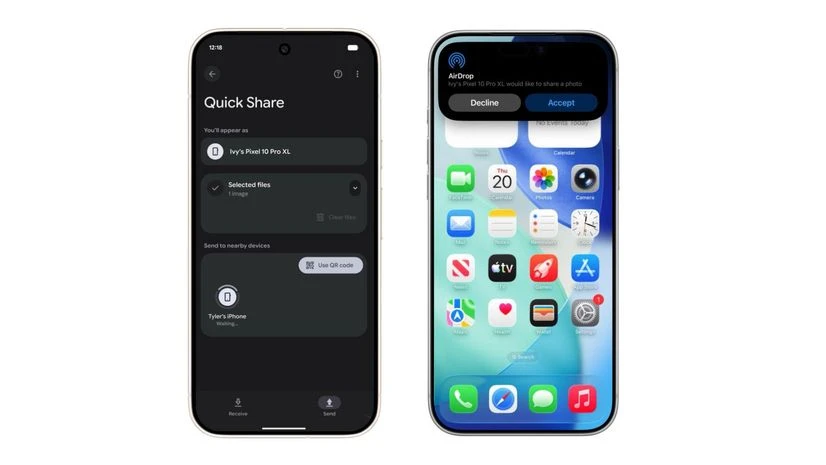
Qualcomm’s confirmation that Android’s Quick Share will eventually support file transfers to Apple’s AirDrop marks a practical shift in a long-standing gap between the two major mobile ecosystems. For years, iPhone users have relied on AirDrop as a seamless way to move photos, documents, and other files, while Android users were left with a mix of third-party apps or platform-specific workarounds. Quick Share has been Google’s attempt to streamline that process across Android and Windows, but until recently it remained firmly separated from Apple’s closed-loop approach.
Google announced that Quick Share can now send files directly to iPhones using the same wireless protocol that powers AirDrop, though this expanded capability is currently restricted to the Pixel 10 series running the Tensor G5 chipset. That rollout effectively created a technical preview rather than a broad solution for Android users, as only a small fraction of devices have access to the feature at launch. Qualcomm’s decision to publicly acknowledge that support is coming to Snapdragon-powered devices signals that the feature is not intended to remain confined to Pixel hardware.
The confirmation arrived through the official Snapdragon account on X, where Qualcomm reposted Google’s announcement and hinted that Quick Share-to-AirDrop interoperability will be enabled on Snapdragon platforms in the near future. Google had already suggested that broader support was part of the plan, but Qualcomm’s involvement makes the timeline feel more realistic for mainstream Android users who rely on Snapdragon-based phones across brands like Samsung, Xiaomi, OnePlus, and Motorola. While Qualcomm hasn’t specified which chipsets or product generations will be included, it is reasonable to expect newer Snapdragon models to receive the update first, followed by a phased expansion across other devices.
MediaTek and Samsung have not yet commented on whether their Dimensity and Exynos lines will be included. Since Quick Share is built directly into Android, there is little reason to think that support will remain exclusive to Qualcomm devices. Still, until those manufacturers issue clear statements, the roadmap remains incomplete. Beyond smartphones, Quick Share already ties together Android tablets and Chromebooks, and the same system could eventually allow those devices to send files to iPhones and iPads once the cross-platform protocol matures.
The broader Android-to-iOS sharing divide has been an unexpected holdout in an era where most basic interoperability issues have already been addressed. Something as simple as sending a photo between phones has historically required workarounds that felt outdated for a modern operating system. With Qualcomm now publicly on board, the path toward universal wireless file sharing looks clearer, even if the rollout will likely be gradual and fragmented before becoming a standard feature across devices.