
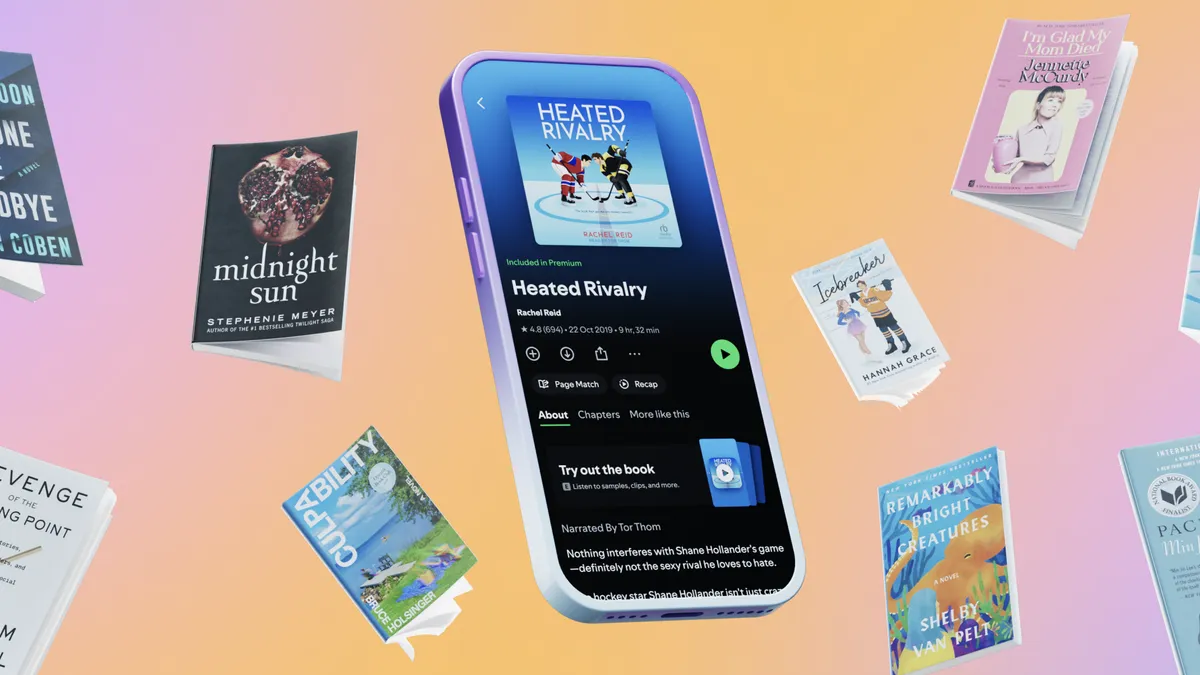
The latest expansion of audiobooks on Spotify suggests the company is testing how far its ecosystem can stretch beyond streaming. With the rollout of a new Page Match feature and an upcoming integration that allows users to purchase physical books through the app, Spotify is edging into territory long dominated by Amazon and its tightly linked Kindle and Audible platforms.
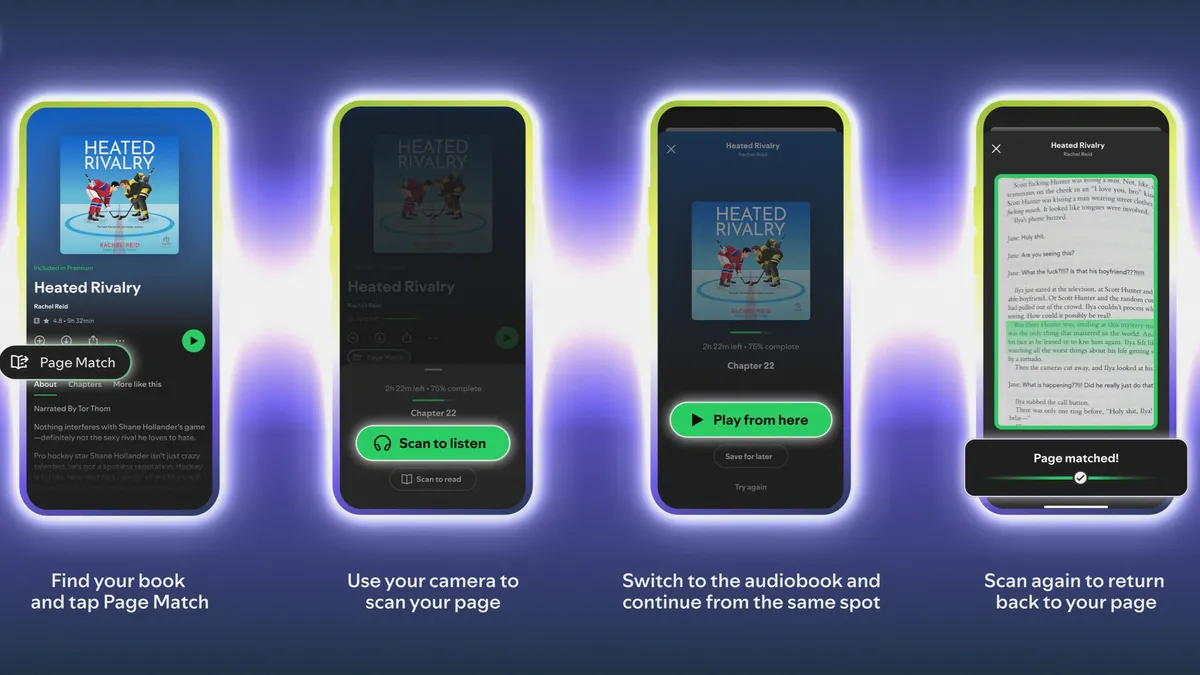
Page Match is designed to solve a familiar frustration for readers who move between formats. Similar in concept to Amazon’s Whispersync, which connects Kindle ebooks with audiobooks on Audible, Spotify’s tool lets users scan a page from a printed book or ebook using their phone camera. The app then jumps directly to the corresponding point in the audiobook. Spotify describes this as a first-of-its-kind feature, though the underlying idea is well established. Its significance lies less in novelty and more in execution: Page Match works with physical books, not just digital editions tied to a single retailer.
The feature has been in limited testing and is expected to reach most English-language audiobook titles by late February. For frequent audiobook listeners, it removes the need to manually search for chapters or timestamps when switching formats. It also reinforces Spotify’s broader strategy of positioning audiobooks as a core pillar of its platform rather than a side offering.
More commercially significant is Spotify’s new partnership with Bookshop.org, which will allow users in the US and UK to purchase physical books directly through the Spotify app later this spring. Orders are completed and fulfilled by Bookshop.org, which distributes revenue across its network of independent bookstores. Spotify has stated that it does not control how those funds are pooled or distributed, framing the integration as a way to connect discovery within the app to physical ownership.
This move places Spotify closer to Amazon’s end-to-end model, where discovery, purchase, and consumption all happen inside a single ecosystem. The difference is that Spotify is not handling logistics or inventory, instead acting as a discovery and transaction layer. Whether that distinction matters to consumers or booksellers will likely depend on how revenue sharing plays out over time and how prominently Spotify inserts itself into the purchasing journey.
There is also an open question around incentives. Spotify’s history with music royalties has made some creators wary of how value is divided on large platforms. While supporting independent bookstores is a stated goal, the long-term balance between convenience, platform control, and fair compensation remains unclear.
For now, the audiobook upgrades make Spotify more competitive for readers who want flexibility across formats. Whether that translates into meaningful pressure on Amazon will depend on adoption, transparency around payouts, and how aggressively Spotify continues to expand beyond streaming.