

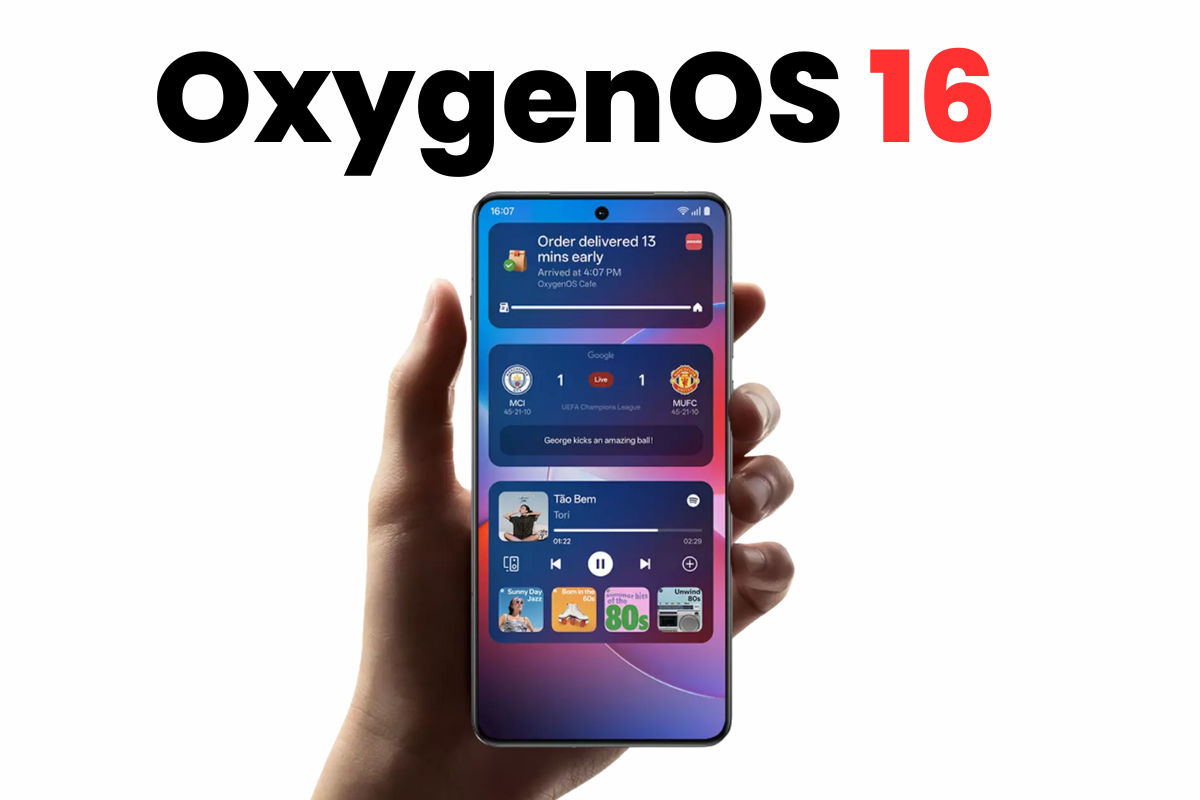
The OxygenOS 16 update is now rolling out to a growing list of OnePlus devices, marking the company’s transition to Android 16 across much of its recent hardware portfolio. The update process appears to be largely on track, with some models receiving the software earlier than initially outlined. While early access does not necessarily indicate broader availability in all regions, it does suggest that the rollout is moving at a steady pace rather than being delayed or restructured.
OxygenOS 16 is based on Android 16 and represents a full platform upgrade rather than a minor patch. As with previous annual updates, it brings system-level changes, security improvements, and refinements to existing features rather than radical design shifts. The focus this cycle appears to be on stability, background performance, and tighter integration with Android’s newer privacy and power-management frameworks, areas that have become more important as hardware gains have slowed year over year.
According to the current rollout status, the stable OxygenOS 16 update is reaching a wide range of devices from OnePlus, covering both flagship and mid-range segments. Models confirmed to be receiving the update include the OnePlus Open, OnePlus 13, 13R, and 13S, along with the OnePlus 12 and 12R. Devices from the previous generation such as the OnePlus 11 and 11R are also included. On the mid-range side, the update is arriving on the OnePlus Nord 5, Nord 4, Nord 3, and Nord CE 5. OnePlus tablets have not been excluded either, with the OnePlus Pad 3 and OnePlus Pad 2 also beginning to receive the Android 16-based software.
As with most large-scale Android updates, distribution is being handled in phases. This means availability may vary by region, carrier, and device variant, even within the same model line. Users will typically receive a notification once the OxygenOS 16 update is ready for their device, though it can also be checked manually through the system update section in settings.
The OxygenOS 16 update carries a sizable download, running several gigabytes in most cases. Users are advised to ensure adequate free storage, ideally at least five to six gigabytes, before starting the installation. Battery charge should be above 40 percent to reduce the risk of interruption, and backing up important data remains a sensible precaution, particularly for those updating on day one.
For owners of OnePlus devices not listed so far, this does not automatically mean their phones are excluded. Rollout schedules are often expanded over time, especially for older or region-specific models. As Android 16 adoption continues, the OxygenOS 16 update list is expected to evolve, with additional devices added as testing and certification are completed.