
Origen introduced a new smart home platform called DOMIA during Mobile World Congress (MWC) 2026 in Barcelona, presenting a system designed to bring large language model capabilities into residential environments. The company describes DOMIA as a shift away from conventional connected-home systems toward a model where artificial intelligence coordinates devices, interprets context, and manages everyday household tasks with limited user input.
Smart home platforms have traditionally relied on automation frameworks built around rigid triggers and routines. Many current systems operate through predefined commands such as “if this happens, then perform that action.” DOMIA attempts to move beyond this structure by using a multi-agent architecture powered by large language models. In practice, this means multiple specialized AI agents operate simultaneously within the home environment, each responsible for different tasks such as lighting, climate management, and occupancy awareness.
The platform is designed to analyze patterns of daily behavior and gradually adjust home settings in response. Over time, the system can identify recurring routines and modify environmental controls accordingly. For example, lighting levels, temperature settings, and general comfort adjustments can be adapted based on how residents typically use their space rather than relying solely on fixed schedules.
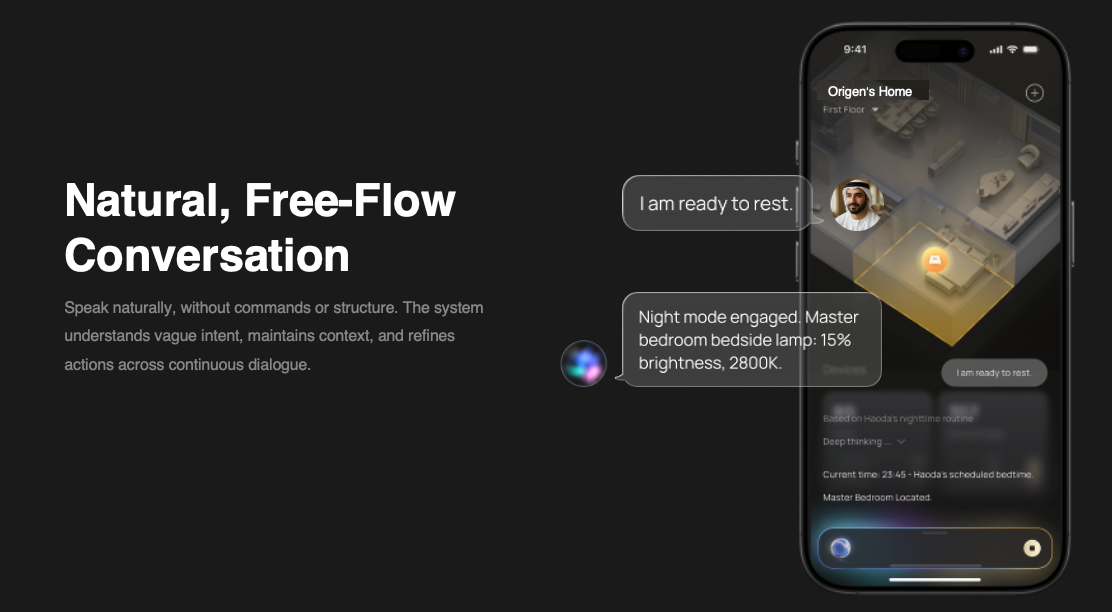
Context recognition plays a central role in how the system operates. Instead of requiring explicit commands, DOMIA attempts to interpret conversational cues. A casual statement such as “It’s a bit dark” may trigger a change in lighting levels, while broader requests like “prepare the house for guests” prompt the system to coordinate multiple elements simultaneously. In this scenario, the platform could adjust lighting, regulate temperature, and manage digital access permissions for visitors.
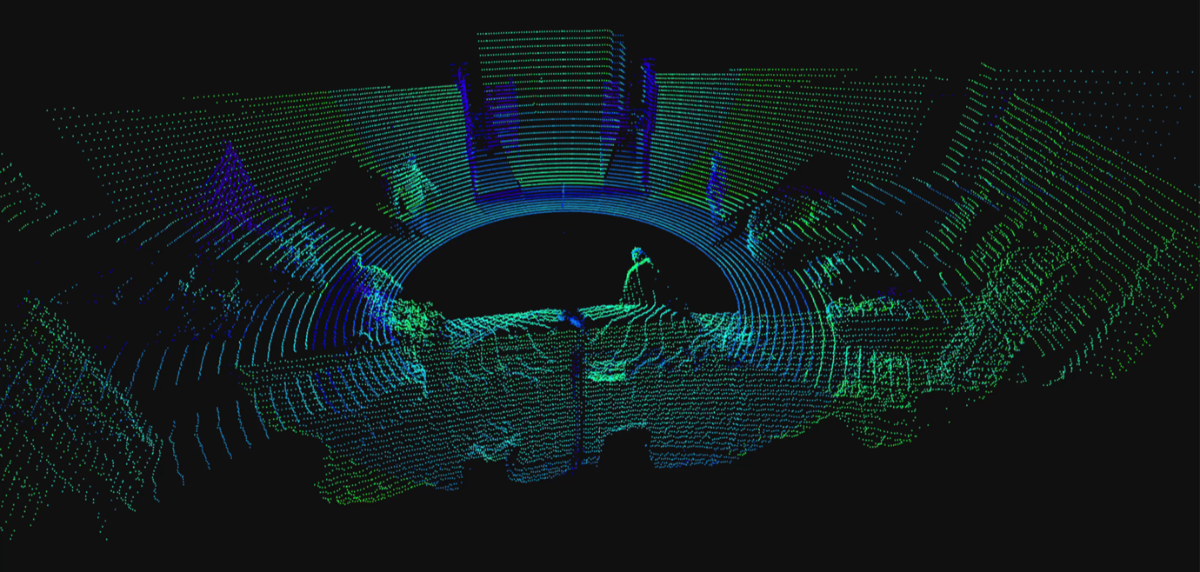
Another area the system emphasizes is indoor sensing and privacy. Rather than using camera-based monitoring, DOMIA relies on millimeter-wave radar and LiDAR sensors to detect movement and occupancy. These technologies allow the platform to recognize presence and activity without capturing visual imagery. The system can then generate summarized insights about household activity while avoiding traditional video surveillance methods.
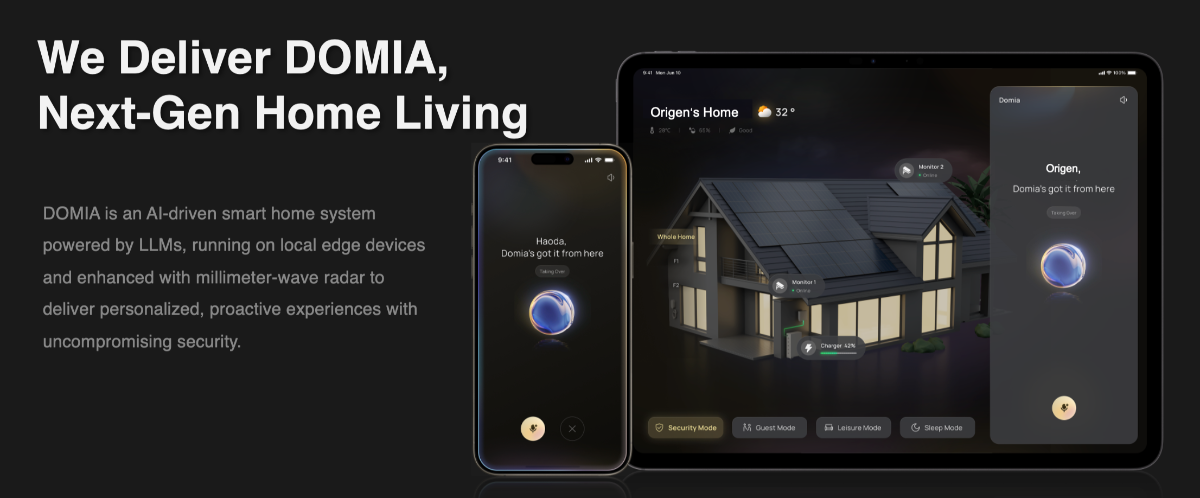
The platform also includes a digital twin interface that creates a real-time three-dimensional representation of the home environment. This model provides residents with a visual overview of rooms, occupancy, and device status, allowing them to manage their living space through an interactive dashboard rather than navigating multiple device-specific apps.
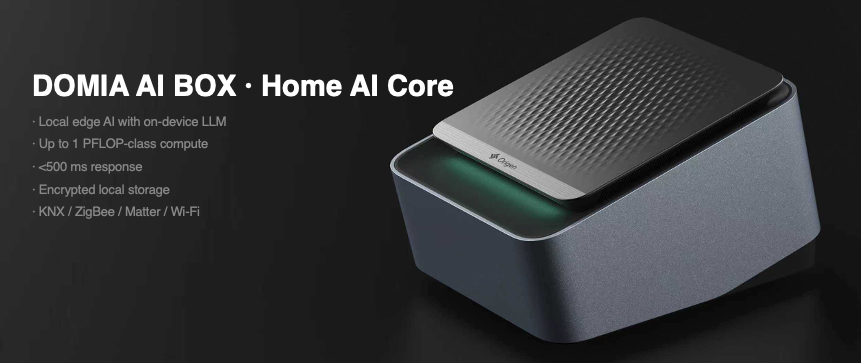
At the center of the platform is what Origen calls an AI Box, a local computing hub that runs the system’s core AI models and decision-making processes. Instead of sending most data to remote cloud servers, the device processes information directly within the home. Local processing is intended to reduce response latency and maintain system functionality even when internet connectivity is limited.
Local data processing is also positioned as a way to maintain stronger user control over personal information. According to the company, household data remains stored and processed locally, avoiding long-distance transmission to external data centers.
The introduction of platforms like DOMIA reflects a broader shift in smart home technology. The industry is increasingly exploring how large language models and agent-based AI systems might manage complex household environments more autonomously. Rather than focusing only on connecting devices, newer systems are being designed to interpret context, coordinate multiple systems, and operate as a foundational layer of residential infrastructure.
While it remains early for large-model AI in domestic environments, products like DOMIA highlight how companies are experimenting with combining local computing, contextual AI reasoning, and privacy-oriented sensing technologies within the home.