
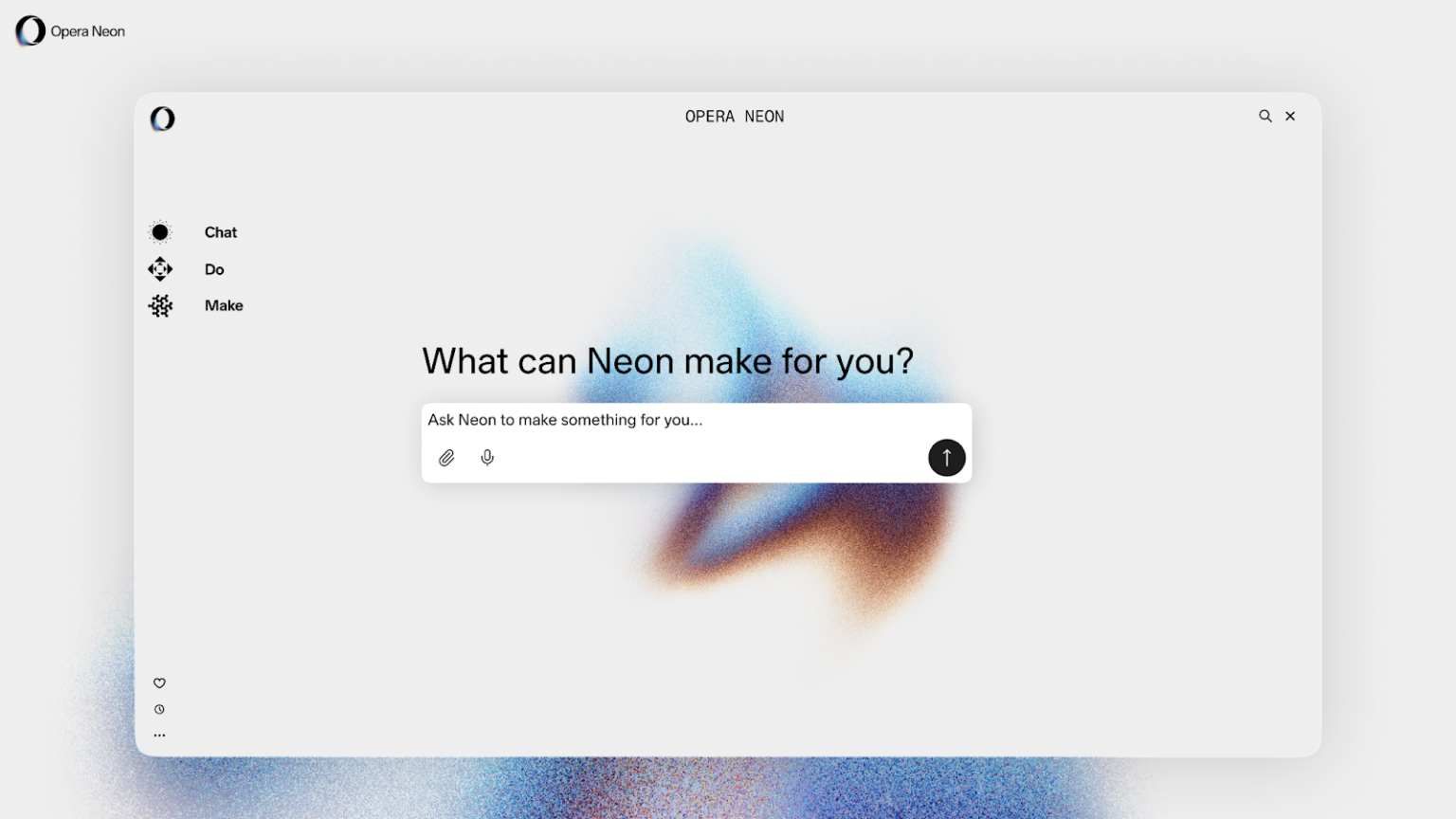
Opera is entering the AI browser race with the announcement of Opera Neon, a new browser designed to automate tasks — from coding websites and games to managing online bookings and shopping. Unlike traditional browsers, Neon is built around AI workflows that aim to perform tasks directly on the user’s behalf, moving beyond search and into action.
Still in waitlist mode, Opera Neon is expected to launch as a paid subscription product, though the company hasn’t disclosed pricing or a release timeline. Once available, users will be greeted with a trio of new tools in the browser’s sidebar: Chat, Do, and Make. These features reflect Opera’s larger vision for an AI-first browsing experience, one that blends natural language input with cloud-powered automation.
The Chat button functions like an integrated AI chatbot. It can answer questions, explain page content, and conduct searches directly from the browser. While similar to AI chat features being tested by competitors, Opera’s implementation is part of a larger, more task-oriented design.
Where things get more ambitious is with Do. This function uses Opera’s own “Browser Operator,” an AI agent introduced earlier this year. It’s pitched as a tool for task automation: booking trips, filling out web forms, and handling routine browsing chores — all handled locally within the browser.
The most attention-grabbing feature, however, is Make. Using a cloud-based virtual machine, this tool allows users to generate code, design websites, or create games with simple text prompts. According to Opera, these tasks can run in parallel and even continue while the user is offline, as long as the prompts are processed by the cloud-based AI engine.
This kind of automation—especially for coding—aligns with a broader industry push toward AI agents that don’t just generate content but actually execute tasks. Yet, as with many AI-powered tools in development today, performance often falls short of promise. How well Opera’s new tools work in real-world scenarios remains to be seen.
Opera Neon enters a crowded and increasingly competitive field. Google is developing AI agents that could soon offer both contextual search and task automation. Meanwhile, newer players like The Browser Company are also experimenting with AI-first browser designs. Whether Neon can differentiate itself on reliability, speed, or practical functionality will be critical.
Opera says Neon is designed for modern workflows, not passive browsing. But until users get hands-on access, its true value will be hard to assess. What’s clear is that the browser is no longer just a gateway to the web — it’s becoming an active participant in how we use it.