
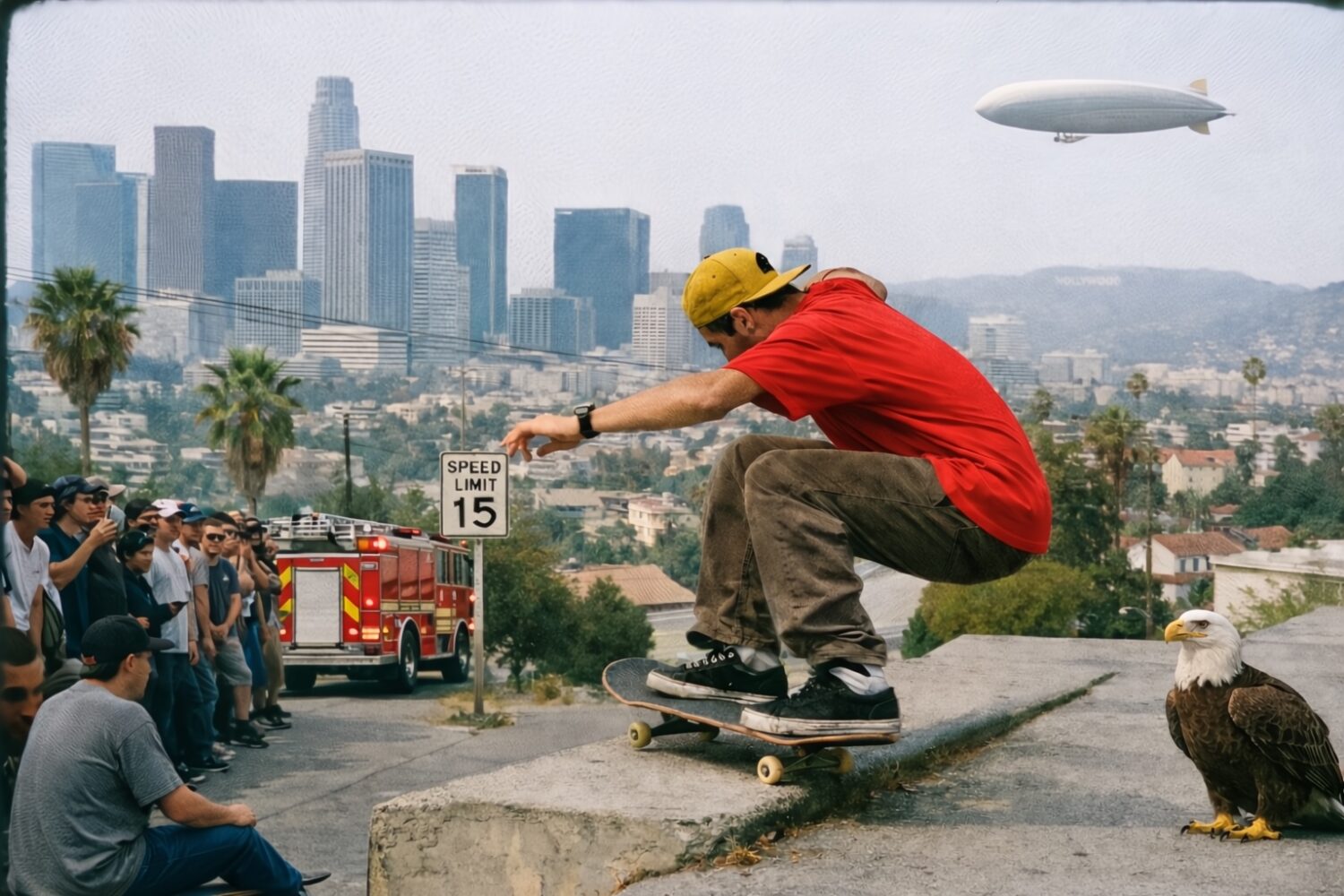
OpenAI has released a new version of its image generation system, expanding ChatGPT Images with a model it calls GPT-Image-1.5. The update, which is rolling out to all ChatGPT users and developers through the API, focuses on practical improvements rather than sweeping claims about creative breakthroughs. According to OpenAI, the new image generation model offers faster output, tighter adherence to instructions, and more controlled image editing compared with the previous release.
GPT-Image-1.5 arrives amid intensified competition between OpenAI and Google, particularly following Google’s recent advances with Gemini 3 and its image-focused Nano Banana Pro model. Internal pressure inside OpenAI became public last month after a leaked memo from CEO Sam Altman described a “code red” response to Google’s growing momentum. While OpenAI introduced GPT-5.2 shortly afterward to reinforce its position in text and multimodal tasks, image generation remained an area where Google had gained noticeable traction across public benchmarks.
The new image model appears to be a direct response to those dynamics. OpenAI says GPT-Image-1.5 can generate images up to four times faster than its predecessor, GPT-Image-1, which launched in April. More significantly, the model aims to address a persistent weakness in generative image tools: iterative editing. Users often struggle to make small, targeted changes without the system reinterpreting or rebuilding the entire image. GPT-Image-1.5 is designed to preserve key elements such as facial features, lighting, color tone, and composition while applying narrow edits like adjusting expressions or modifying lighting temperature.
These capabilities place ChatGPT Images closer to production-ready workflows rather than one-off experimentation. Like competing tools, including Google’s Nano Banana Pro, the system now supports post-generation refinement intended to maintain visual continuity across multiple edits. This makes the tool more suitable for design, marketing, and content production tasks where consistency matters.
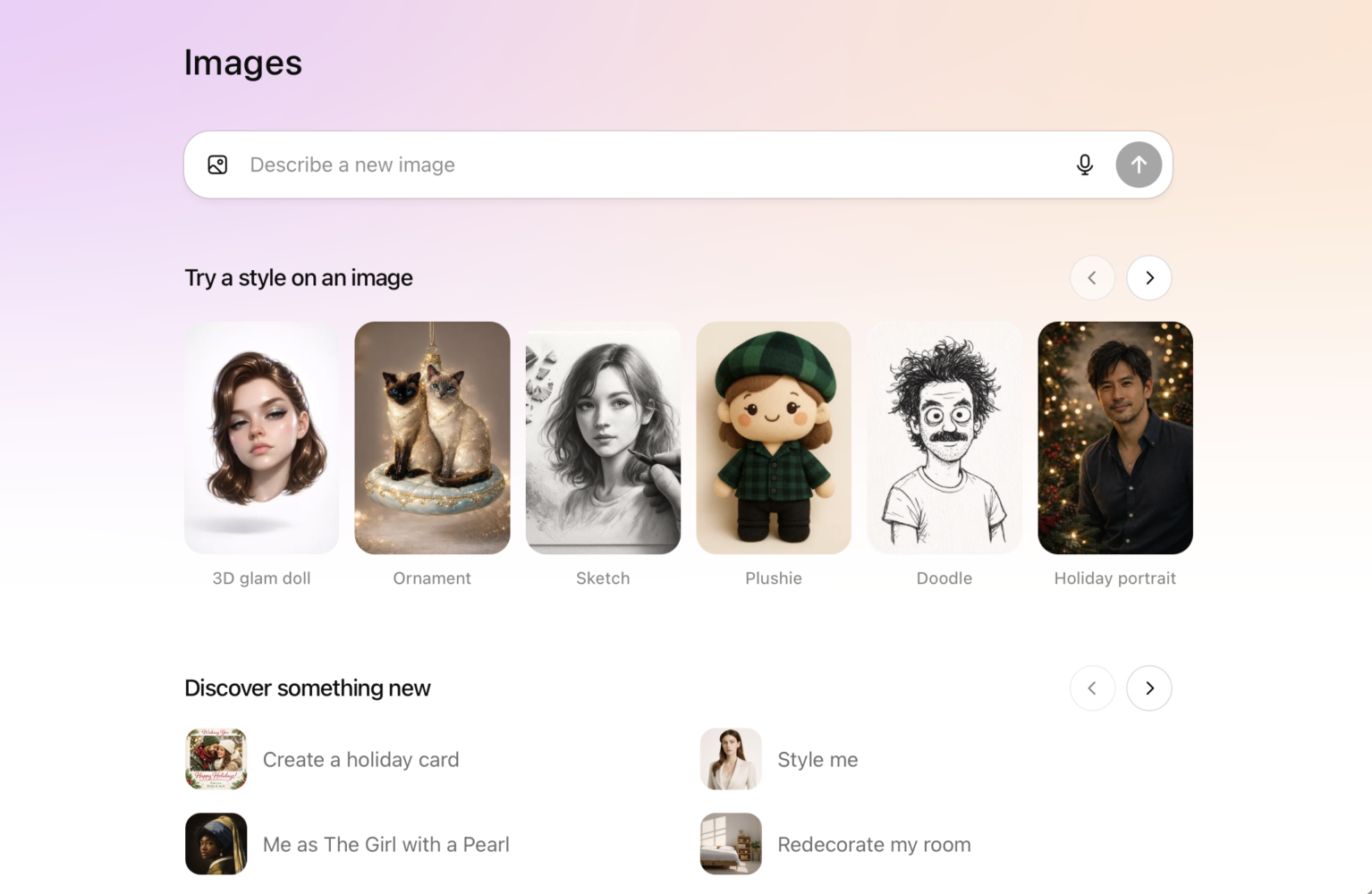
Alongside the model upgrade, OpenAI has redesigned how users access image generation within ChatGPT. Images now have a dedicated entry point in the sidebar, positioned as a workspace rather than a simple prompt-and-output interface. The new layout includes expanded viewing and editing screens, as well as curated prompts and preset filters meant to support ideation without dictating outcomes.
OpenAI is also signaling a broader shift toward richer visual integration across ChatGPT. The company plans to incorporate more visual elements into search-style queries, with clearly attributed sources, for use cases such as unit conversions or sports information. The intent, according to OpenAI, is to reduce friction between thinking, searching, and creating by placing relevant visual tools directly in context.
Rather than reframing the competitive landscape overnight, GPT-Image-1.5 reflects OpenAI’s effort to close specific gaps in speed, control, and usability. As generative image systems mature, these incremental improvements may prove more meaningful than headline-grabbing feature lists.