

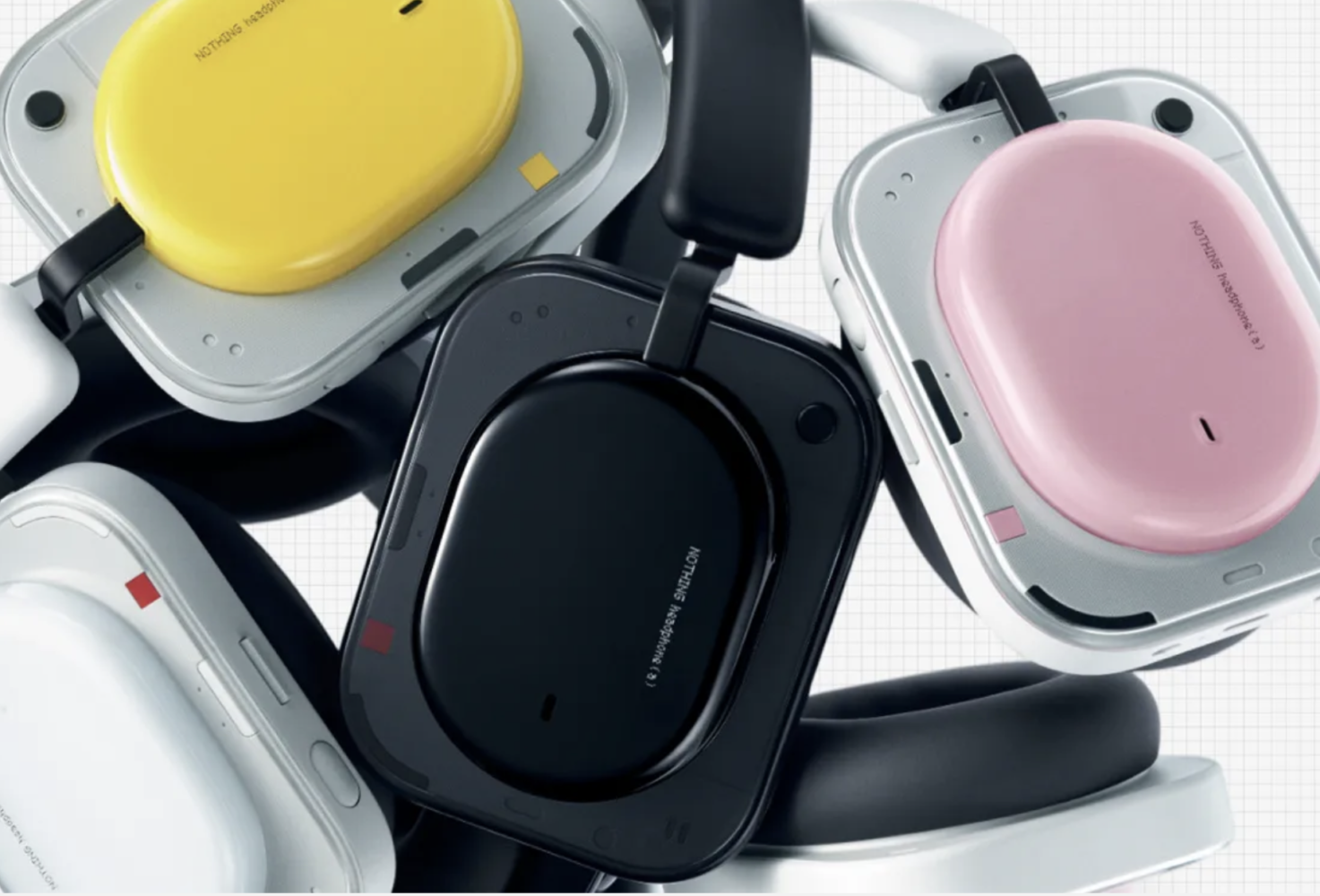
Nothing has introduced a new pair of wireless headphones called the Nothing Headphone (a), a lower-priced model that arrives less than a year after the company entered the over-ear headphone category with the Nothing Headphone (1). While the earlier model launched at £300, the new Nothing Headphone (a) is positioned as a more accessible option, priced at $199 in the United States.

The release reflects a familiar strategy in consumer electronics: offer a reduced-cost version of a flagship product while retaining the features most likely to influence everyday use. In the case of the Nothing Headphone (a), the company has kept several core audio components from the original model, including the same 40mm drivers and active noise cancelling system. In theory, this should allow the new headphones to deliver a similar sound profile to the higher-priced version, though the overall experience may still differ due to changes in build materials and design.
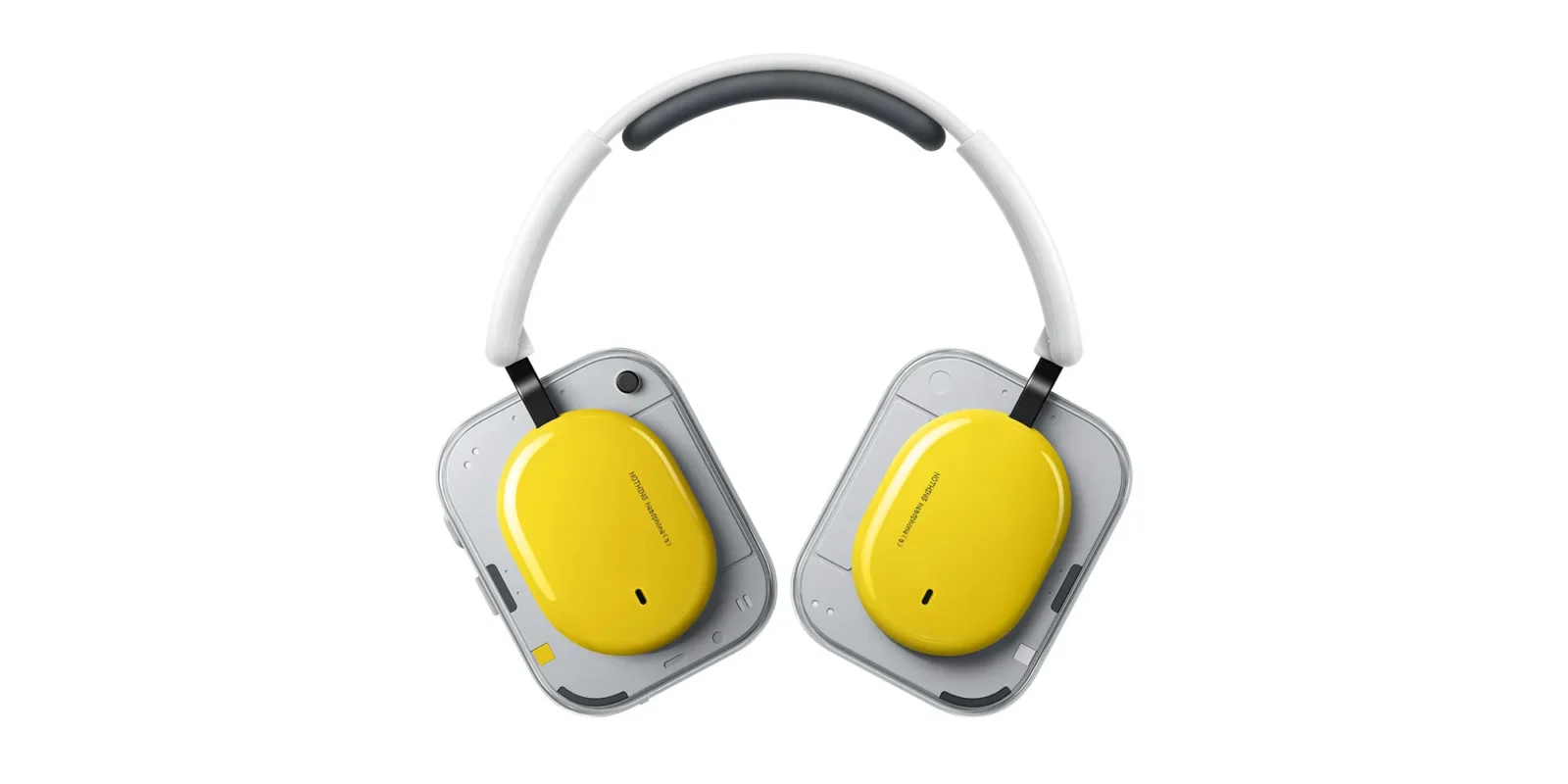
To reach the lower price point, Nothing has made several visible adjustments. The Nothing Headphone (a) uses more plastic in its construction, making the headset lighter than the first model but also less premium in terms of materials. The company has also removed certain accessories, most notably the carrying case included with the original headphones. These changes reflect typical cost-cutting decisions in the headphone market, where manufacturers often prioritize audio hardware while simplifying packaging and materials.
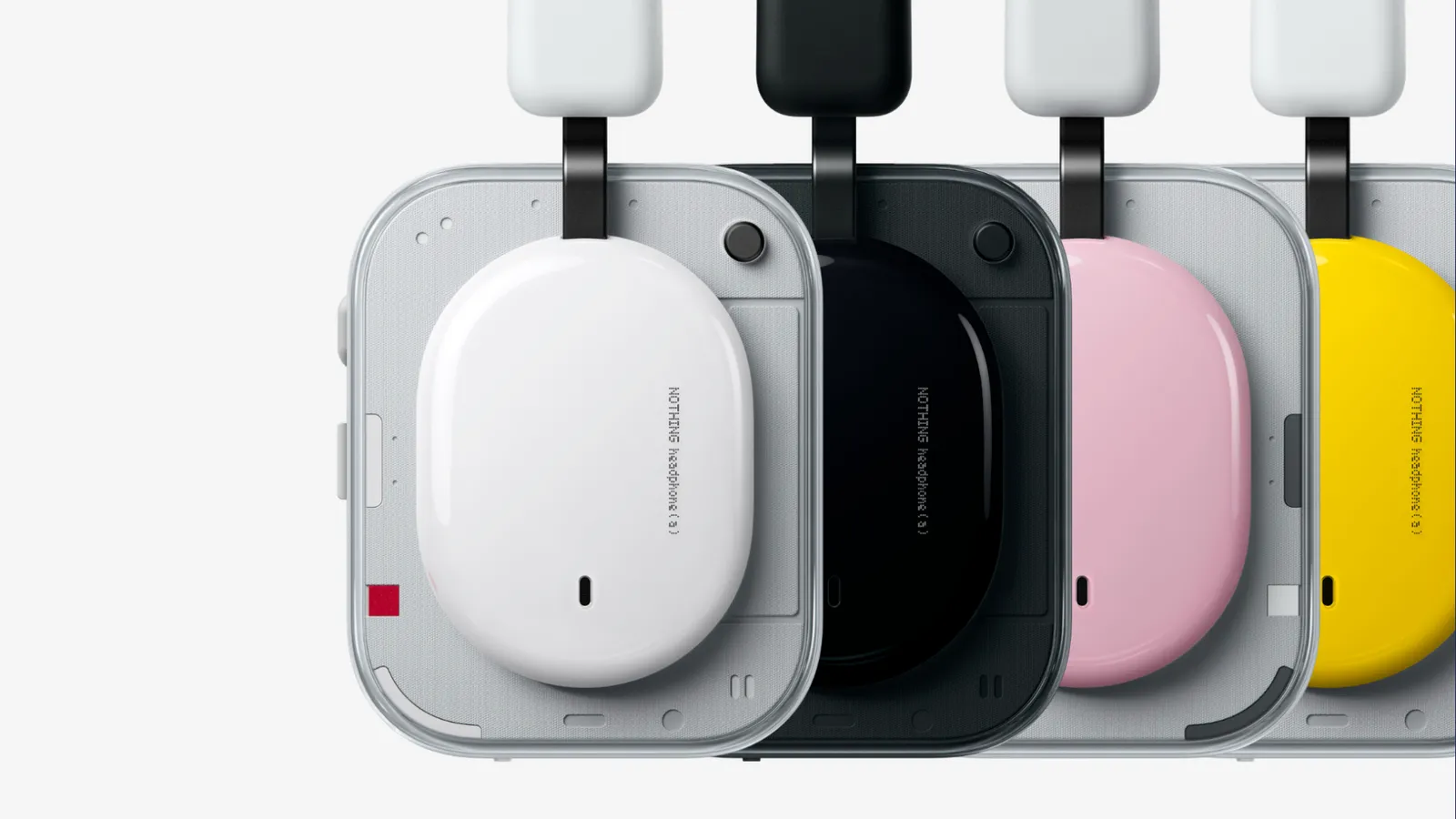
Visually, the Nothing Headphone (a) keeps the recognizable square-shaped earcup design introduced with the Nothing Headphone (1), although the earcups themselves appear simpler. Some users may find the cleaner aesthetic preferable, particularly if they found the original design somewhat busy. The headphones will be available in several colors, including black, white, pink, and a limited yellow variant.
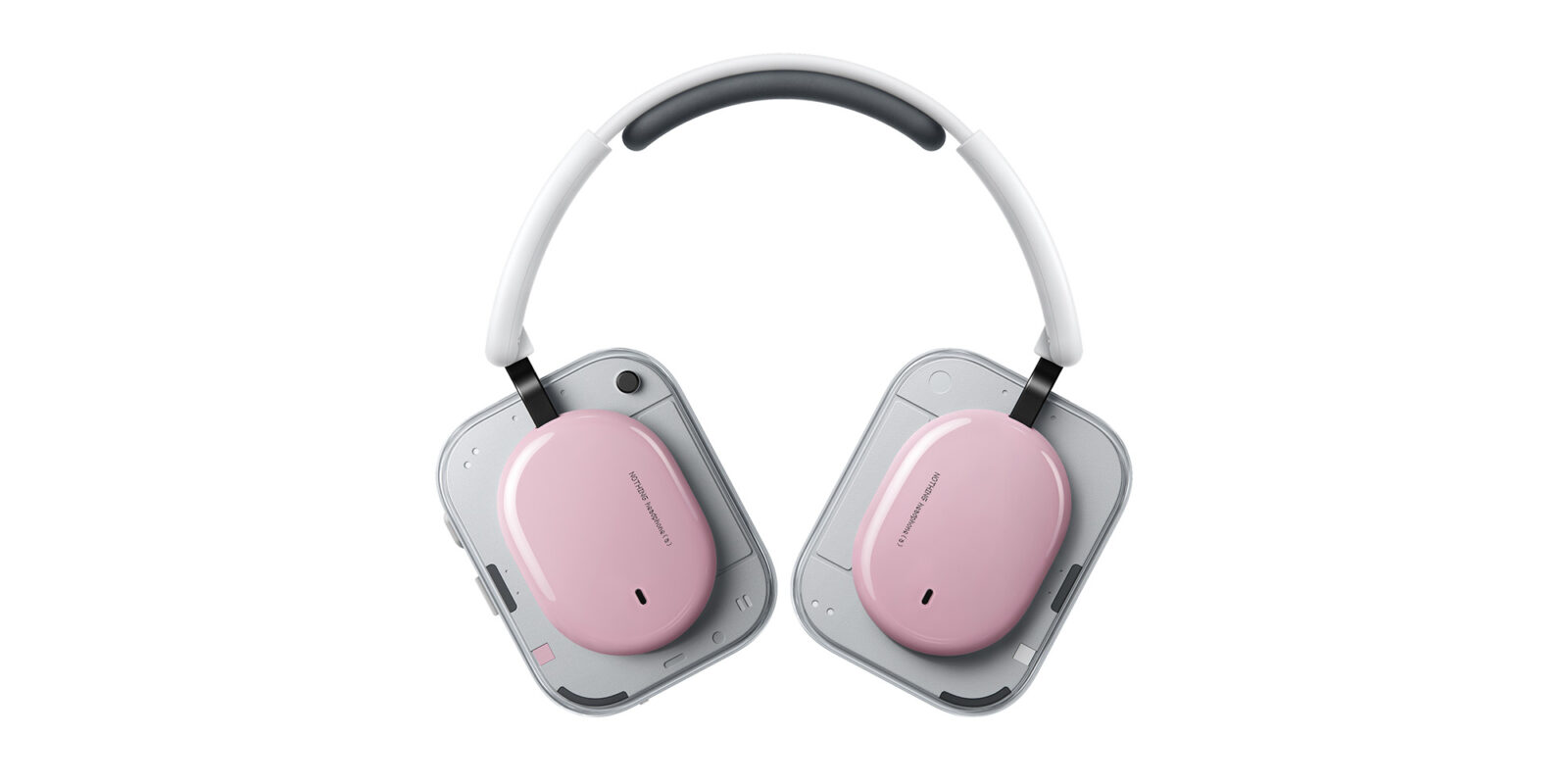
One area that remains largely unchanged is the physical control system. The Nothing Headphone (a) continues to rely on tactile controls rather than touch panels, which some listeners still prefer for reliability and ease of use. One earcup houses a Bluetooth pairing button along the inner edge, along with a physical power switch, a USB-C charging port, and a 3.5mm headphone jack for wired listening.
That same earcup also includes a roller for volume adjustment that doubles as a play/pause control when pressed, as well as a rocker switch for skipping tracks. On the outer surface sits a customizable shortcut button that can be assigned to launch apps or activate voice assistants. The opposite earcup contains no controls.
Comfort may be one of the areas where the lighter construction offers a practical advantage. The ear cushions appear broadly similar to those used on the original model, but the reduced weight could make the headphones easier to wear for extended periods. At the same time, the lighter build may slightly reduce passive noise isolation compared with the more solid construction of the higher-end version.
Pricing, however, may ultimately determine how the Nothing Headphone (a) is received. Although the new model launches at roughly half the original price of the Nothing Headphone (1), discounts have already pushed the older model closer to £199 in some markets. That narrows the real-world price gap, potentially complicating the value comparison between the two models.
The success of the Nothing Headphone (a) will likely depend on whether consumers prioritize the lower price and lighter design over the materials and accessories offered by the original version. As with many new headphone releases, the market response may become clearer after the initial launch period and once retail discounts settle.