

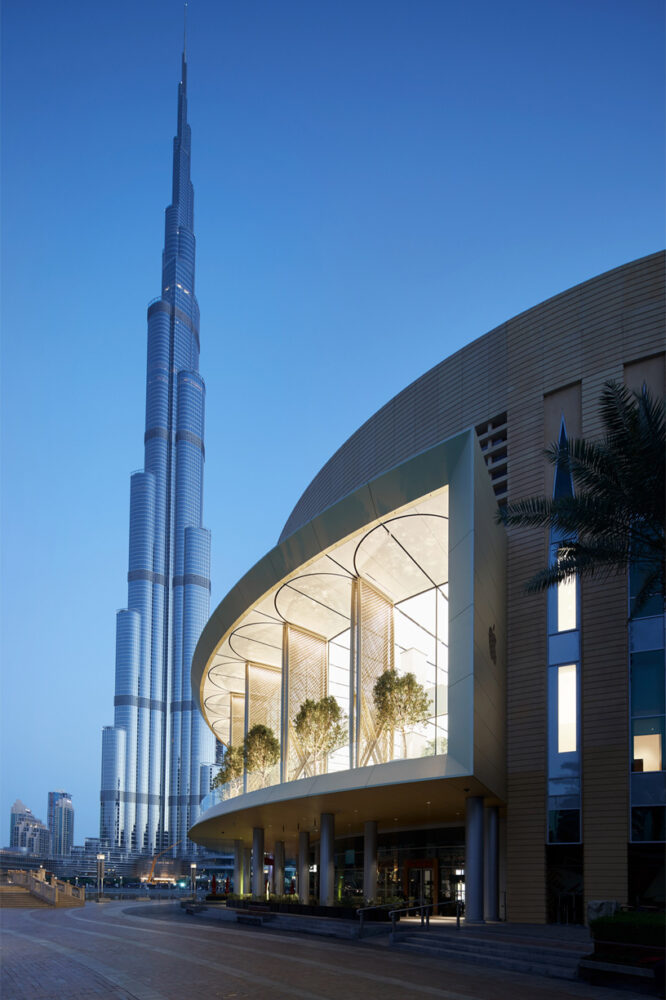
If you’ve been scrolling through social media lately, you might have come across alarming claims suggesting that Apple has shut down its stores in Dubai, and across the UAE with some posts specifically pointing to the iconic Dubai Mall location as being permanently closed. The tone of these claims has ranged from concerned speculation to outright certainty, creating confusion among residents and visitors alike. In reality, however, these claims don’t reflect what’s actually happening on the ground in one of the world’s most resilient cities and fast-moving retail environments.
The claim that Apple has permanently shut down its stores in Dubai is simply not true. There has been no official announcement, and simply no evidence to support this. In fact, the UAE continues to be one of Apple’s most important and dynamic markets in the region, supported by world-class infrastructure, strong consumer demand, and a retail landscape that consistently attracts global brands.
In early March 2026, Apple temporarily closed its five UAE stores—Dubai Mall, Mall of the Emirates, Yas Mall, Al Maryah Island, and Al Jimi Mall—as a safety precaution amid regional tensions and in line with government guidance. This reflects the UAE’s proactive and precaution-first approach, where safety and well-being are always prioritized. These closures were not unique to Apple but were part of a broader, coordinated environment where precautionary measures were being taken across various sectors. Importantly, these closures were short-lived, with all locations reopening just a few days later, reinforcing how quickly normal operations resume in the UAE’s highly efficient ecosystem.
This entire situation ultimately highlights not just the importance of verifying information, but also the strength and stability of the UAE itself. Temporary measures are handled swiftly, transparently, and with minimal disruption, allowing businesses and daily life to return to normal almost immediately. It’s a reminder that in a country known for its resilience, innovation, and global connectivity, short-term precautions should never be mistaken for long-term change.