
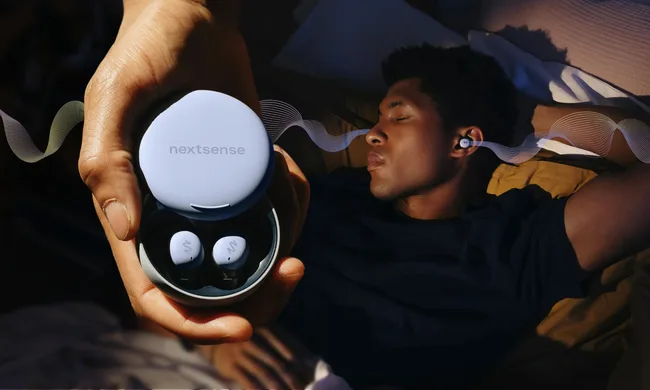
NextSense is entering the sleep technology market with a different angle: instead of analyzing your night after it’s over, it says its new EEG sleep earbuds can respond to your brain in real time. The product, called Smartbuds, is designed to measure brain activity during sleep and deliver audio stimulation at specific moments, with the stated goal of supporting deeper rest.
Unlike most consumer sleep trackers, which rely on motion sensors or heart rate variability to estimate sleep stages, Smartbuds use six built-in EEG sensors to monitor electrical brain activity directly. According to the company, the system detects sleep stages and transitions within milliseconds. When certain patterns—particularly those associated with slow-wave sleep—are identified, the earbuds trigger targeted sound stimulation intended to reinforce that stage.
This “closed-loop” approach is central to the pitch. Instead of delivering a sleep score the next morning, the device continuously monitors EEG signals and adjusts audio feedback throughout the night. In theory, that allows the system to influence sleep while it is happening rather than simply reporting on it afterward. The company also says the system adapts over time, learning individual sleep patterns and refining stimulation timing across multiple nights.
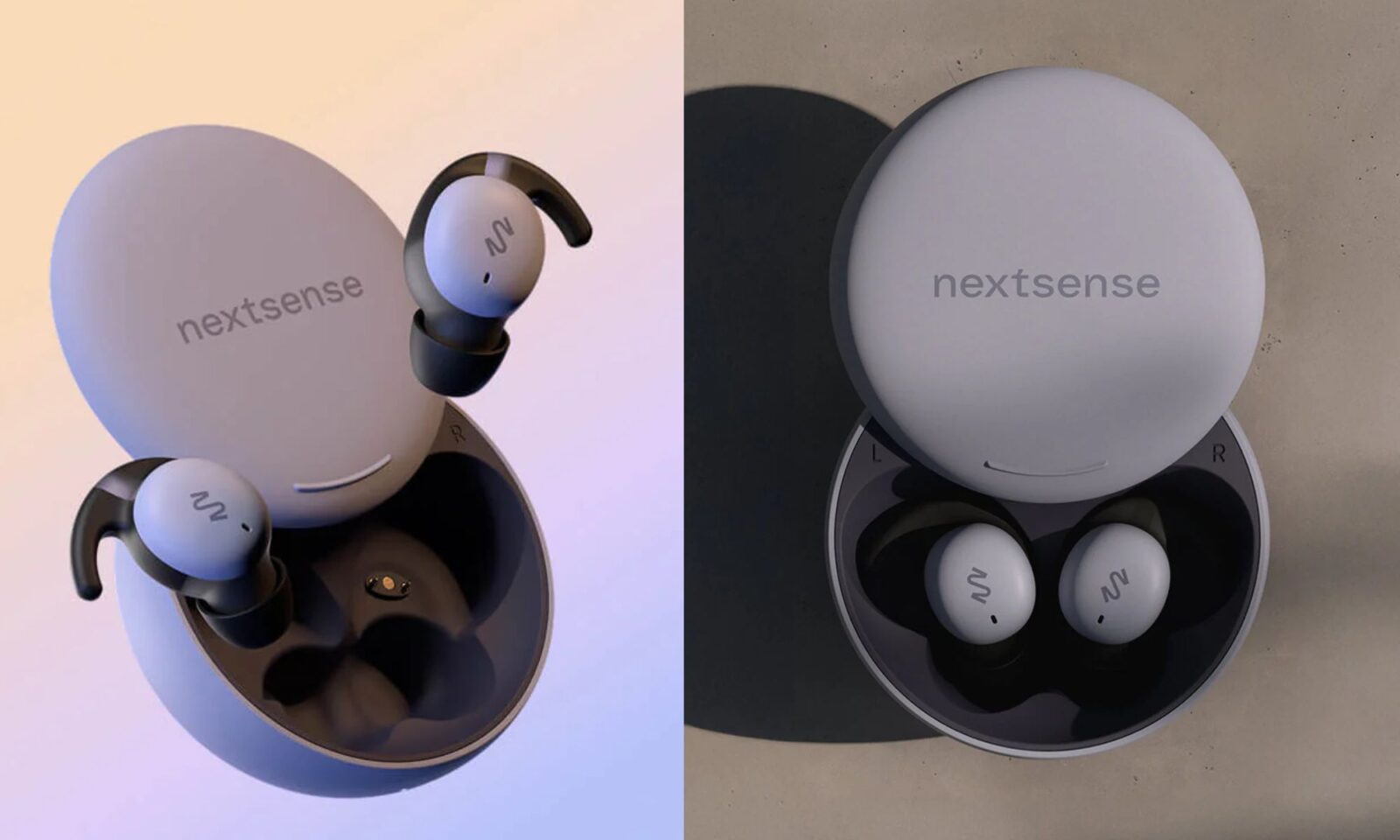
From a design standpoint, NextSense is positioning Smartbuds as true wireless earbuds rather than a headband or wired EEG device. Comfort and wearability are key factors in sleep tech adoption, and the company appears to be betting that users are more likely to wear familiar earbud-style hardware than medical-looking equipment.
Pricing reflects both hardware and service components. Retail cost is listed at $399.99, with an early bird price of $249. After the first three months, continued use requires a Fit Kit subscription starting at $14.99 per month. That shifts Smartbuds from a one-time purchase to an ongoing service model, adding to long-term ownership costs.
Device compatibility is currently limited. Smartbuds require an iPhone 12 or newer running iOS 17 or later. Android devices and older iPhones are not supported at launch, which narrows the potential user base and effectively ties the product to Apple’s ecosystem.
To support its claims, NextSense cites a controlled beta covering 106 nights, reporting an average increase in slow-wave activity when Smartbuds were used. The company also references more than 1,400 nights of real-world data and user-reported improvements in sleep quality, mood, energy, and focus. However, independent validation and peer-reviewed research will likely be important factors for consumers evaluating whether EEG-based stimulation meaningfully improves sleep outcomes.
As interest in brain-based wellness devices grows, Smartbuds represent an attempt to move beyond passive tracking. Whether EEG sleep earbuds become a mainstream sleep solution will depend on comfort, long-term effectiveness, subscription tolerance, and third-party verification. For now, NextSense is offering an early entry into a category that blends consumer audio hardware with elements of neurotechnology.