
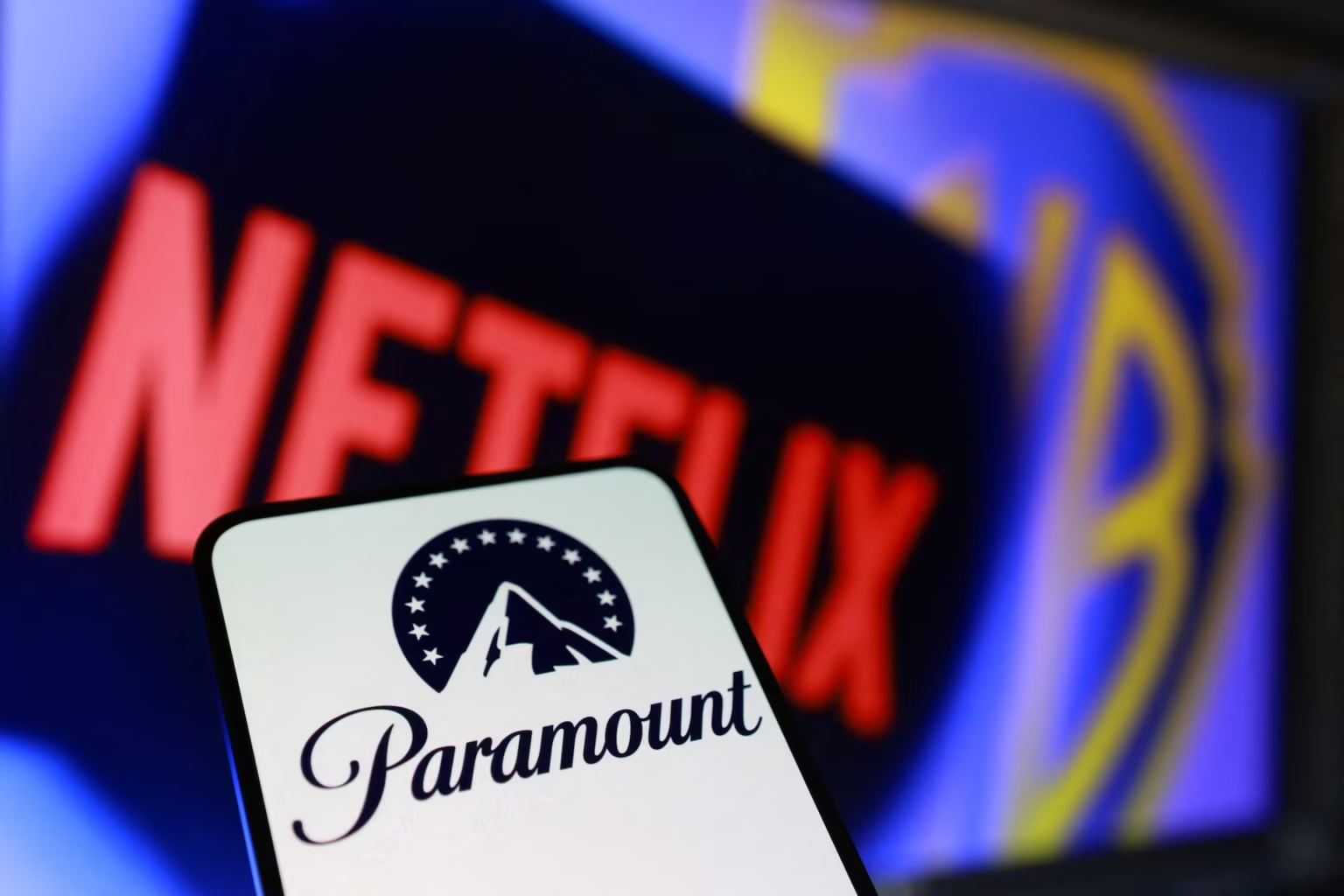
Netflix has formally stepped away from its proposed $82 billion acquisition of Warner Bros. Discovery, clearing a path for Paramount to pursue its own takeover bid. The Netflix Warner Bros. deal, announced late last year, had positioned the streaming company to acquire most of the studio’s assets. However, after Paramount submitted a higher offer, Netflix opted not to continue bidding. The focus now shifts to shareholder approval and regulatory review, which will determine whether the Paramount Warner Bros. takeover proceeds.
For several weeks, Warner Bros. declined to engage directly with Paramount, a standoff that briefly escalated into legal action. Earlier this month, Netflix allowed Warner Bros. a one-week window to reopen discussions with its rival bidder. After evaluating the competing proposals, Warner Bros.’ board concluded that Paramount’s offer provided greater value. Netflix chose not to revise its bid, signaling that the acquisition was not central to its long-term strategy.
In a public statement, Netflix co-CEOs Ted Sarandos and Greg Peters said they believed their company would have been capable custodians of Warner Bros.’ brands, but emphasized that the transaction was contingent on financial discipline. That framing suggests Netflix viewed the Warner Bros. acquisition as opportunistic rather than essential, particularly at a higher price point. With the streaming market stabilizing after several years of aggressive expansion, large-scale consolidation now faces greater scrutiny from both investors and regulators.
Under the revised terms, Paramount will pay Netflix a $2.8 billion breakup fee originally owed by Warner Bros. Additionally, Paramount has agreed to a $7 billion reverse breakup fee if regulators block the deal. These financial safeguards reflect the uncertainty surrounding major media mergers in 2026, particularly as governments continue to assess competition concerns in streaming, film production, and broadcast distribution.
Regulatory review in the United States and abroad will likely examine how a combined Paramount and Warner Bros. Discovery would affect theatrical distribution, premium cable networks, streaming services, and gaming. The deal would unite two legacy studios with extensive film libraries, television production arms, and global distribution pipelines. Authorities may require divestitures or other concessions before granting approval.
If completed, the Paramount acquisition would include Warner Bros.’ gaming division, a portfolio that has gained renewed attention amid steady performance from franchise-driven titles. Company executives have already highlighted a slate of 2027 releases, including the possibility of a sequel to Hogwarts Legacy. Integrating gaming operations into a larger media conglomerate could provide cross-platform synergies, though execution remains critical in an increasingly competitive market.
For now, the Netflix Warner Bros. acquisition is off the table, and Paramount’s takeover bid moves to its most consequential stage. Shareholder votes and regulatory rulings will determine whether one of the largest media consolidation efforts of the decade reshapes the entertainment landscape. The outcome could influence future merger activity across streaming, film, television, and interactive entertainment.