
Microsoft is reshaping its gaming leadership at a moment when artificial intelligence is increasingly central to its broader strategy. The company confirmed that long-time Microsoft Gaming CEO Phil Spencer is departing, along with Xbox President Sarah Bond. Their exits mark one of the most significant transitions for Xbox in more than a decade.
Spencer will be succeeded by Asha Sharma, a former executive at Instacart and Meta who most recently served as president of Microsoft’s CoreAI product division. Her appointment signals a closer alignment between Xbox and Microsoft’s artificial intelligence initiatives. While AI has been a growing focus across Microsoft’s product ecosystem, its integration into gaming has been gradual and, at times, experimental.
In recent years, Microsoft has tested AI-driven concepts such as an in-game companion tool and even released an AI-generated level for the classic shooter Quake II. That demo drew attention for technical ambition but also criticism for instability and uneven design. The mixed reception reflects a broader industry tension: AI can streamline development and introduce new mechanics, but it also risks undermining the handcrafted qualities that define successful games.
In an internal memo, Sharma outlined her vision for Xbox’s next phase. She indicated that “monetization and AI” will continue to evolve and influence Microsoft’s gaming business models, but she also emphasized that the company does not intend to rely on what she described as “soulless AI slop.” According to Sharma, games will remain artistic works created by human developers, supported—not replaced—by technology.
That framing suggests Microsoft is attempting to balance efficiency with creative credibility. As development budgets increase and production timelines stretch, AI tools are often positioned as a way to reduce costs or automate repetitive tasks. However, the gaming community has shown skepticism toward generative AI content, particularly when it appears to substitute original design rather than enhance it.
Sharma outlined three commitments in her memo: building games that resonate with players, prioritizing the Xbox platform, and exploring new business models shaped by AI and monetization trends. The reference to “new ways to play” indicates that Microsoft may view AI not only as a backend tool but also as a potential gameplay layer—perhaps in procedural storytelling, adaptive difficulty, or personalized player experiences.
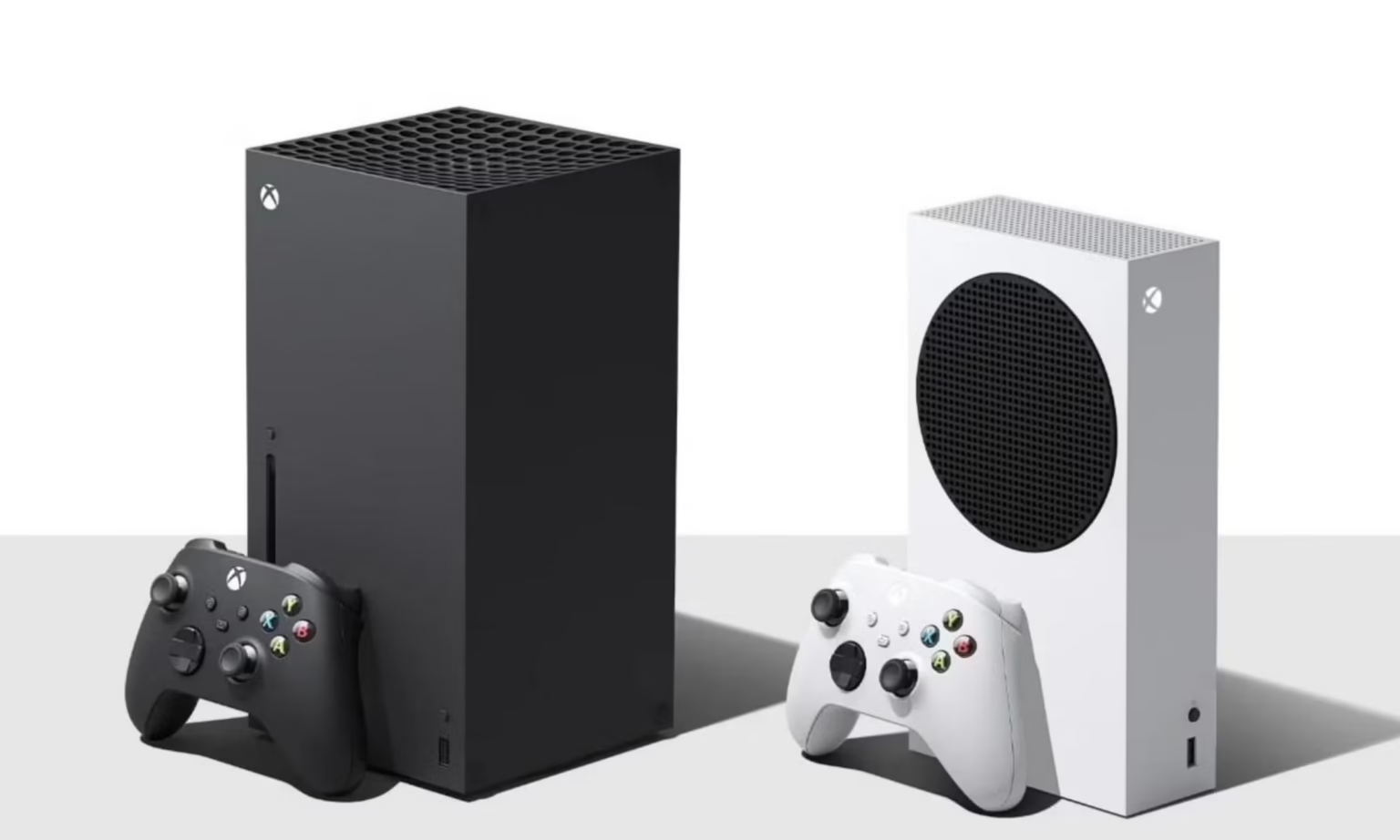
The leadership change comes at a time when Xbox faces competitive pressure from both hardware and software ecosystems. Microsoft has expanded its cross-platform strategy in recent years, bringing more titles to PC and cloud platforms while maintaining console development. The integration of AI could further blur those lines, particularly if cloud-based processing becomes central to advanced in-game systems.
At the same time, Sharma’s public stance against flooding the ecosystem with low-quality AI output suggests an awareness of player concerns. Gaming audiences have become increasingly vocal about monetization practices, live-service fatigue, and automation in creative industries. Microsoft’s challenge will be to demonstrate that AI enhances player experiences without diminishing the craftsmanship associated with major releases.
As Xbox enters this next phase under new leadership, the company’s approach to artificial intelligence may define not only its internal development practices but also how it positions itself within a rapidly shifting gaming landscape. Whether AI becomes a quiet infrastructure layer or a visible feature in future titles will likely shape the perception of Xbox for years to come.