

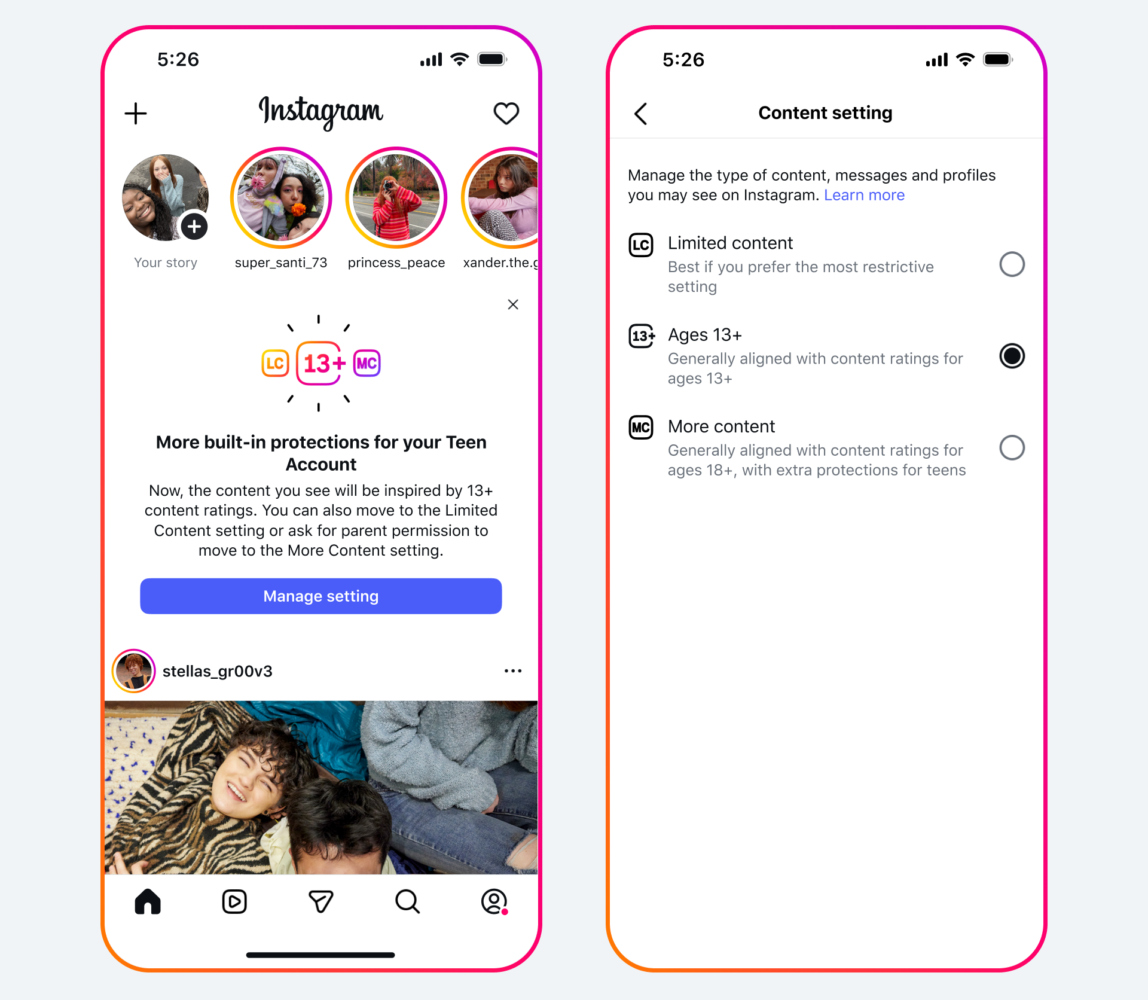
Meta has rolled out an update to its Instagram Teen Accounts in the UAE and Saudi Arabia, introducing stronger default safeguards for users aged 13 to 18 and giving parents additional oversight of their children’s online activity.
The changes adjust the default experience so that teen accounts now align more closely with what many parents consider suitable for this age group. New Teen Accounts in the region will automatically show what the company calls “age-appropriate” or “less sensitive” content. For existing accounts, the setting may currently appear as “less sensitive content” or “standard,” with a gradual rollout expected to reach all users across the MENA region within the next 8 to 12 weeks.
Families seeking tighter restrictions have the option to select a stricter mode. This further limits visible content, blocks additional search terms, and prevents teens from seeing, leaving, or receiving comments on posts. The aim is to reduce exposure to material that could be considered unsuitable.
The update also expands existing protections. Teen accounts are now restricted from following or interacting with profiles that share inappropriate content. Age-inappropriate material is filtered out from Explore, Feed, Stories, comments, and direct messages. Meta has broadened its list of blocked search topics to cover areas such as alcohol and gore, and parents will receive more visibility into the kinds of topics their teen engages with.
These measures build on similar stricter defaults introduced by the company in the UK, US, Australia, and Canada in October 2025. The company frames the changes as a response to ongoing concerns about teen safety on social platforms, where issues like exposure to harmful content, unwanted interactions, and mental health impacts have drawn scrutiny from regulators and families worldwide.
While the enhancements offer parents more tools, questions remain about how effectively automated filters can adapt to evolving trends and cultural nuances across different markets. Enforcement will likely depend on consistent moderation, clear definitions of “inappropriate” content, and how quickly the company responds to feedback from users and guardians in the Gulf region.
The rollout reflects a broader industry trend toward age-specific experiences on social media, as platforms face increasing pressure to demonstrate responsibility amid growing public and governmental expectations.