
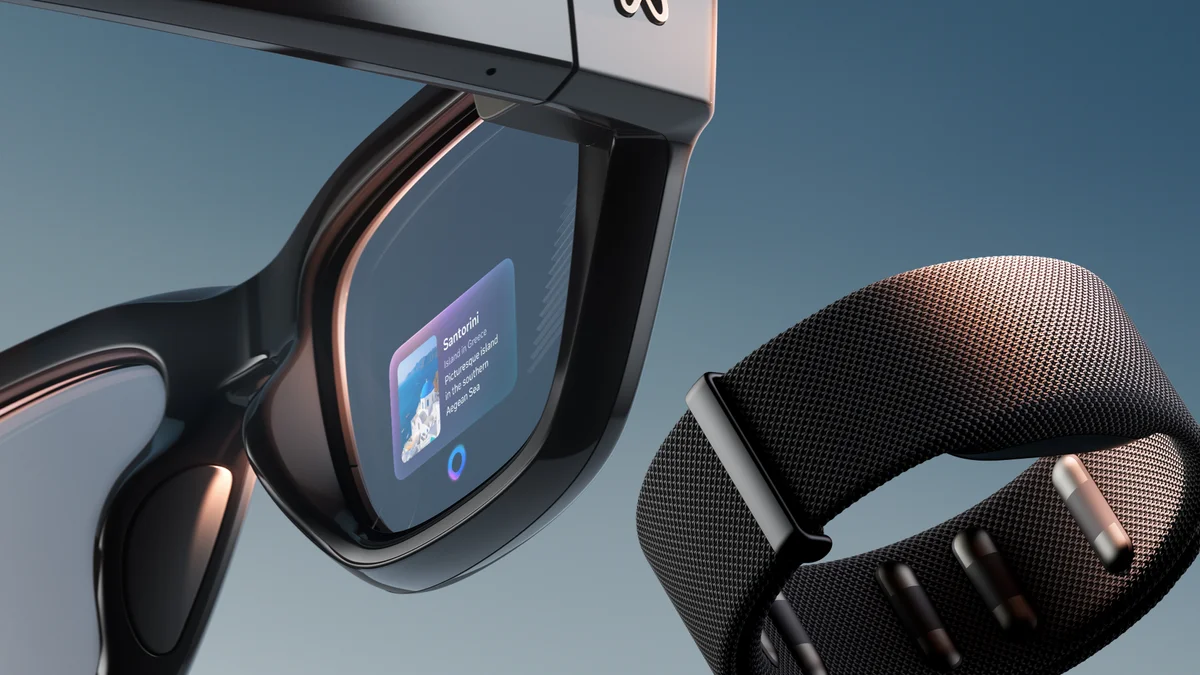
Meta is preparing to release two additional versions of its Ray-Ban smart glasses, with a focus that appears more practical than experimental. The upcoming models, reportedly codenamed Scriber and Blazer, are expected to launch soon and are designed primarily to better accommodate users who require prescription lenses .
Rather than introducing new hardware capabilities or a redesigned experience, these versions seem to refine how the product is distributed and customized. Previous iterations of the Ray-Ban smart glasses already allowed for prescription lenses, but the process was less streamlined. The new approach is expected to integrate more directly with standard eyewear providers, making it easier for users to order a complete pair tailored to their vision needs without relying on third-party adjustments.
In practical terms, this signals a shift toward accessibility rather than innovation. By simplifying the purchasing process for prescription users, Meta is targeting a broader segment of the market — one that may have been interested in smart glasses but deterred by the inconvenience of customization. Frame options are expected to include both rectangular and rounded designs, suggesting incremental variety rather than a major design overhaul.

Details about the underlying technology remain limited. It is still unclear whether these models will align with earlier versions of the Ray-Ban smart glasses, which focus on audio, camera input, and voice interaction, or if they will incorporate elements from more recent prototypes that experiment with display features. Based on available information, the safer assumption is that these will resemble existing models, offering built-in cameras, microphones, and speakers, with AI-driven features layered on top.
This release also fits into a broader strategy to normalize wearable technology, particularly in the extended reality (XR) space. Smart glasses have long been positioned as a potential successor or complement to smartphones, but adoption has been uneven. Devices that attempt to introduce entirely new interfaces often struggle with usability, privacy concerns, or limited real-world applications. Incremental updates like these suggest a more measured approach — refining form factors and distribution before pushing more advanced capabilities.
However, ongoing concerns around privacy and data handling remain a factor in how these products are perceived. Reports about how captured data may be processed or reviewed have raised questions about trust, especially for devices designed to be worn in everyday social environments. These concerns could influence whether simplifying access to prescription-compatible models is enough to meaningfully expand adoption.
Ultimately, these new Ray-Ban smart glasses do not appear to redefine the category. Instead, they represent a continuation of an existing product line, with adjustments aimed at making the technology easier to adopt for a wider audience. Whether that is enough to drive sustained growth will depend less on availability and more on how users weigh convenience against unresolved concerns about functionality and privacy.