
A fast-food campaign in Türkiye is drawing attention for addressing a familiar inconvenience in gaming: stepping away mid-session often leads to penalties, lost progress, or disrupted matches. This time, the idea comes from McDonald’s Türkiye, which has introduced a small physical accessory as part of a promotional bundle tied to its menu.
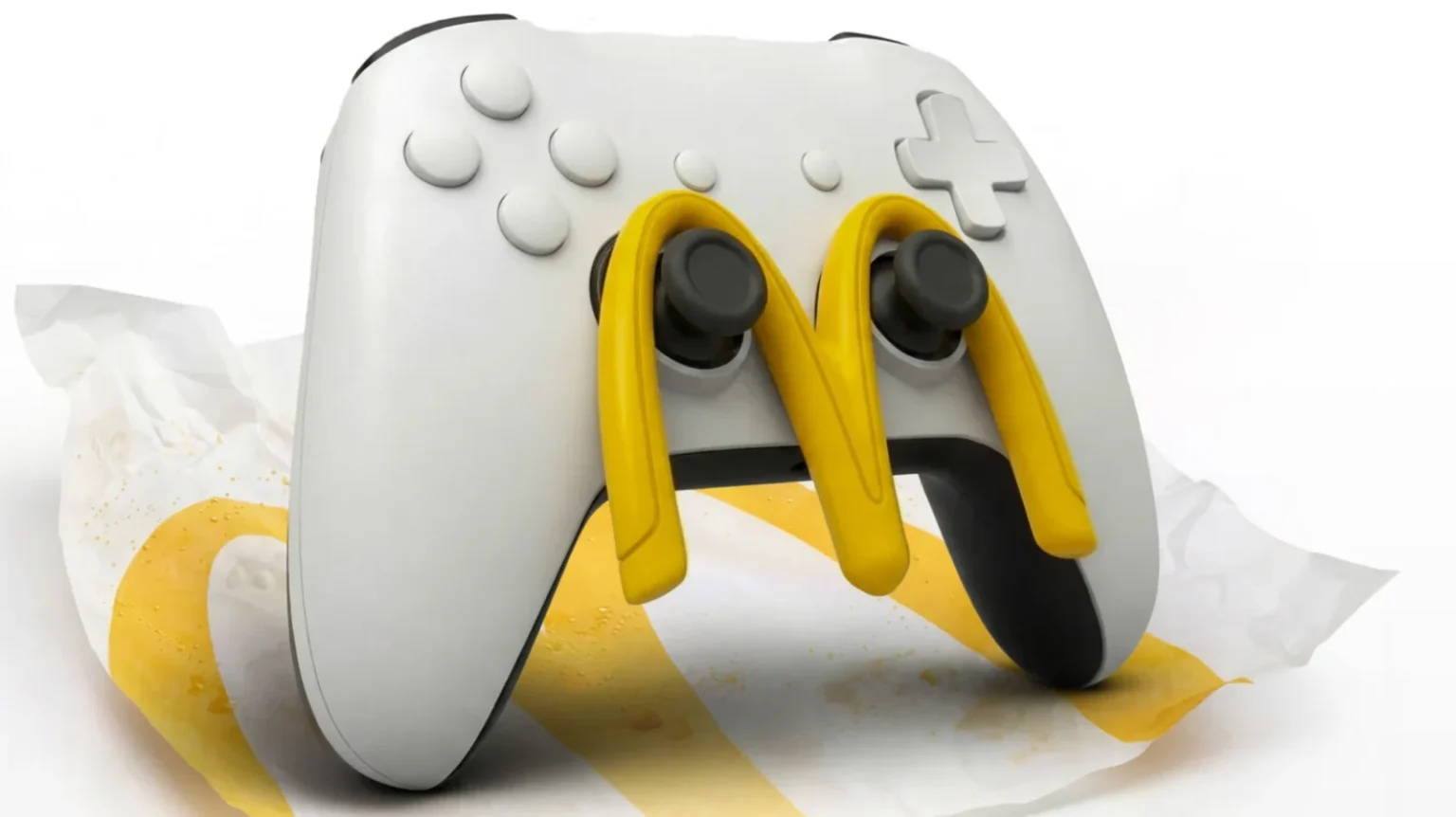
The device, called Archie, is designed to hold a controller’s analog sticks in a fixed position. By keeping the sticks engaged, it ensures that an in-game character continues moving, helping players avoid being flagged as inactive. It’s a simple workaround to a long-standing issue in multiplayer gaming, where inactivity can result in being kicked from matches or penalized by game systems.
Archie is included with what McDonald’s Türkiye is calling a Pro Gamer Menu, which features a standard fast-food combination: a burger, fries, a drink, and onion rings. The bundle positions the accessory as a practical add-on for players who order food during gaming sessions, suggesting that stepping away briefly shouldn’t come at the cost of in-game progress.

The thinking behind the campaign reflects how gaming and food delivery increasingly overlap. Many players avoid leaving their setup during live matches, even for short breaks, because of how quickly situations can escalate in competitive environments. By introducing a low-effort tool that maintains minimal in-game activity, McDonald’s Türkiye is aligning its offering with an existing behavior rather than trying to reshape it.
At the same time, the idea sits in a somewhat ambiguous space. While it solves a real inconvenience, it doesn’t replace actual participation. In team-based games, a continuously moving but inactive player may still affect outcomes. Game developers have typically tried to discourage passive play, so tools like this could be seen as working around intended mechanics rather than improving them.
Even so, the campaign stands out for its restraint. Instead of presenting the product as a technological leap, McDonald’s Türkiye focuses on a narrow, relatable problem and offers a direct fix. It’s a reminder that not all solutions in gaming need to be software-driven. Sometimes, a basic physical intervention can resonate just as effectively, particularly when it reflects everyday habits.