
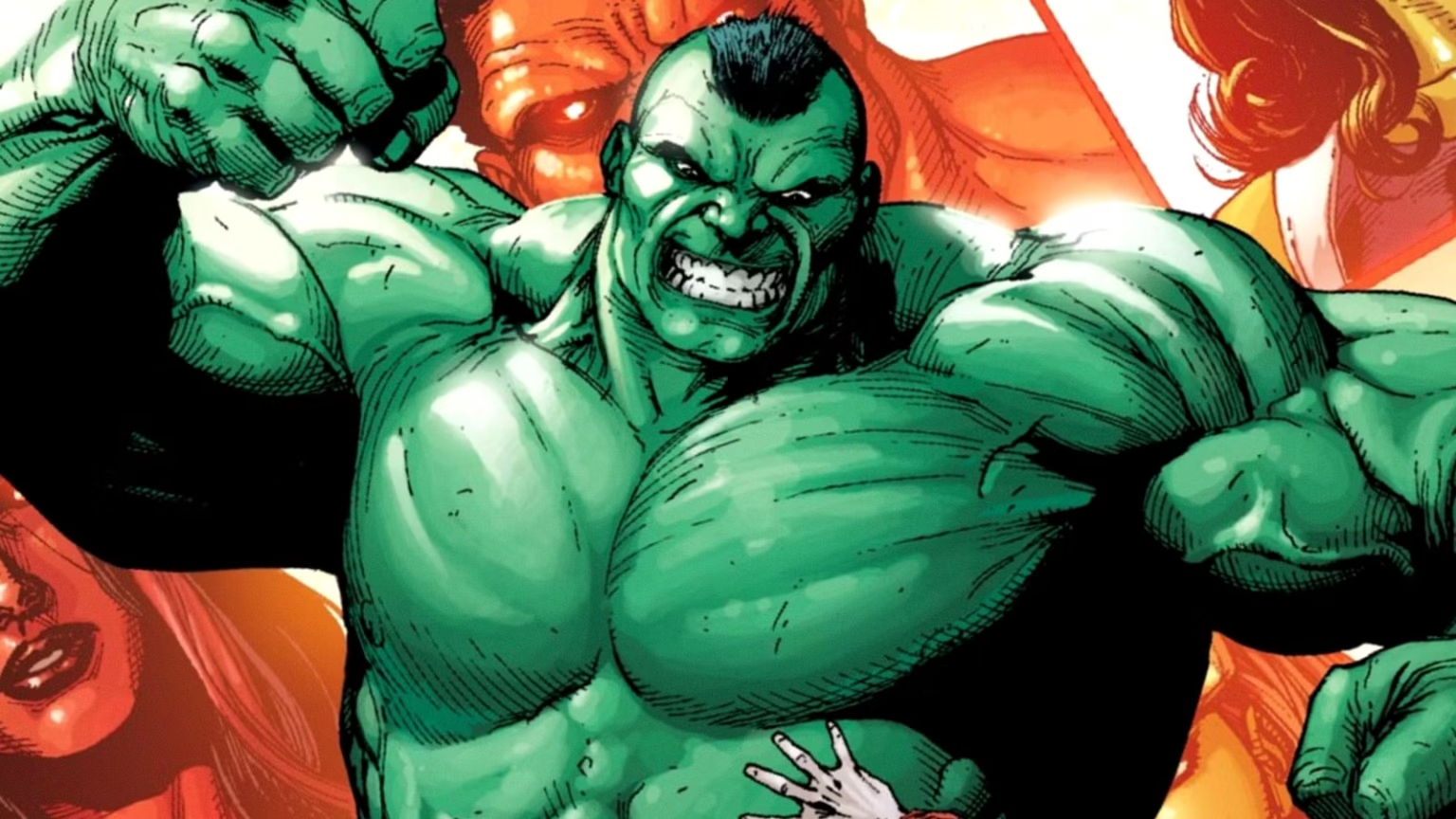
Marvel has introduced another addition to its expanding roster of gamma-powered characters with the Infernal Hulk, a transformed version of one of Bruce Banner’s existing alter egos. In the pages of Avengers: Armageddon #1, the Fractured Son—a relatively recent Hulk persona tied to deeper psychological fractures—falls under the influence of an entity called Eldest, resulting in this more volatile and destructive form. Banner’s history of multiple identities, from the classic Savage Hulk to the calculating Gray Hulk known as Joe Fixit and the analytical Professor Hulk, has long reflected his fractured psyche. This latest shift continues that pattern but escalates the stakes within a broader conflict.
The story centers on Thaddeus Ross, operating as Red Hulk, who initiates a bold power grab by seizing control of Doomstadt and Latveria. He renames these territories Democracy City and New America, respectively, and physically demolishes parts of the former using his enhanced strength. Ross assembles a team of high-ranking officials transformed into gamma mutates, each displaying distinct colors and abilities. Among them is Captain Ortega, a female Gray Hulk serving as his second-in-command, handling logistics and communications, such as relaying dissatisfaction from the White House over the occupation. Other figures like Captain Doakes demonstrate enough power to challenge Avengers-level threats, suggesting these new Hulks blend raw physical might with disciplined military experience rather than unchecked rage.
This development highlights a recurring theme in Marvel’s gamma narratives: the unpredictable and often devastating consequences of such transformations. While only a handful of individuals survive the physical and mental toll of gamma exposure, those who do can inflict considerable damage. Historically, Hulk stories have explored the duality of power and isolation, with Banner’s monsters oscillating between mindless destruction and moments of strategic intent. Here, Ross’s coordinated strike force of “New American” gamma mutates raises questions about whether these beings represent an evolutionary step or simply a more organized threat to global stability. Unlike traditional rampaging Hulks, these characters retain mental clarity, making them potentially harder to counter through conventional means. Bullets prove ineffective, and the Avengers face an uphill battle against foes who combine superhuman strength with tactical acumen.
The concept echoes earlier explorations in Marvel lore where gamma mutates have threatened to upend society, yet it also invites skepticism. Elevating these characters to near-invincible status can strain narrative tension, as invulnerability risks diminishing the human cost central to Banner’s original tragedy. Still, the setup in Avengers: Armageddon offers room to examine themes of authoritarianism, the allure of unchecked power, and the blurred line between hero and villain in a world where ordinary humans seem increasingly outmatched. It remains to be seen whether this new Infernal Hulk will add meaningful layers to the mythos or simply amplify existing spectacle.
Avengers: Armageddon #1 arrives from Marvel Comics on June 10, 2026, written by Chip Zdarsky with art by Frank Alpizar and Delio Diaz. For longtime readers, it builds on decades of Hulk evolution since Stan Lee and Jack Kirby’s debut in 1962, reminding us that gamma radiation continues to spawn complications as much as solutions in the Marvel Universe.