

At CES 2026, LG is adding a new option to the growing category of televisions designed to blend into living spaces rather than stand out as traditional screens. The company has announced the LG Gallery TV, a model positioned to function both as a conventional television and as a display for artwork and curated visuals when not in active use. The move reflects continued interest in “art TV” designs, a segment that until recently was largely associated with Samsung and its Frame lineup.
LG’s approach centers on its existing Gallery+ service, which the company introduced earlier this year. Gallery+ offers a rotating library of artwork, photography, cinematic imagery, and stylized gaming scenes intended for long-term display. As with similar services in this category, there is a limited free tier, while broader access requires a paid subscription. The model closely mirrors what Samsung has done with its Art Store, reinforcing the idea that software ecosystems are becoming just as important as hardware design in this niche.
Despite the name, the LG Gallery TV is not related to LG’s G Series OLED models, such as the G5, which previously carried “Gallery” branding. This new set uses a mini-LED panel rather than OLED, a practical decision given the intended use. OLED panels, while strong performers for movies and gaming, are not ideal for displaying static images for long periods due to the risk of image retention. Mini-LED avoids that issue while still offering better brightness control than standard LED LCD TVs.
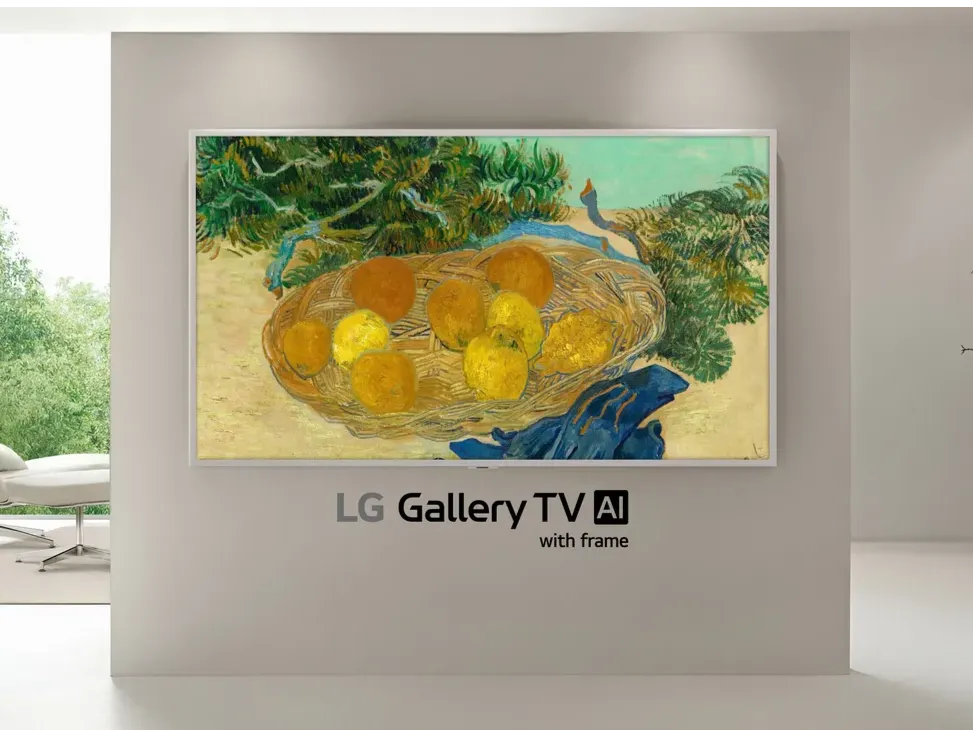
LG says the Gallery TV features a specialized screen designed to reduce glare and reflections, suggesting a matte or low-reflective finish similar to what competing art-focused TVs use. The company has not shared detailed information about the backlight system, but most televisions in this category rely on edge lighting to maintain a slim profile suitable for wall mounting.
Design-wise, LG is clearly targeting aesthetics as much as specifications. The TV ships with a white frame, with an optional wood-toned frame available separately, following a trend already seen from brands like Hisense. Screen sizes at launch will be limited to 55 and 65 inches, which aligns with typical living room installations rather than dedicated home theaters.
Pricing has not yet been announced, and LG has not provided a release window beyond its CES showing. With competition already established from Samsung and newer entries from TCL and Hisense, the success of the LG Gallery TV will likely depend on how it is priced and how compelling users find the Gallery+ content library. As art TVs continue to move from novelty to a defined product category, LG’s entry suggests the segment is becoming a permanent part of the broader TV market rather than a single-brand experiment.