


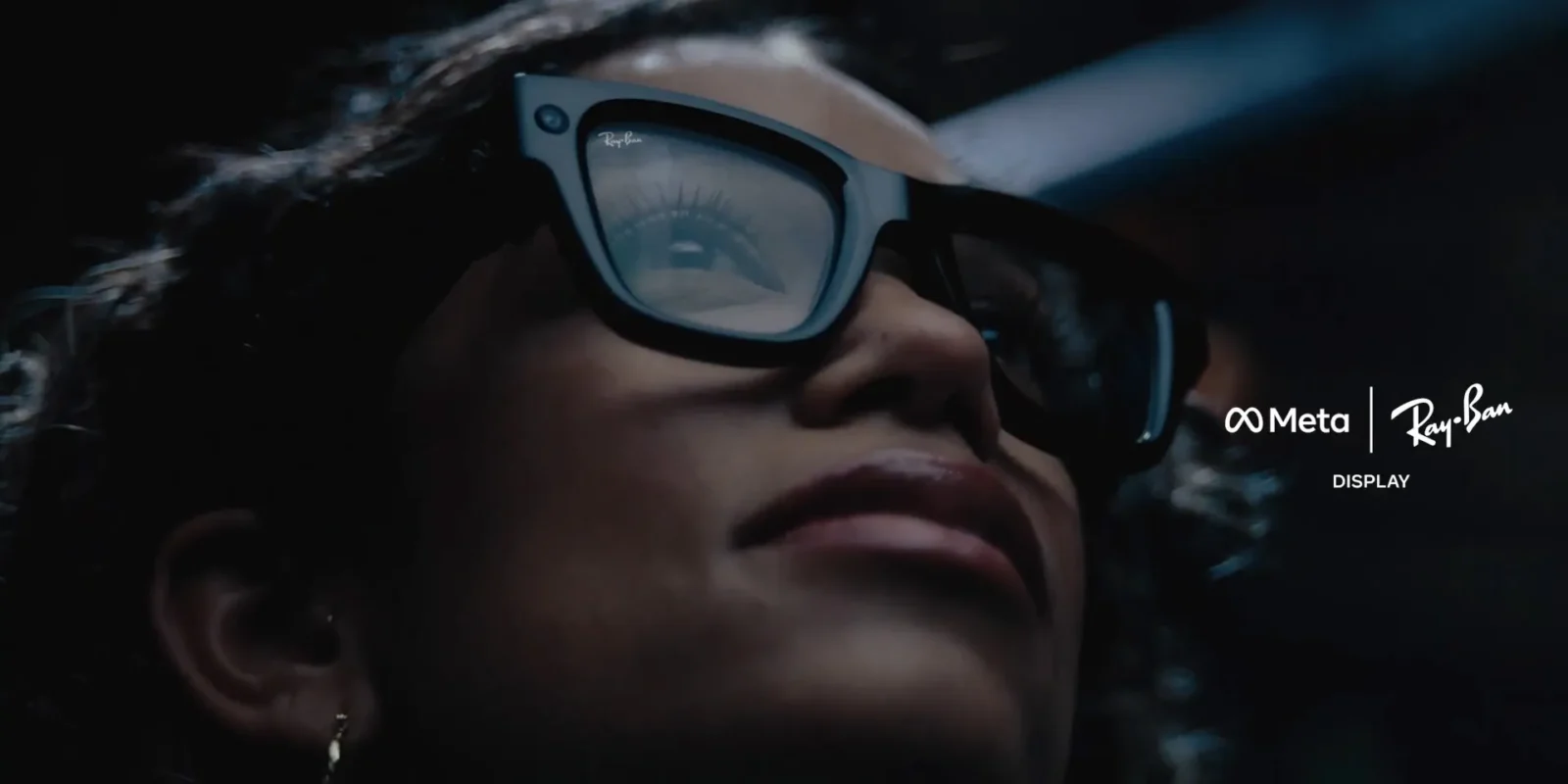
Just days before Meta Connect 2025, a premature video upload has given the world its first look at what appears to be Meta’s most ambitious step yet in smart eyewear: the Meta Ray-Ban Display glasses.
The clip, quickly pulled from YouTube but mirrored on social media, shows a familiar Ray-Ban aesthetic now paired with something far more futuristic: a monocular heads-up display hovering over the right lens. Unlike earlier iterations of Meta’s glasses, which leaned heavily on audio and camera features, this model clearly aims to blur the line between smart glasses and lightweight AR.
In the video, the display is shown handling turn-by-turn navigation, live translation of text in the real world, message notifications, and voice-command responses from Meta AI. Interestingly, the demo also includes interaction with Meta’s experimental sEMG wristband, a neural interface the company has been developing to translate subtle wrist movements into digital commands. This pairing suggests Meta is thinking beyond voice control and touchpads, aiming for more seamless, gesture-based input.
The hardware itself looks more substantial than previous models. The temples, in particular, appear thicker—an expected compromise to house the display tech and additional components. Reports earlier this year hinted at some tension with EssilorLuxottica, Ray-Ban’s parent company, over the need for bulkier frames. The end result keeps the Ray-Ban silhouette intact, but these aren’t as subtle as the camera-only versions Meta released in 2021 and 2023.
Pricing has been rumored at around $800, placing the glasses firmly in premium gadget territory rather than mainstream fashion accessory. Originally, industry watchers expected Meta’s display-equipped Ray-Bans to arrive no sooner than 2026. The sudden appearance of this video suggests the company is ahead of schedule and may officially unveil the device during Meta Connect on September 17.
The leak comes as competition heats up in the wearable AR and XR space. Samsung’s “Project Moohan” headset is expected later this year, with Android XR smart glasses rumored for 2026. Apple, meanwhile, continues to refine its Vision Pro platform, though its headset remains a far bulkier, high-end option.
For Meta, these Ray-Ban Display glasses represent a critical middle ground: something lighter and more socially acceptable than a headset, but with enough visual functionality to edge closer to true AR. Whether consumers are ready to spend $800 on glasses that sit between fashion and futuristic utility is the big question the company may try to answer this week.