
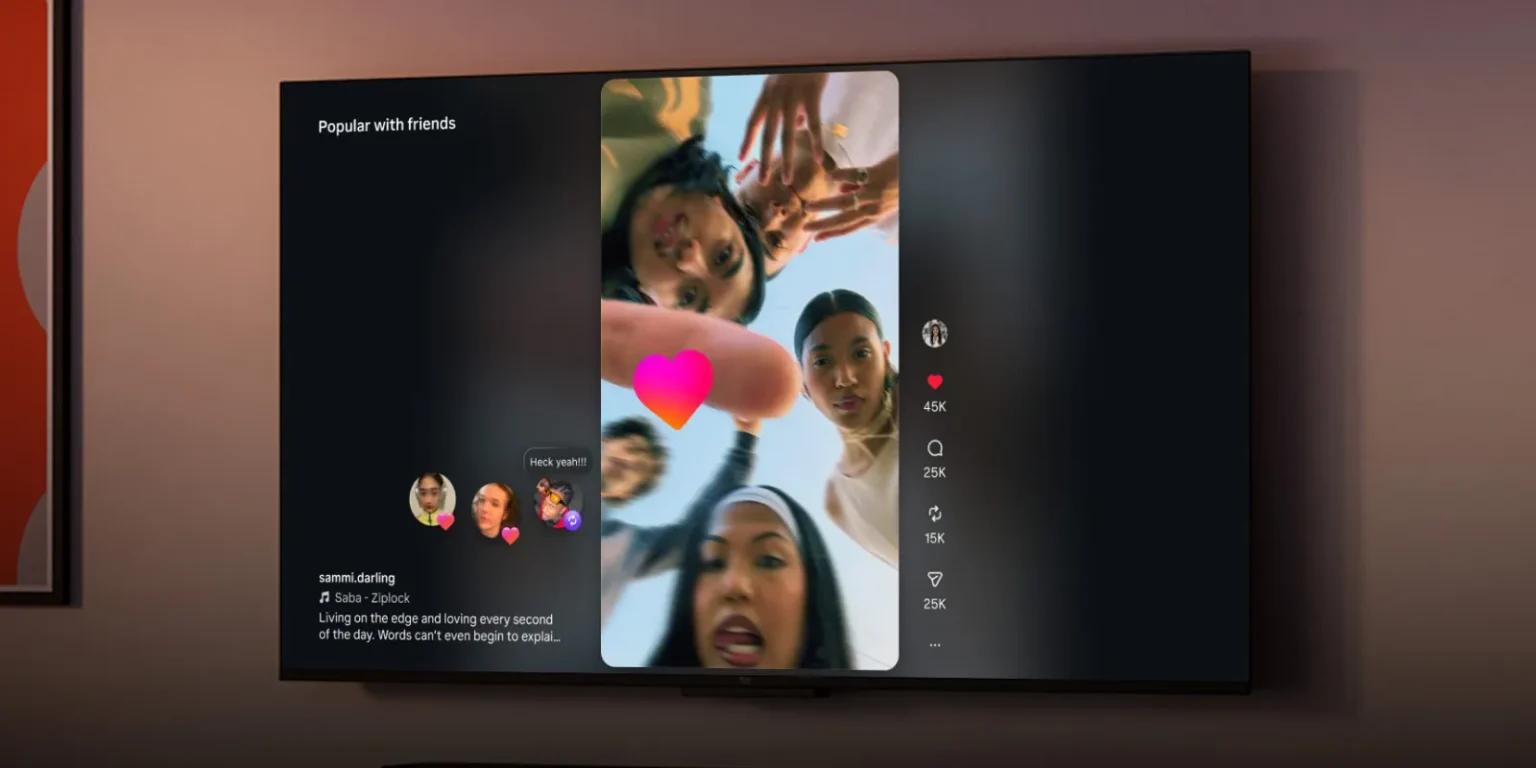
Instagram is now available on Google TV, extending the social media platform’s reach from smartphones to living room screens. The rollout follows Instagram’s earlier launch on Amazon Fire TV devices in 2025, signaling Meta’s continued push to position the Instagram TV app as part of the broader connected TV ecosystem.
The move was confirmed by Instagram head Adam Mosseri on Threads, and it represents another attempt by Meta to compete for attention on smart TVs — a space long dominated by YouTube and increasingly contested by TikTok. While YouTube remains the default destination for short-form and long-form video on television, Instagram’s Google TV launch suggests Meta does not want to concede that ground.
For now, the Instagram Google TV app is available only in the United States. Users outside the US, including Canada, are unable to download the app at launch. Meta has not detailed a timeline for international expansion, but broader availability is likely if early adoption meets internal benchmarks.
The TV version of Instagram mirrors much of the mobile experience. Users can scroll through their main feed and watch Instagram Reels on a larger screen. Content remains personalized, reflecting the same algorithmic recommendations tied to individual accounts. Short-form videos are organized into themed channels based on interests and followed creators, a structure designed to make navigation easier with a remote rather than a touchscreen.
Importantly, the experience is not limited to passive viewing. Users can like, comment, and share posts directly from the Google TV interface. That interactivity differentiates the app from earlier experiments in social TV that focused primarily on lean-back consumption.
Still, the broader question is how often users will want to engage with Instagram in a living room setting. Social media has traditionally thrived on private, handheld screens where scrolling is habitual and personal. Watching a curated feed — especially one built around vertical video — on a television may feel less natural for many users.
Meta’s decision likely reflects competitive pressure as much as user demand. Both YouTube and TikTok already maintain a presence on smart TVs, and short-form video consumption continues to expand beyond phones. By launching the Instagram app on Google TV, Meta ensures it remains part of that shift, even if its long-term role on the big screen remains uncertain.
As connected TV usage grows in the US, Meta’s experiment with Instagram on smart TVs will serve as a test of whether social-first platforms can translate mobile engagement habits into shared household environments.