
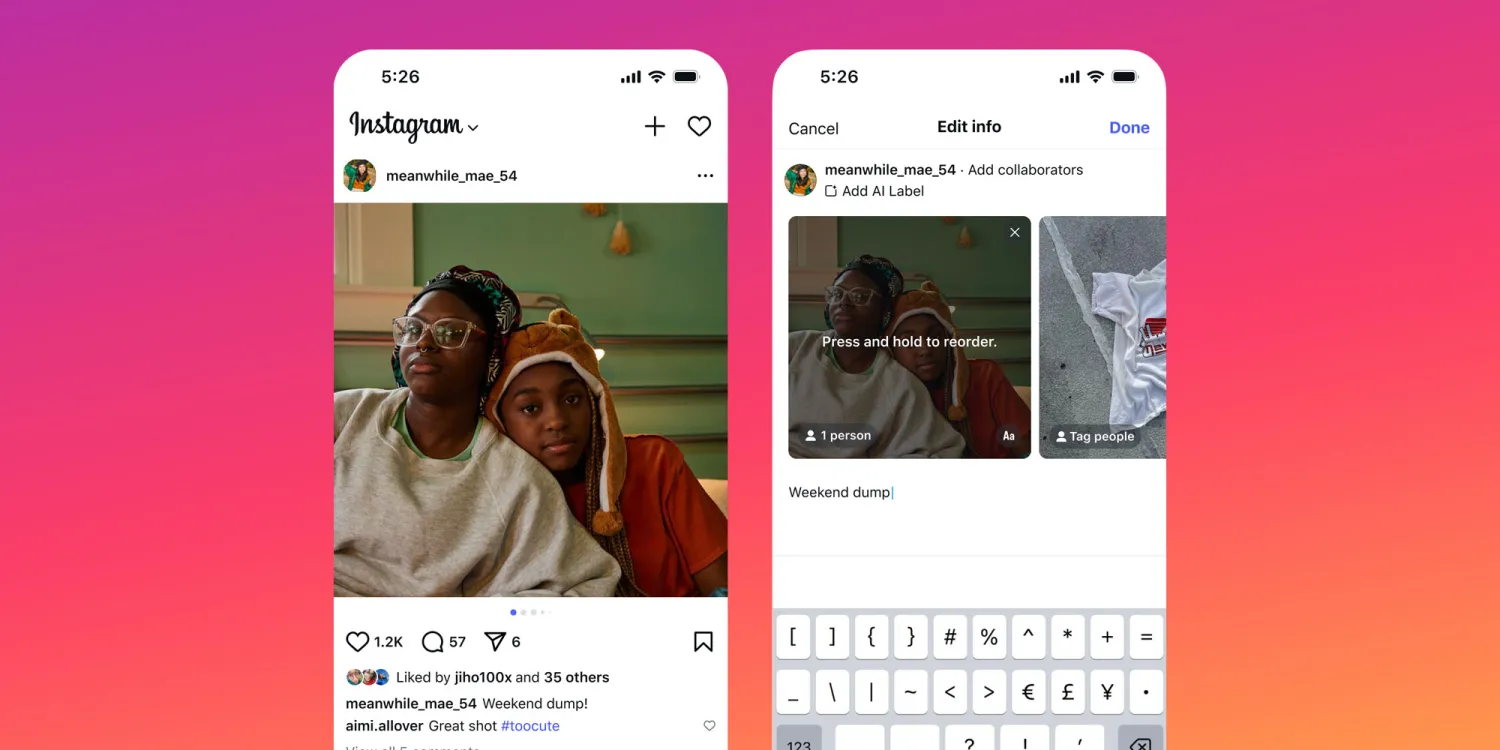
Instagram has started rolling out a feature that allows users to reorder photos and videos within a carousel after a post has already been published. The update addresses a long-standing limitation on the platform, where correcting the sequence of a multi-image post typically required deleting and reposting the entire carousel.
For years, carousel posts on Instagram have offered a way to share multiple images or clips in a single post, but the inability to adjust their order after publishing has been a consistent frustration. The new carousel reordering feature changes that by introducing a simple editing option directly within the post settings.
To use the feature, users can navigate to their profile, open a carousel post, and access the edit menu via the three-dot icon. From there, individual photos or videos can be rearranged by pressing and dragging them into a new position. The change is applied without affecting likes, comments, or the post’s visibility, which removes a key pain point for creators and casual users alike.
While the feature itself is straightforward, it reflects a broader pattern in how Instagram has been refining its core posting tools. Rather than introducing entirely new formats, the platform has been gradually improving existing ones, often in response to user feedback. Carousel posts, in particular, remain a central format for storytelling, product showcases, and event recaps, making even small usability changes like this one more significant than they might initially appear.
That said, the rollout is gradual. As with many updates on Instagram, not all users will see the option immediately. Availability may depend on region, app version, or account type, and it could take several days—or longer—for the feature to reach everyone.
The addition of post-publish editing for carousel order also raises a subtle question about how Instagram balances flexibility with content integrity. While the ability to adjust posts after publishing is convenient, it may also blur the line between original intent and later revisions, particularly for creators who rely on carefully structured visual narratives.
Even so, the update is a practical improvement. It reduces friction in the posting process and aligns Instagram more closely with user expectations shaped by other editing tools across social platforms.