



Infinix has officially introduced the Edge Note, positioning it as a slim smartphone option at a time when many major manufacturers have eased off aggressively pursuing ultra-thin designs. Measuring 7.2mm, the device focuses on form factor efficiency without abandoning practical hardware considerations, particularly around battery capacity and display quality.
One of the more notable aspects of the Infinix Edge Note is its 6,500mAh battery, which stands out in a segment where thinner phones often compromise on endurance. The company uses a carbon silicon battery design, a solution increasingly adopted by brands outside the US to allow higher capacity cells within slimmer enclosures. Charging support tops out at 45W, which is not class-leading but remains adequate for a battery of this size and suggests a balance between speed and long-term battery health.
The front of the device features a 3D curved AMOLED panel with a 1.5K resolution and a claimed peak brightness of 4,500 nits. While real-world sustained brightness will likely be lower, the specification points toward good outdoor visibility. Protection comes via Corning Gorilla Glass 7i, and the phone carries an IP6 rating, offering basic resistance against dust and water exposure rather than full submersion protection.
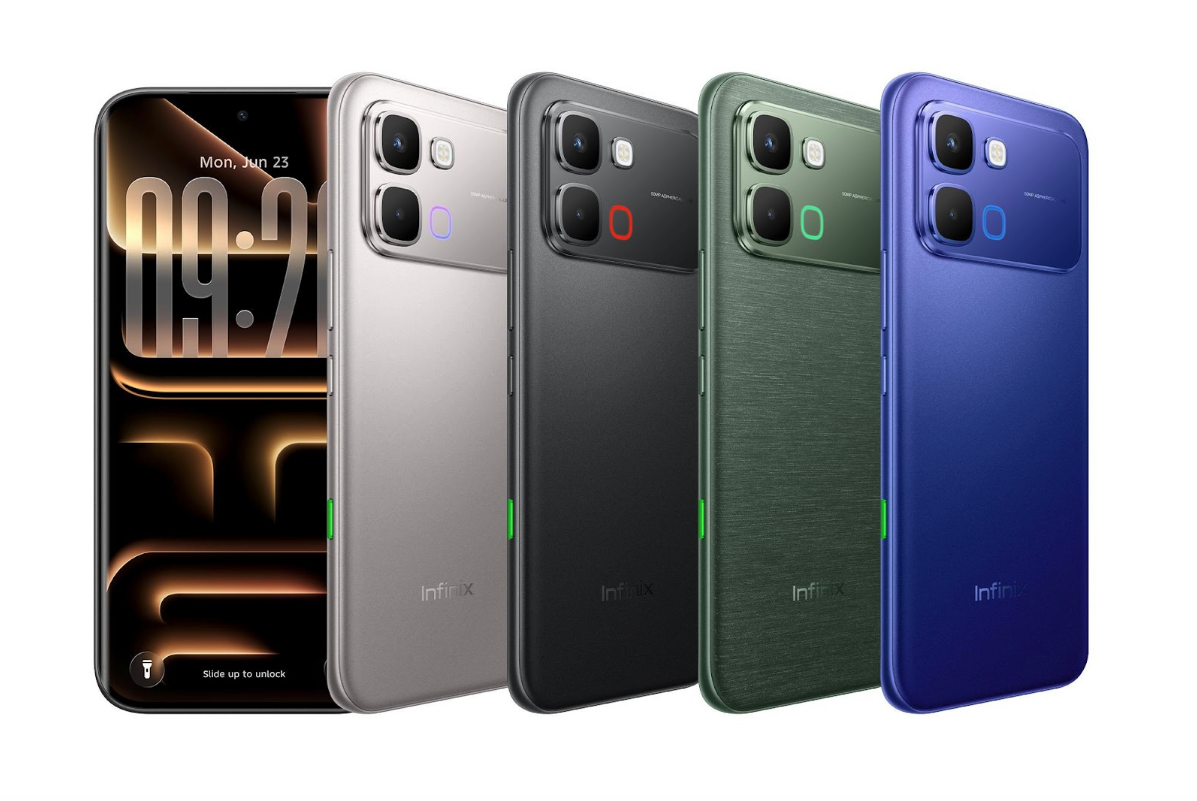
Performance duties are handled by MediaTek’s Dimensity 7100 chipset, paired with up to 8GB of RAM. This configuration places the Edge Note firmly in the midrange category, aimed more at everyday responsiveness than heavy gaming or sustained high-load tasks. On the software side, the phone runs XOS 16, based on Android 16. Infinix has committed to three major Android version upgrades, extending to XOS 19, along with five years of security updates, which is a relatively strong policy for a device in this price bracket.
Artificial intelligence features are integrated into the user experience through a customizable side-mounted shortcut button that launches FOLAX, Infinix’s in-house assistant. The implementation reflects a broader industry trend rather than a unique differentiator, but it does provide quick access to system-level tools and AI-driven functions.

Camera hardware is straightforward, with a 50MP main sensor using a 1/2-inch sensor size and 0.8μm pixels. While it is unlikely to compete with premium imaging systems, it should deliver competent results in good lighting conditions, which aligns with expectations at this level.
Pricing for the Infinix Edge Note starts at around $200, with regional variations expected. Overall, the device appears designed to appeal to users looking for a slim phone that prioritizes battery life and display quality over flagship-level performance or camera features.