

Huawei has officially entered the foldable PC category with the debut of the MateBook Fold Ultimate Design, its first laptop to feature a flexible display. But this launch isn’t just about a new screen format—it’s also Huawei’s first notebook powered by its own HarmonyOS for PC and in-house silicon, signaling a bigger shift toward self-reliant computing hardware.
At the center of the MateBook Fold’s appeal is its 18-inch foldable display, which collapses into a more compact 13-inch form factor. The OLED panel boasts a 3.3K resolution (3296 × 2472), supports HDR with peak brightness up to 1600 nits, and uses a dual-layer LTPO configuration. A carbon fiber support structure underneath the screen is said to triple its impact resistance—an important safeguard for a foldable device.
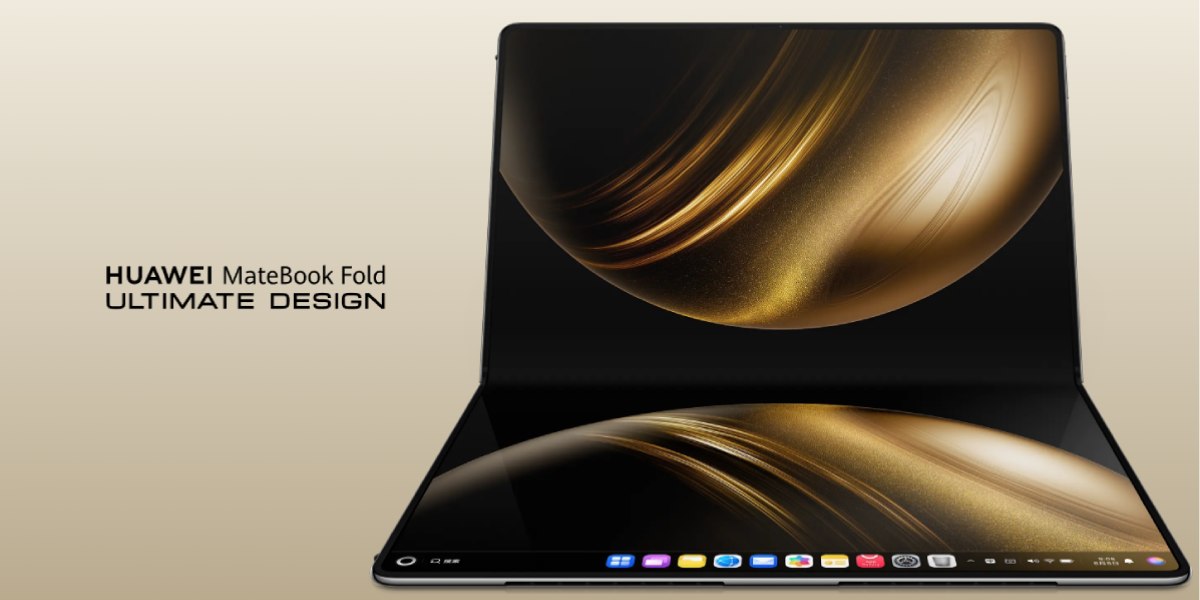
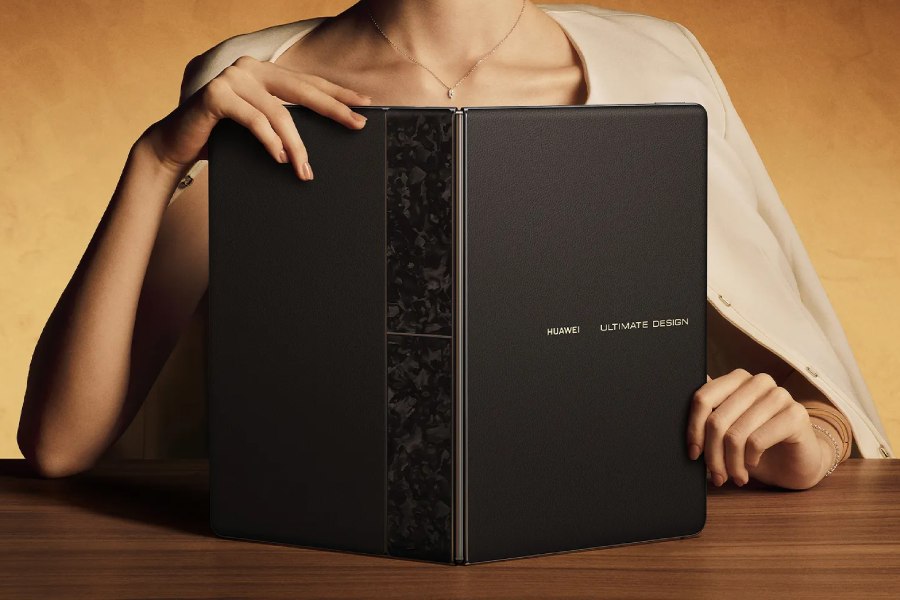
Despite its large screen, the MateBook Fold remains impressively portable. It weighs just 1.16kg and measures only 7.3mm thick when unfolded, making it unusually slim for a device in this category. Aesthetically, the laptop carries a premium feel with a leather-clad finish available in three colors: Forged Shadow Black, Sky White, and Cloud Blue. The black variant features Huawei’s distinctive “Forging Shadow Cloud Pattern” and “Black Gold Waistline” for added visual flair.
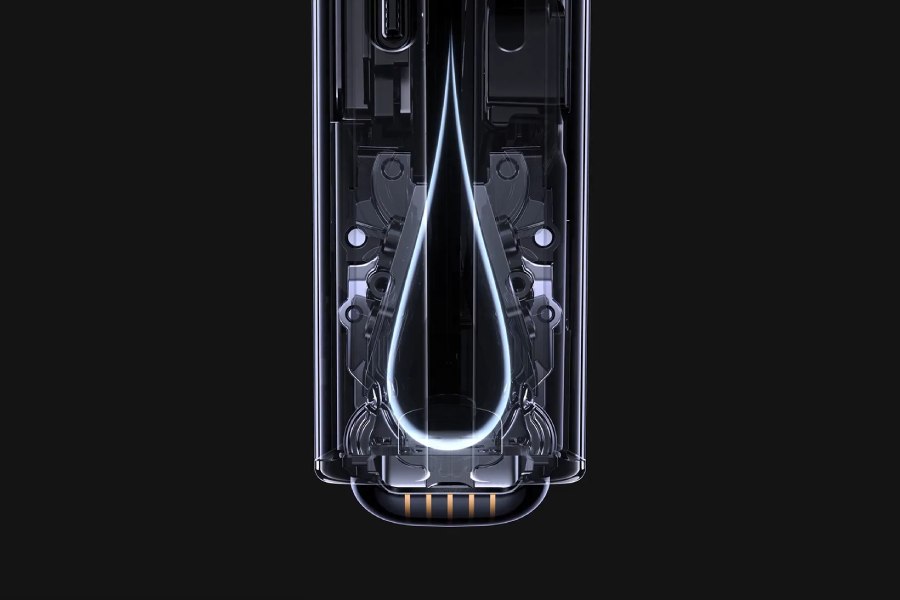
The device’s 285mm folding hinge—claimed to be the largest in the industry—supports a wide range of viewing angles up to 150 degrees. Huawei says the water-drop shaped hinge reduces screen stress and offers smoother motion, with a 400% boost in hovering torque and improved structural precision. The upgraded thermal system includes dual diamond aluminum fans and an ultra-thin anti-gravity vapor chamber to keep temperatures in check under demanding loads.
On the performance front, the MateBook Fold runs HarmonyOS 5, Huawei’s latest PC operating system. The OS introduces a range of features aimed at creating a unified experience across mobile and desktop devices. These include high-speed distributed file sharing (up to 160MB/s), up to four-device simultaneous connections, and advanced gesture support—like five-finger scrolling and eight-finger tap for the virtual keyboard. The laptop also includes new dual-screen interaction capabilities, allowing users to cast part of the display while interacting with another portion.
While Huawei confirmed the use of in-house silicon, it has yet to reveal specific details about the chip. However, it marks a continuation of Huawei’s shift away from reliance on foreign chipmakers and operating systems, aligning with its broader long-term hardware strategy.
In terms of hardware, the MateBook Fold comes with 32GB of RAM, and either 1TB or 2TB of SSD storage. Wireless connectivity includes WiFi 6 and Bluetooth 5.2, and the battery is a 74.69Wh unit. Users also get two USB-C ports, an 8MP front-facing camera, six speakers, and a fingerprint scanner integrated into the power button.
As expected for a device at the cutting edge of design and hardware, the MateBook Fold Ultimate Design sits firmly in the premium price tier. The 32GB + 1TB model is priced at 23,999 yuan (around $3,300), while the 32GB + 2TB Forged Shadow Black version costs 26,999 yuan (about $3,720). The laptop is currently available for reservation in China through Huawei’s official store, Vmall.
With this launch, Huawei joins a growing field of tech companies experimenting with foldable form factors beyond smartphones. But with its own OS, proprietary hardware, and a highly specialized hinge system, the MateBook Fold represents Huawei’s bid to redefine what a foldable PC can be—both as a device and as a self-contained ecosystem.