


Google is expanding its Search removal tools, giving users more direct control over what personal information appears in search results. The update centers on the “Results about you” hub, a feature within Google accounts that now supports the removal of additional types of sensitive data, including government-issued identification numbers and explicit images shared without consent.
For years, Google Search has made it easy to locate information about individuals. That accessibility can be useful, but it also increases the risk that personal details—such as phone numbers, email addresses, or identification numbers—surface in ways that create privacy or safety concerns. The latest changes aim to simplify how users request the removal of that data from search results.
Through the updated Results about you hub, users can track and request the removal of search listings that include passport numbers, driver’s license numbers, and other official ID information. After signing into a Google account, individuals can input the personal data they want monitored. Google then scans Search results for matches and sends alerts if it finds content that may qualify for removal.

Users can review flagged results directly within the dashboard and submit removal requests without navigating separate forms. Manual requests are also still available for information discovered outside the automated alerts. Google says each submission is reviewed against its content policies before action is taken.
The company is also streamlining the process for removing explicit images, particularly those shared without consent. Instead of filing separate requests for each image, users can now submit multiple URLs in one go. Once approved, Google can also apply filtering measures to reduce the likelihood of similar explicit images appearing again in future search results.
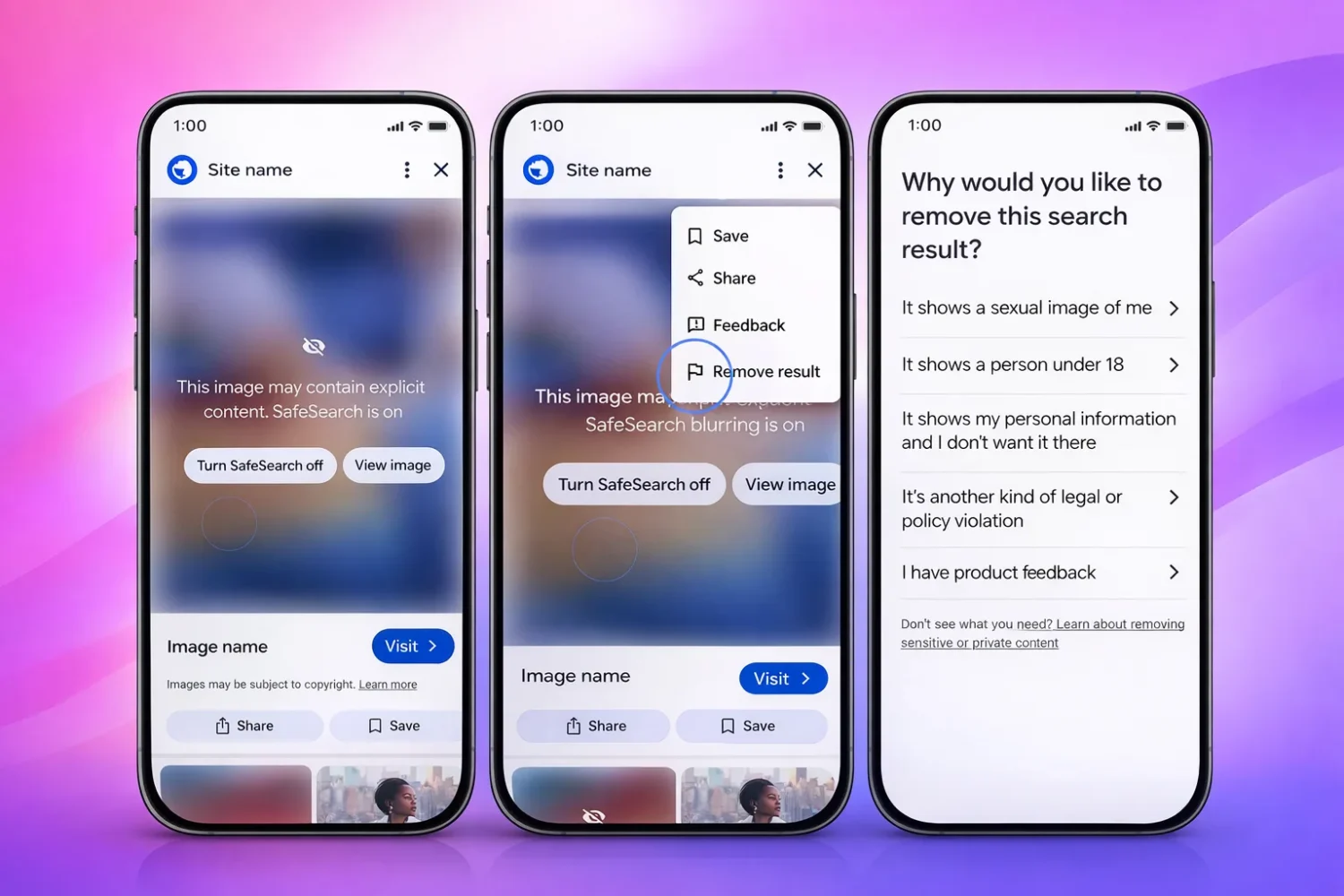
All requests and status updates are consolidated in the Results about you hub, with email notifications sent when changes occur. This centralization is intended to make the removal process easier to track over time.
It is important to note that removing content from Google Search does not erase the material from the internet itself. The original content remains on the hosting website unless the site owner deletes it. However, removing it from search results can significantly reduce its visibility.

The update also coincides with Google discontinuing its dark web monitoring reports. Those alerts previously notified users if their name, email, or phone number appeared in data breach listings. According to the company, the alerts often lacked clear next steps, limiting their usefulness. The new removal tools are positioned as a more practical alternative.
As privacy concerns continue to grow, these expanded Google Search removal tools reflect a broader shift toward giving users clearer mechanisms to manage how their personal information appears online. While not a complete solution to data exposure, the changes offer more structured and accessible controls within the Google ecosystem.