

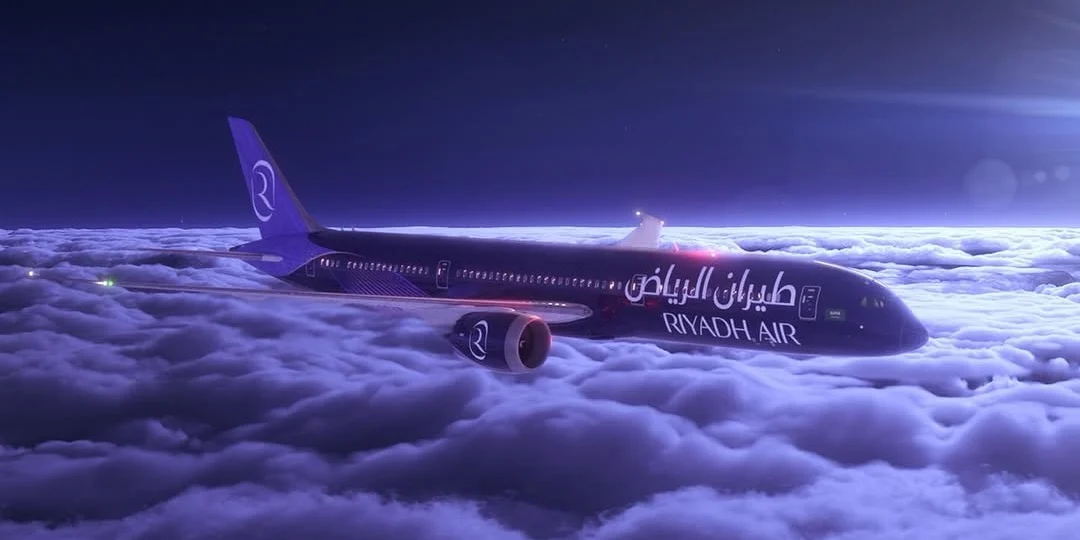
The phrase “AI-native airline” is designed to signal a break from traditional aviation models, but its real significance lies less in novelty and more in structure. Artificial intelligence has been part of airline operations for years, typically layered onto decades-old systems to improve scheduling, pricing, or customer service efficiency. What differentiates Riyadh Airis that its systems, workflows, and operating assumptions are being built with AI at the core from the outset, rather than added later as an upgrade.
Launched in 2023 by Saudi Arabia’s Public Investment Fund, Riyadh Air is scheduled to begin commercial flights in the first half of 2026. The airline is part of a broader national effort to expand Saudi Arabia’s aviation and tourism sectors, positioning Riyadh as a global hub. While its branding emphasizes technology, recent details released by its technology partner, IBM, offer a clearer view of what AI-native actually means in day-to-day operations.
From a passenger perspective, the most noticeable changes are expected in customer service and airport interactions. Riyadh Air plans to rely on AI-powered voice bots to handle routine inquiries, such as booking questions or flight status updates. These systems are intended to reduce wait times and offload repetitive tasks, while human agents remain available for more complex or sensitive issues. Rather than replacing staff entirely, the model leans toward AI-assisted service, where software supports faster decision-making and more consistent responses.
At the airport, employees will be supported by an AI-based concierge system that provides real-time suggestions during customer interactions. For example, if a passenger is running late, the system might prompt staff to offer fast-track security or alternative routing options. The aim is to standardize service quality across different locations and staff experience levels, though it also introduces questions about how scripted or automated these interactions may feel to travelers over time.
Internally, Riyadh Air’s workforce is expected to operate within what IBM describes as a personalized digital workplace. AI agents will help manage routine administrative tasks, internal communications, and human resources requests. In theory, this allows employees to spend less time navigating internal systems and more time on operational or customer-facing responsibilities. In practice, it also reflects a broader trend across industries, where white-collar automation is increasingly focused on process management rather than physical labor.
Beyond customer experience and internal workflows, AI is positioned as a core tool for strategic decision-making. Riyadh Air plans to use machine learning models to analyze route planning, demand forecasting, fuel efficiency, and pricing strategies. These systems are designed to continuously evaluate performance and recommend adjustments that reduce costs or improve profitability. The airline has framed this as a way to remain flexible, whether that means offering lower fares to attract passengers or prioritizing margins as the network matures.
This approach, however, is not without trade-offs. As more airlines adopt similar AI-driven models, the cumulative effect on employment across the industry could be significant. Routine customer service roles, administrative positions, and certain planning functions are among the most vulnerable to automation. Even IBM, a central player in enterprise AI development, acknowledged this reality when it announced substantial layoffs in early 2025, citing automation as a contributing factor to workforce reductions.
Riyadh Air’s leadership has described the airline as a blueprint for the future of aviation, but whether that future proves sustainable will depend on execution as much as technology. Building an airline around AI does not eliminate the operational challenges that have long defined the industry, including fuel volatility, regulatory complexity, and unpredictable demand. What it does offer is a more data-driven foundation from which those challenges can be addressed.
As Riyadh Air moves closer to launch, its AI-native claim will be tested not by press releases, but by how well these systems perform under real-world conditions. If successful, it may accelerate a shift already underway, where AI becomes less of a differentiator and more of an assumed layer in modern airline infrastructure.