
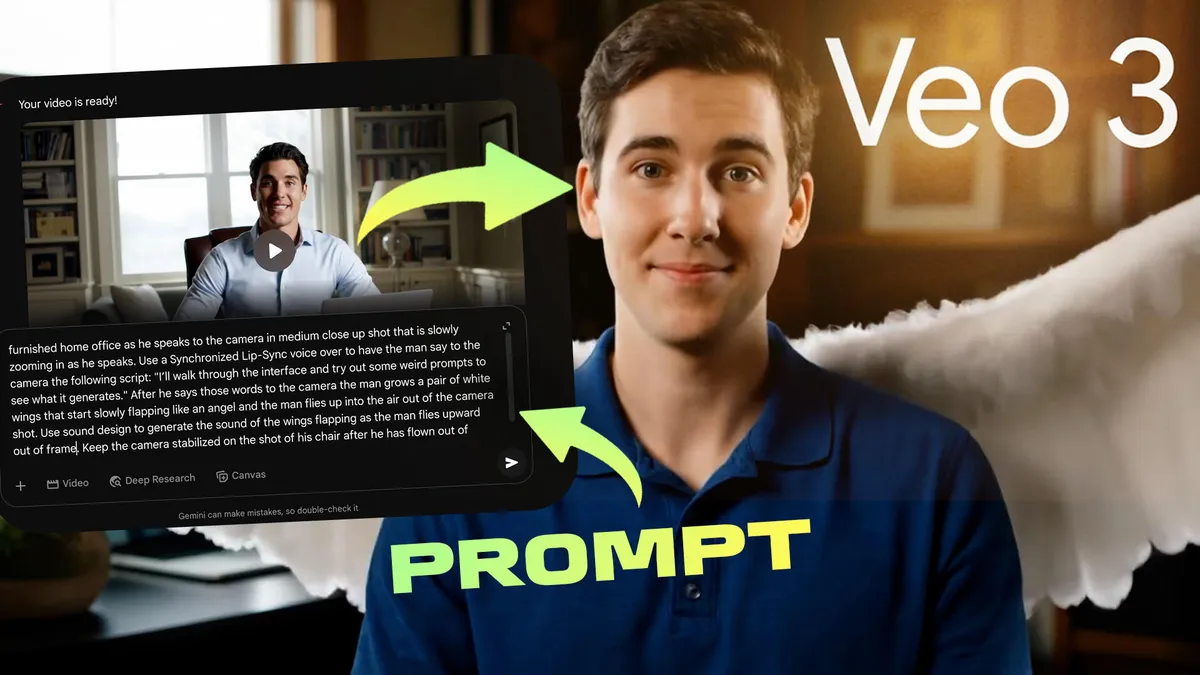
Google has introduced a lower-cost version of its AI video generation model, signaling a continued push to make generative media tools more accessible while addressing the high computational demands associated with them. The new model, Veo 3.1 Lite, is positioned as a more affordable alternative within the company’s broader Veo lineup, offering similar performance characteristics at reduced cost .
According to available details, Veo 3.1 Lite is designed to cut usage costs by roughly half compared to the faster Veo 3.1 Fast model, while maintaining comparable generation speed. This pricing adjustment reflects a growing focus across the AI sector: reducing the operational expense of generating video content, which remains one of the most resource-intensive applications of generative AI. As more companies experiment with video tools, cost efficiency is becoming just as important as output quality.
In terms of capabilities, the Lite version retains core features such as text-to-video and image-to-video generation, along with support for both horizontal (16:9) and vertical (9:16) formats. Output resolution reaches up to 1080p, which may be sufficient for many social and web-based use cases but falls short of the 4K support available in higher-tier models. This trade-off suggests that the Lite version is aimed more at developers, marketers, and content creators working at scale, rather than those focused on high-end production.
The model also allows for short, customizable video durations—specifically 4, 6, or 8 seconds—with pricing tied to length and resolution. This structure aligns with current trends in short-form video, where platforms prioritize brief, loopable content. By tailoring pricing and output to these formats, Google appears to be optimizing the tool for common digital use cases rather than cinematic production.
Access to Veo 3.1 Lite is currently limited to developers using Google’s paid AI ecosystem, including the Gemini API and related tools. This reinforces the idea that, at least for now, advanced generative video remains primarily a developer-facing capability rather than a widely consumer-facing product.
The timing of the release is notable. It comes shortly after OpenAI discontinued its Sora video generation app, a product that combined social sharing with AI-generated video. While the reasons for that decision were framed around shifting priorities, the broader context points to the high cost and infrastructure demands of running such systems at scale. Google’s approach, by contrast, appears to focus on incremental optimization—making existing tools cheaper and more flexible rather than repositioning them entirely.
This move also reflects a wider industry recalibration. Early excitement around AI video generation emphasized realism and creative potential, but the practical limitations—especially cost and compute requirements—are now shaping how these tools evolve. By introducing a lower-cost model, Google is effectively acknowledging that long-term adoption will depend not just on what the technology can do, but on how economically it can be deployed.
For developers and businesses experimenting with AI-generated video, Veo 3.1 Lite may lower the barrier to entry. However, the limitations in resolution and feature set indicate that trade-offs remain. As with many AI tools currently on the market, the challenge is less about capability and more about finding a balance between performance, cost, and real-world utility.