
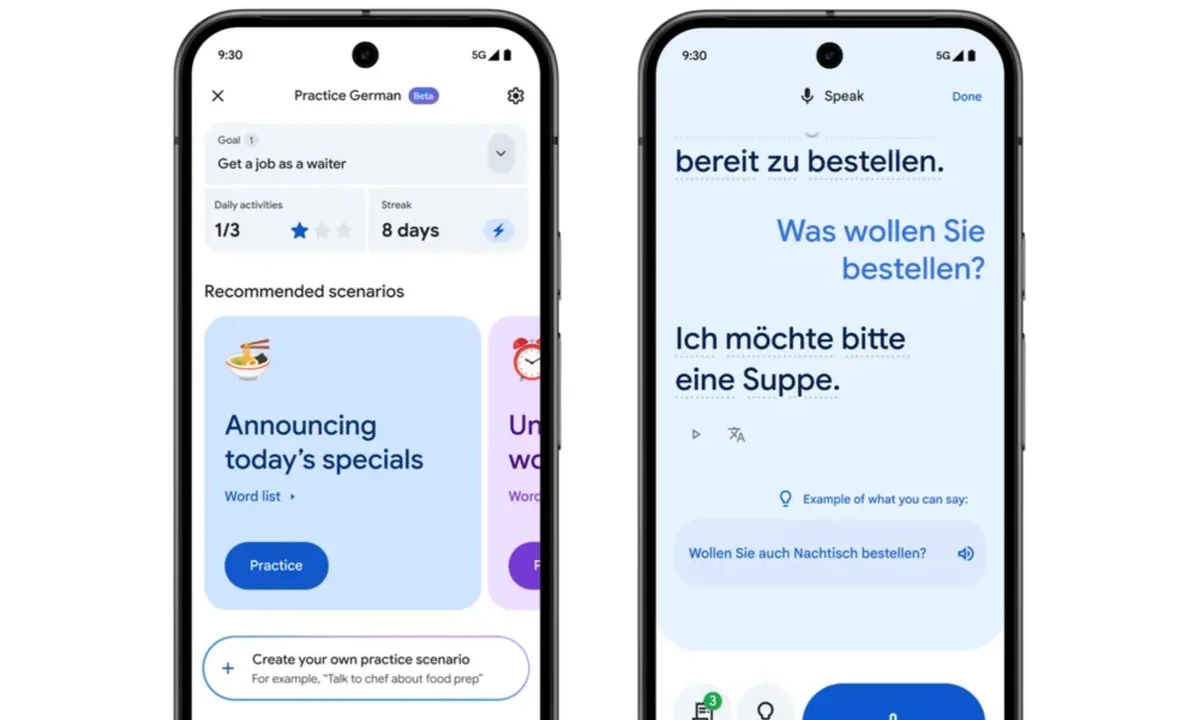
Google Translate appears to be moving beyond simple translation and into guided language learning, with a new feature in development aimed at improving pronunciation. The update, described as a “Practice” mode, introduces tools that allow users to actively refine how they speak rather than just լս or read translated phrases.
The shift reflects a broader trend in AI-powered language tools, where passive translation is being supplemented with interactive feedback systems. Instead of relying solely on the familiar speaker icon for audio playback, users would be able to hear native pronunciation samples, record their own attempts, and receive an evaluation of how closely their speech matches the expected output.
At the core of the feature is speech analysis. The system assesses pronunciation accuracy and provides a score, along with suggestions for improvement. This could include highlighting mispronounced syllables or offering alternative ways to shape certain sounds. For users who find traditional phonetic notation difficult to interpret, the tool also introduces simplified phonetic breakdowns designed to make pronunciation more accessible.
The emphasis on repetition suggests the feature is intended to function more like a training tool than a one-off utility. Users can retry phrases multiple times, gradually improving their accuracy. Early indications also point to the possibility of expanding this into a broader learning environment, with structured difficulty levels or even conversational practice modes that simulate real-world dialogue.
The feature was identified in a pre-release version of the app, which suggests it is still under development. As with many experimental updates, rollout is expected to be gradual, likely beginning with widely used language pairs such as English and Spanish before expanding further. This staged approach would allow Google to refine the system based on user feedback and performance data.
While the addition could make Google Translate more competitive with dedicated language-learning platforms, it also raises questions about how far the app will move beyond its original purpose. Translation tools have traditionally prioritized speed and clarity over instruction. Introducing coaching features may blur that distinction, positioning the app somewhere between a quick reference tool and a structured learning platform.
There are practical benefits to this direction. Pronunciation is often one of the more difficult aspects of language learning, particularly for users without access to native speakers or formal instruction. A built-in feedback system could lower that barrier. At the same time, accuracy and nuance will be key. Automated pronunciation scoring can be useful, but it may struggle with regional accents, speech patterns, or variations that fall outside standardized models.
If the feature launches more widely, it could change how casual users interact with translation apps, encouraging more active participation rather than quick lookups. Whether it becomes a core part of the experience or remains an optional add-on will likely depend on how well it balances usability with meaningful feedback.