
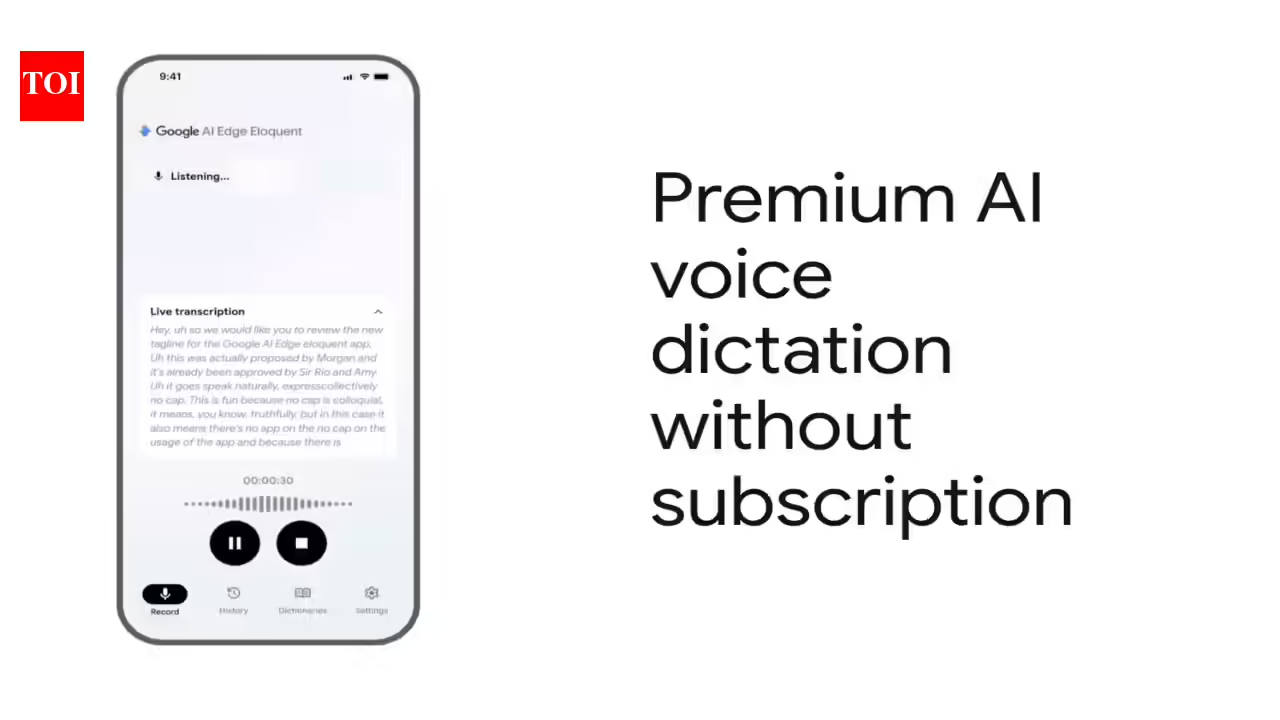
Google has introduced a new dictation app, Google AI Edge Eloquent, on iOS, adding another entry into the growing field of AI-powered speech-to-text tools. The release appears to be relatively low-profile, but it reflects a broader shift toward more capable, flexible voice input systems—particularly those that can function without a constant internet connection.
The app is built around offline-first functionality. Once users download the necessary speech recognition models, it can process dictation locally on the device. This approach addresses privacy concerns associated with cloud-based transcription while also allowing the app to function in environments with limited connectivity. For users who prefer enhanced processing, an optional cloud mode can be enabled, which uses more advanced models for refining text output.
At a basic level, the app transcribes spoken input in real time. However, it goes a step further by automatically editing the transcript to remove filler words such as “um” or “ah,” as well as smoothing out self-corrections. The result is text that is closer to a finished draft than a raw transcription. Users can also apply different formatting styles—such as generating summaries, shortening content, or adjusting tone—to better match specific use cases.
The app includes features aimed at personalization and workflow tracking. It can incorporate custom vocabulary, including names or specialized terms, and optionally draw from a user’s Gmail data to improve recognition accuracy. A session history allows users to revisit past dictations, search transcripts, and view metrics such as speaking speed and total word count.
While currently limited to iOS, references to Android integration suggest a broader rollout is planned. On Android, the app is expected to offer deeper system-level functionality, including the ability to act as a default keyboard and provide persistent access through a floating interface. These features would position it more directly against existing dictation tools that emphasize always-available voice input across apps.
The timing of the release aligns with increased interest in AI-assisted writing tools. As speech recognition models improve, dictation is becoming a more viable alternative to typing for a wider range of tasks, from note-taking to drafting emails and documents. However, the category is still evolving, and user expectations around accuracy, editing, and ease of use continue to rise.
Google’s entry into this space suggests it is testing how voice interfaces can integrate more deeply into everyday workflows. Whether this app remains a standalone experiment or becomes part of a broader system-level feature set will likely depend on user adoption and how effectively it competes with existing tools.