
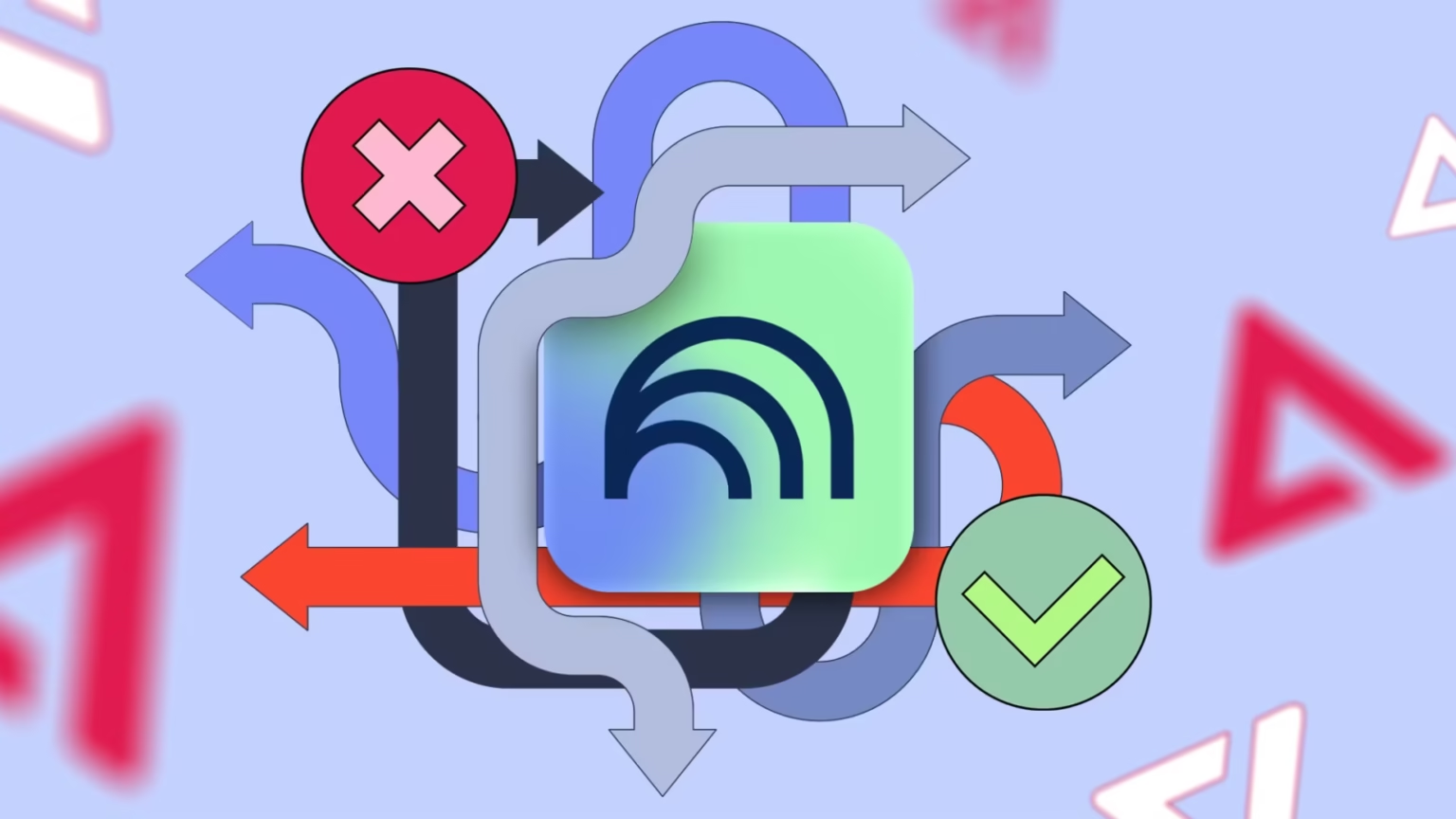
Google is expanding the capabilities of NotebookLM with a new feature aimed at students, researchers, and readers who manage large collections of digital books. The latest update introduces native support for EPUB files, allowing users to upload and analyze ebooks directly inside the platform.
EPUB, short for Electronic Publication, is one of the most widely used formats for digital books. Unlike PDFs, EPUB files are designed with flexible layouts that adjust to different screen sizes and devices. They also tend to have smaller file sizes and can include interactive features such as embedded links or multimedia elements.
With the new update, users can upload EPUB books directly into NotebookLM as source material. Once added, the AI system can analyze the text and generate summaries, create audio or video overviews, and even build slide presentations based on the content. The goal is to turn large documents or books into more digestible formats for study or research.
NotebookLM was originally introduced as an AI-assisted research workspace that allows users to upload documents and interact with them through questions, summaries, and generated insights. The tool uses Google’s AI models, including integrations with Gemini, to analyze uploaded material and respond to prompts based on the source content.
Adding EPUB compatibility simplifies the process for users who maintain digital book libraries. Previously, people who wanted to use ebooks inside NotebookLM often had to convert EPUB files into PDFs before uploading them. That extra step created friction for users who rely on large collections of textbooks, research materials, or reference books.
By removing the conversion requirement, Google is positioning NotebookLM as a more practical tool for managing long-form reading material. Students, for example, could upload several textbooks and create a searchable knowledge base that allows them to generate summaries, extract key concepts, or review material quickly before exams.
Readers and book enthusiasts may also find the feature useful for exploring complex books. Uploading an EPUB file allows NotebookLM to provide quick explanations, highlight themes, or generate condensed overviews that help users understand lengthy texts more efficiently.
Despite the steady stream of updates, the platform still has areas that could benefit from improvement. One commonly mentioned limitation is the lack of built-in folder organization. As users add more notebooks and source materials, managing them can become difficult without better sorting tools.
Another missing feature is streamlined export options. While NotebookLM can generate summaries, slides, and other outputs, sharing or exporting those results often requires extra steps. Adding simple export tools could make the platform more useful for presentations, collaboration, or academic work.
Google has been updating NotebookLM frequently since the beginning of 2026, introducing new AI models, deeper integrations with its broader AI ecosystem, and experimental features such as multimedia overviews. The addition of EPUB support may seem like a small change, but it removes a practical barrier for people who rely heavily on digital books.