
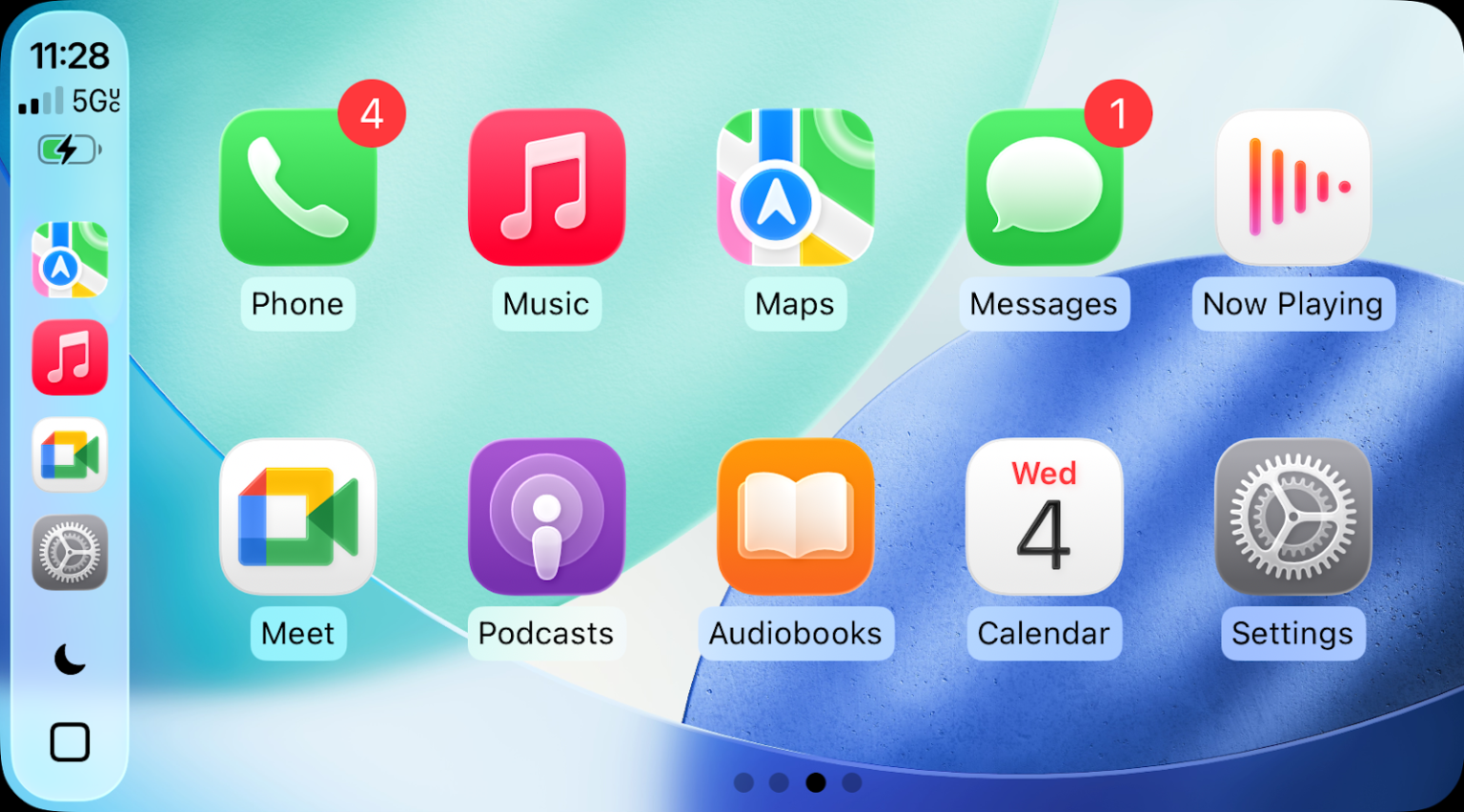
Google Meet is now accessible through Apple CarPlay, extending the reach of in-car communication tools but with clear limitations shaped by safety and platform constraints.
The update allows iPhone users connected to compatible vehicles to join Google Meet sessions directly from their car’s infotainment system. However, the functionality is restricted to audio-only participation. Video, including access to the iPhone’s cameras, is disabled to reduce distraction and keep interactions aligned with driving safety expectations. Users can also view scheduled meetings, making it easier to join calls without handling their phone.
In practical terms, the feature is less about enabling full productivity and more about maintaining continuity during commutes. It reflects a broader shift in how work-related communication tools are adapting to mobile and transitional environments. Rather than encouraging active participation, the design favors passive engagement—listening in on meetings while on the move.
That said, the rollout highlights an uneven landscape across platforms. While Google has brought Meet to Apple CarPlay, its equivalent support for Android Auto is still pending. This delay is notable given that competing services have already established a presence across both ecosystems. Zoom and Webex introduced audio-based meeting support for Android Auto in 2023, while Microsoft Teams followed in early 2024. On the CarPlay side, Teams and Webex have been available for several years, with Zoom offering similar capabilities as far back as 2018.
This staggered rollout leaves Android users dependent on third-party solutions or less integrated workarounds, such as using a phone’s speaker mode. It also underscores how platform priorities can shape feature availability, even when the same company controls both the communication service and the operating system.
From a broader perspective, adding Google Meet to CarPlay aligns with ongoing efforts to keep users within a single ecosystem of tools. Integration across devices—phones, cars, and desktops—can reduce friction, particularly for those already using Google Workspace. However, whether in-car meeting access becomes a widely used feature remains uncertain. For many, the appeal may be situational rather than essential.
As more communication platforms adapt to in-car systems, the emphasis is likely to remain on minimal interaction and audio-first experiences. The goal is less about transforming the car into a workspace and more about extending access in a controlled, limited way.