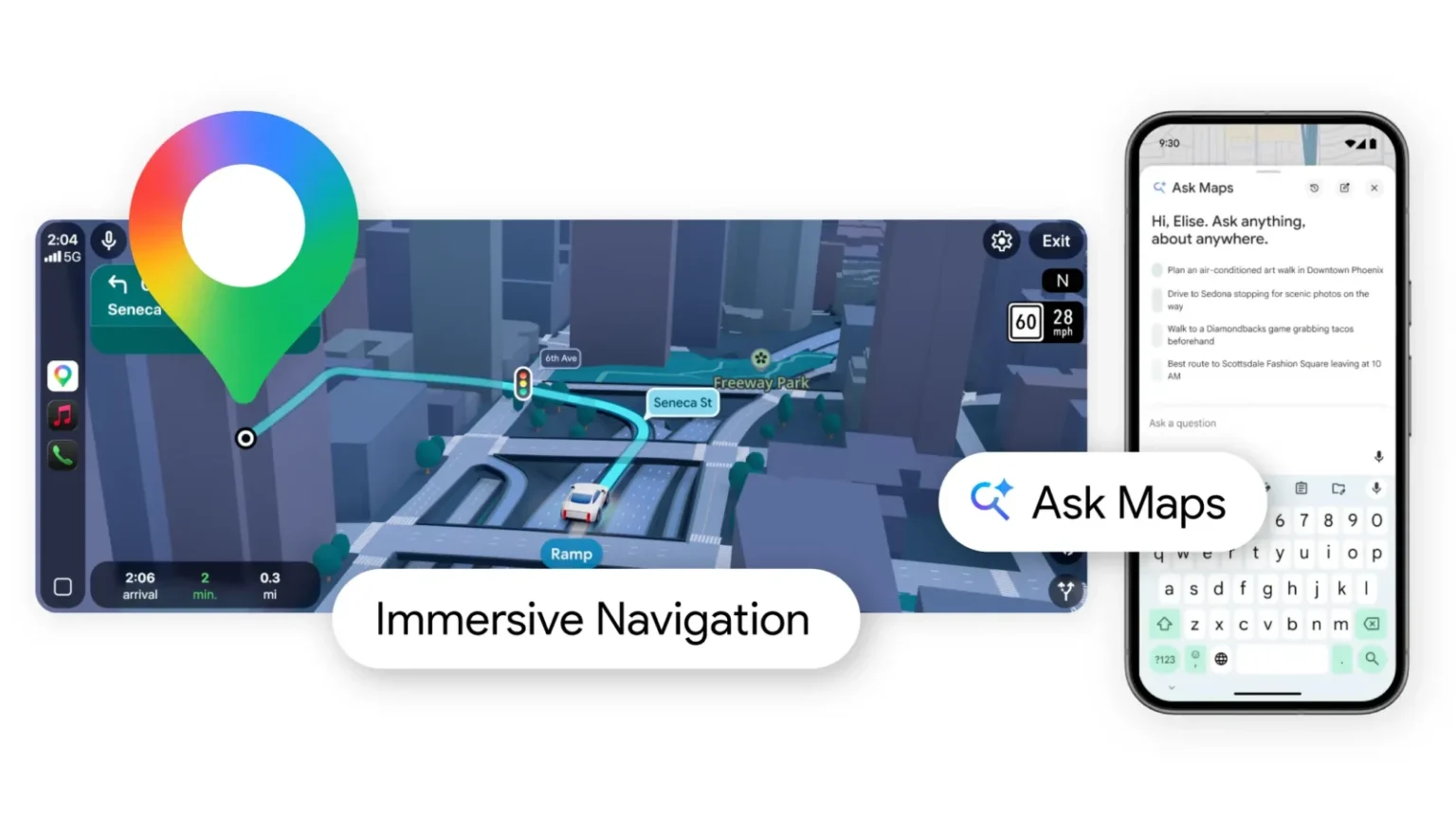
Google is introducing a new set of AI-driven features in Google Maps built around its Gemini models, signaling a broader shift toward conversational search and more visually guided navigation. The update includes two major additions: Ask Maps, a conversational tool designed to answer real-world location questions, and Immersive Navigation, a redesigned driving interface that adds more visual context to routes.
The goal behind these updates is to move beyond traditional map searches and allow users to interact with maps more naturally. Instead of typing short queries or manually filtering through results, Ask Maps lets users ask full questions and receive contextual answers directly within the app.
Ask Maps uses Google’s Gemini models alongside data from the Maps platform to generate personalized recommendations. Rather than simply listing nearby locations, the system attempts to interpret more complex questions and combine multiple factors such as user preferences, location data, and community reviews.
For example, users can ask questions like where to find a public tennis court with lights available at night, or where they can charge their phone without waiting in a crowded café. The feature then returns suggestions alongside a customized map showing the relevant places. Users can save locations, share them with friends, or move directly into navigation.
The conversational system also supports travel planning. A user planning a trip can ask for recommended stops between destinations, and the system will suggest potential places along the route. According to Google, the recommendations draw from data covering more than 300 million locations and insights from over 500 million contributors who provide reviews, photos, and updates to the platform.
Personalization plays a role in how results appear. The system considers previously saved locations, search history, and other signals to tailor suggestions. Someone who frequently searches for vegan restaurants, for instance, may see those options prioritized when asking for places to meet friends for dinner.
Ask Maps is beginning to roll out in the United States and India on both Android and iOS devices. A desktop version is expected to arrive later.
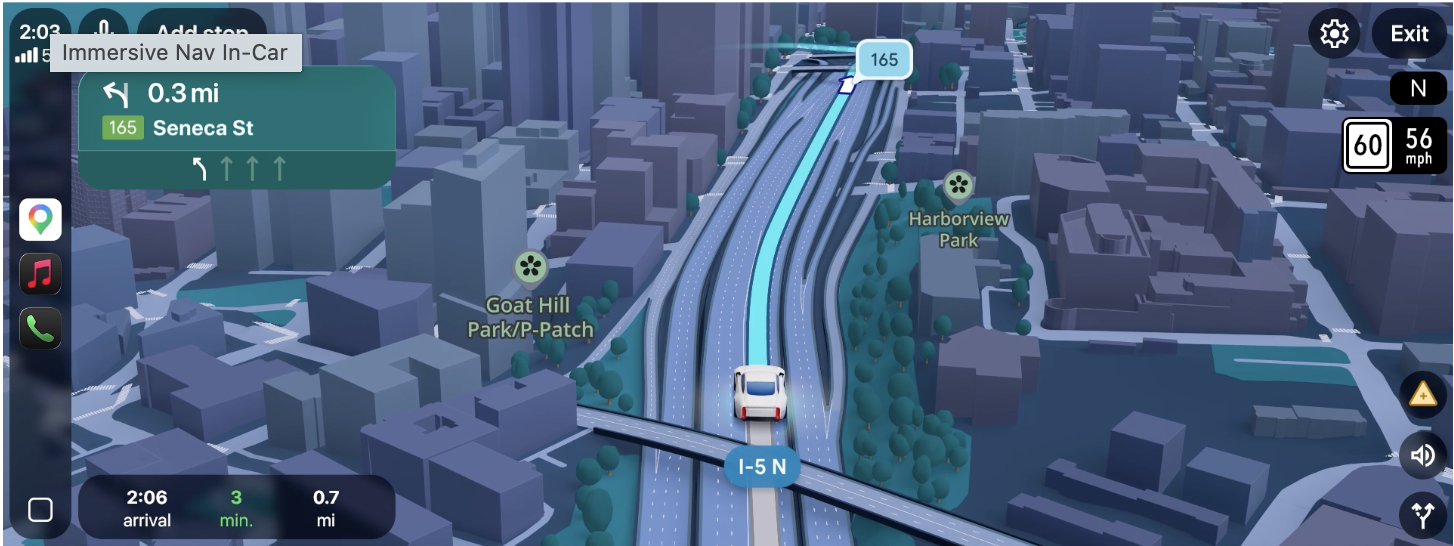
Alongside the conversational feature, Google is also redesigning the navigation experience with what it calls Immersive Navigation. The update introduces a more detailed 3D driving interface intended to make routes easier to interpret while on the road.
The new navigation view incorporates three-dimensional renderings of buildings, overpasses, and terrain along a route. Additional road elements such as lanes, crosswalks, stop signs, and traffic lights are highlighted directly on the map to help drivers anticipate upcoming turns or merges.
These visuals are generated using Gemini models trained on large sets of mapping data, including Street View imagery and aerial photography. The system analyzes this information to produce a representation of the environment drivers are about to encounter.
The navigation update also expands how route information is presented. The map can zoom out to show a broader section of the upcoming route, giving drivers more context before complex turns or lane changes. Voice guidance has also been adjusted to sound more conversational, delivering directions in phrasing intended to feel closer to how a passenger might guide a driver.
Another addition involves route comparisons. Google Maps now explains tradeoffs between alternate routes, such as whether one option is faster but includes toll roads or whether another route may take longer but avoid heavy traffic. The platform already processes large volumes of traffic updates, incorporating millions of real-time changes each second from sensors, mapping data, and driver reports.
Community contributions continue to play a role in the system as well. Drivers regularly report road hazards, crashes, and construction zones through the app, helping keep navigation data updated throughout the day.
The final stage of navigation has also been expanded. Before arriving, users can preview destinations with Street View imagery and see suggested parking locations nearby. As drivers approach their destination, the system highlights the building entrance and indicates which side of the street it is on.
Immersive Navigation is beginning to roll out in the United States and will gradually expand to more regions. Google says the feature will become available across Android and iOS devices, as well as in-car systems such as Android Auto, Apple CarPlay, and vehicles that run Google’s built-in infotainment software.
Together, Ask Maps and Immersive Navigation represent a shift in how Google is positioning Maps. Rather than functioning only as a search-and-directions tool, the platform is increasingly being framed as an AI-driven assistant designed to help users discover places, plan trips, and navigate the physical world through conversational interactions.