
Google has updated its AI Studio platform with a broader set of tools aimed at simplifying how developers move from prompt-based ideas to functional web applications. The company is positioning this as a more complete “full-stack” coding environment, combining frontend generation with backend services, but the real shift lies in how much of that process is now automated.
At the center of this update is the Antigravity coding agent, which is designed to interpret user prompts and translate them into structured, multi-step application builds. Rather than limiting output to isolated code snippets, the system now maintains awareness of an entire project, including its architecture and prior changes. This allows for more consistent edits and reduces the need for manual adjustments across files.
A key addition is deeper integration with Firebase, which brings built-in support for databases and user authentication. When the system detects that an application requires persistent storage or login functionality, it can suggest provisioning tools like Cloud Firestore or authentication services. While this reduces setup time, it also ties projects more closely to Google’s ecosystem, which may not suit every development workflow.
The platform also expands its compatibility with modern web frameworks. In addition to React and Angular, developers can now work with Next.js directly within the environment. The agent can install external libraries on demand, such as animation or UI toolkits, based on the requirements inferred from a prompt. This reflects a broader trend in AI-assisted development tools, where systems are expected to make decisions about dependencies rather than waiting for explicit instructions.
Another practical update is session continuity. Projects are now saved across devices, allowing users to return to work without manually managing versions or local files. There is also a built-in system for handling API keys and credentials, stored securely within a settings panel, which aims to simplify integration with third-party services like payment platforms or mapping tools.
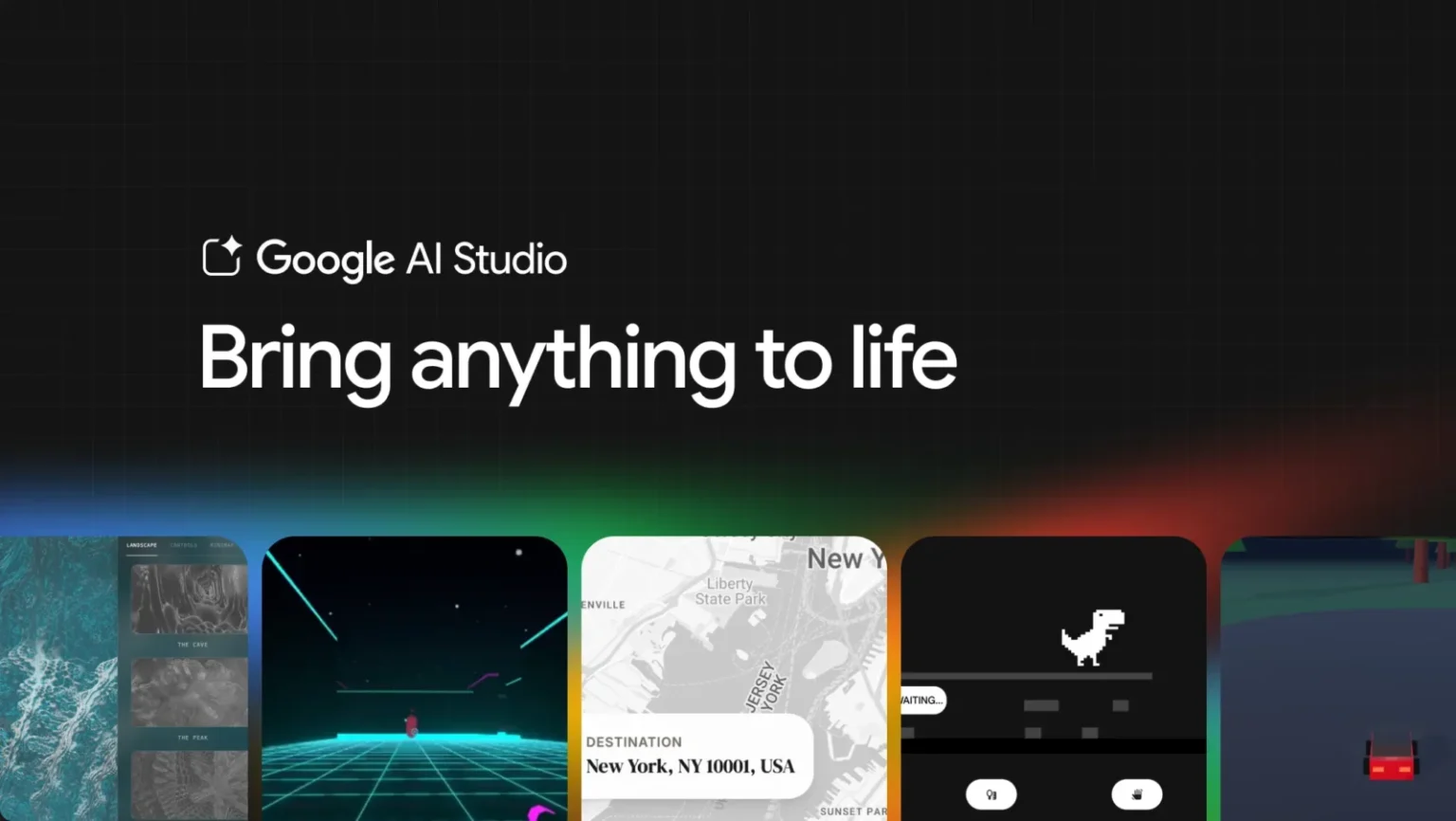
The platform also introduces support for multiplayer and real-time applications, including collaborative tools and browser-based games. While these examples demonstrate the system’s capabilities, they also highlight ongoing limitations—AI-generated code at this level often still requires review, particularly for performance, scalability, and security considerations.
Internally, Google reports that the updated environment has already been used to build a large volume of applications, though the quality and complexity of those projects are not clearly defined. Future updates are expected to include tighter integration with other Google services, such as Drive and Sheets, along with a more direct pathway from development to deployment.
Overall, the update to Google AI Studio reflects a continued push toward abstracting away traditional development steps. While this lowers the barrier to entry, it also raises questions about long-term maintainability and developer control, especially as more of the stack becomes automated.