
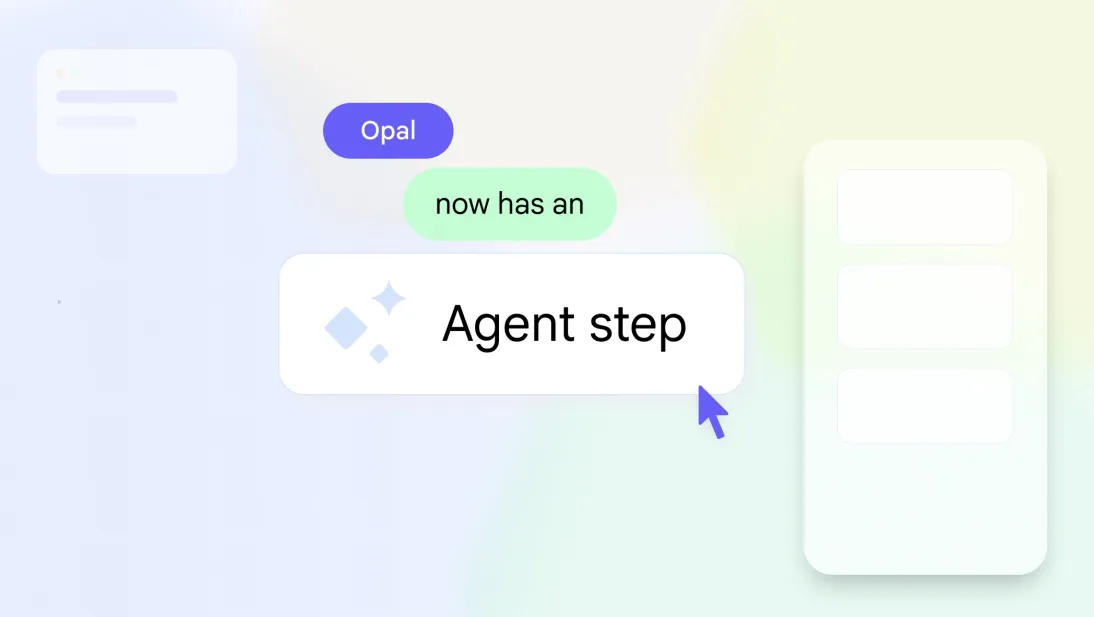
Google is expanding the capabilities of Opal, its vibe-coding app, by introducing a new agent designed to help users create automated workflows through text prompts. The update adds a structured way to build mini-apps that can plan and execute multi-step tasks without requiring traditional coding skills.
The new agent runs on Gemini 3 Flash, one of Google’s lightweight AI models optimized for speed and interactive tasks. Within Opal, the agent can interpret a user’s prompt, determine which tools are needed, and sequence actions automatically. For example, if a user is building a simple e-commerce helper app, the agent could use Google Sheets to store persistent data such as a shopping list or inventory tracker, maintaining memory across sessions without additional configuration.

Google says the agent is designed to be interactive rather than static. If the system lacks information to complete a task, it can ask follow-up questions or present options to guide the user toward the next step. This approach reflects a broader shift in AI-assisted development tools, where conversational interfaces increasingly serve as the front end for workflow automation.
Opal was initially launched in the United States in July 2025 as a platform for creating and remixing lightweight web apps. The company gradually expanded availability, first to 15 additional countries—including Canada, India, Japan, South Korea, Vietnam, Indonesia, Brazil, and Singapore—before extending access to more than 160 countries. In December, Google integrated Opal into the Gemini web app, allowing users to build custom apps using a visual editor without writing code.
With the addition of workflow automation through AI agents, Opal is moving further into the no-code and low-code development space. The goal appears to be lowering technical barriers so that users without programming backgrounds can assemble functional applications through natural language instructions. While this approach simplifies development, its effectiveness will depend on how reliably the agent can interpret prompts and manage complex task dependencies over time.
Google is not alone in pursuing this category. Companies such as Lovable and Replit have gained traction by offering tools that generate apps from text prompts. Other startups, including Wabi, Emergent, and Rocket.new, are also developing platforms that combine AI agents with app-building environments. As competition grows, differentiation is likely to hinge on reliability, integration with external services, and how well these systems manage real-world workflows rather than simple prototypes.
The addition of automated workflows to Opal suggests Google is positioning the platform as more than a lightweight experiment. By combining Gemini-powered agents with built-in access to services like Google Sheets, the company is building a bridge between conversational AI and practical task automation. Whether that approach translates into sustained adoption will depend on how accessible and dependable the experience proves to be for everyday users.