

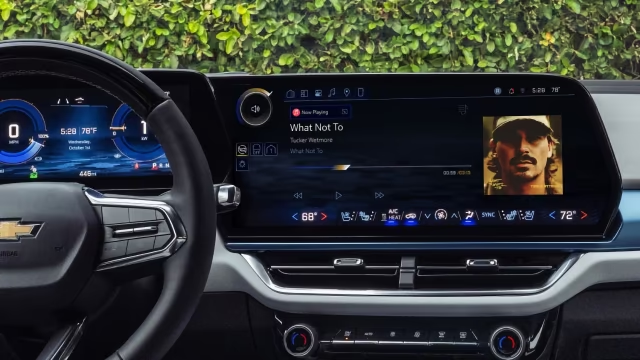
General Motors has begun rolling out a native Apple Music app across its vehicle lineup, marking a notable step in the company’s evolving approach to in-car software. The app allows drivers to access Apple Music directly through the vehicle’s built-in infotainment system without connecting an iPhone, starting with select 2025 and newer Cadillac and Chevrolet models. Support for additional GM brands is expected to follow.
The native Apple Music integration provides access to users’ existing libraries, playlists, and Apple Music radio stations through the dashboard interface. Subscribers can sign in using their current Apple ID, while new users are able to subscribe directly from the vehicle. The app supports hands-free interaction via the vehicle’s voice assistant and is delivered through an over-the-air software update, appearing automatically once installed.
For Cadillac vehicles equipped with higher-end audio systems, the update also enables Spatial Audio with Dolby Atmos. GM says this feature is designed to take advantage of premium speaker configurations, such as the 23-speaker AKG setup available in models like the Cadillac VISTIQ. While Spatial Audio is limited to certain vehicles and trims, its inclusion highlights GM’s intent to differentiate its native software experience through hardware integration rather than phone mirroring.
To address concerns around mobile data usage, GM is bundling music and podcast streaming with its OnStar Basics package. Buyers of eligible 2025 and newer vehicles in the United States and Canada will receive up to eight years of connectivity for supported audio apps at no additional cost. This approach positions in-car streaming as a standard feature rather than an optional add-on, particularly as vehicles become more reliant on embedded software services.
The launch comes amid GM’s broader move away from Apple CarPlay and Android Auto in future vehicles. The company has already phased out phone projection systems in its electric vehicles and confirmed earlier this year that upcoming gas-powered models will follow the same direction. GM leadership has framed the decision as a way to maintain tighter control over the user experience, data flows, and long-term software development.
At the same time, the introduction of a native Apple Music app underscores the continued demand for Apple’s services among drivers. Reports suggesting future support for features like Apple Wallet and digital car keys further illustrate GM’s selective reintegration of Apple functionality, even as full CarPlay support remains off the table. Rather than restoring phone-based interfaces, GM appears to be choosing individual services that can be absorbed into its own software ecosystem.
The Apple Music update is rolling out now and supports a growing list of vehicles, including the 2025 and 2026 Cadillac CT5, Escalade IQ, and VISTIQ, as well as the Chevrolet Blazer EV, Equinox EV, Silverado EV, Corvette, Suburban, and Tahoe. Buick and GMC models are expected to gain access in a future update. Whether this expanding catalog of native apps will satisfy drivers accustomed to full phone integration remains an open question.