
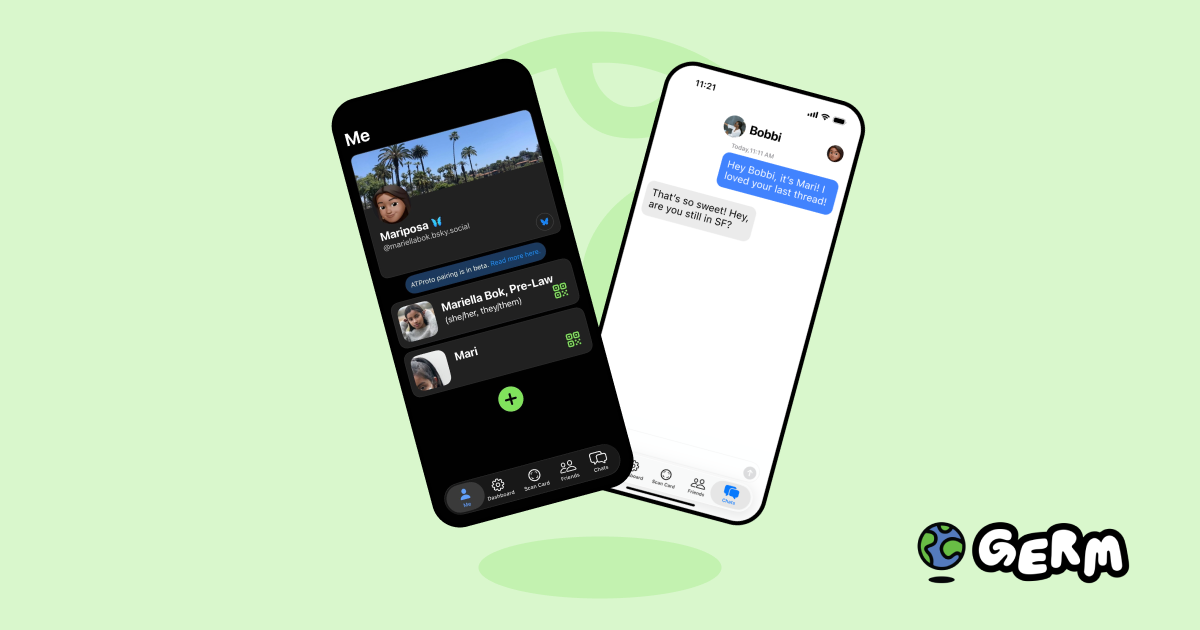
A startup called Germ has become the first private messenger to launch directly inside the Bluesky app, introducing end-to-end encrypted messaging through a native integration rather than a traditional link-out approach. The move marks a notable shift in how features can be added within decentralized social ecosystems, where third-party developers can extend functionality without waiting for the core platform to build it internally.
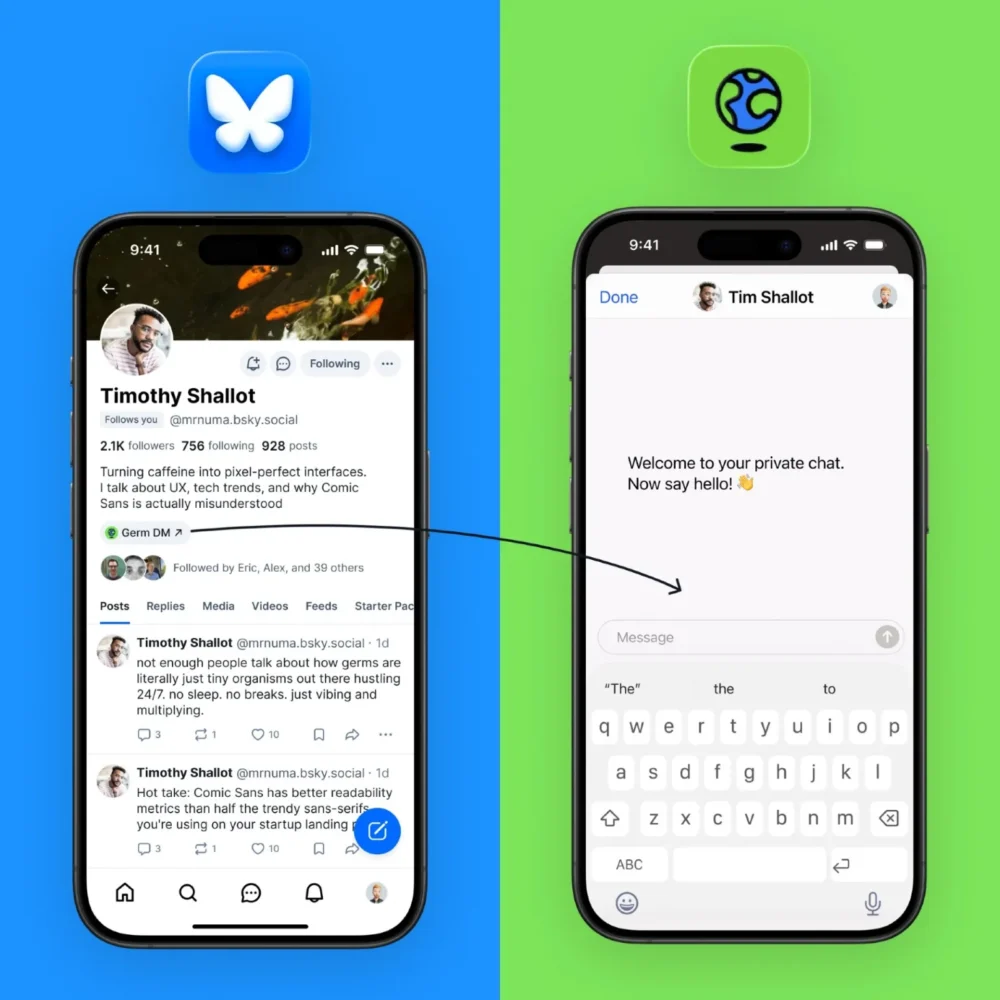
Germ’s encrypted messaging service, known as Germ DM, now appears as a badge on participating users’ Bluesky profiles. Tapping the badge launches an iOS App Clip — a lightweight, temporary version of the app — allowing users to authenticate with their AT Protocol handle and begin sending encrypted messages immediately. Downloading the full Germ app remains optional, though users who want to display the badge must install the standalone app and link their Bluesky credentials.
Unlike traditional messaging services that rely on phone numbers, Germ uses the AT Protocol, the decentralized framework that powers Bluesky and other emerging apps. Its encryption is built on Messaging Layer Security (MLS), a standard approved by the Internet Engineering Task Force. According to the company, this ensures that messages cannot be decrypted by Bluesky, Germ, or any intermediary service.
The integration underscores a structural difference between decentralized platforms and large centralized social networks. On most major platforms, new messaging capabilities would need to be designed, approved, and deployed by the platform owner. In Bluesky’s case, external developers can build services that plug directly into the ecosystem, provided the protocol supports it.
Germ was founded in California by Tessa Brown, a communications scholar with prior academic experience at Stanford, and Mark Xue, a former privacy engineer at Apple who worked on FaceTime and iMessage. The company has been testing its approach since launching a private beta last August. Early users shared “magic links” in their Bluesky bios before the formal badge integration replaced that workaround.
Following the official rollout, Germ reported a fivefold increase in daily active users. Its standalone app remains in public beta on iOS in North America and Europe.
Bluesky has taken a cautious stance on building native end-to-end encryption directly into the protocol, citing technical complexity and the burden it would place on third-party developers. By contrast, Germ aims to handle encryption at the application layer while remaining compatible with AT Protocol’s decentralized model.
Other AT Protocol-based clients, including Blacksky, have already adopted support for the Germ badge, suggesting the integration could extend beyond Bluesky’s main app.
For now, Germ says its focus is on improving everyday messaging tools rather than monetization. Future paid features may target power users such as journalists and creators, potentially including multi-handle support and AI-assisted message filtering.
The rollout highlights how decentralized social networks can experiment with modular features, where secure messaging becomes an add-on rather than a core platform function.