


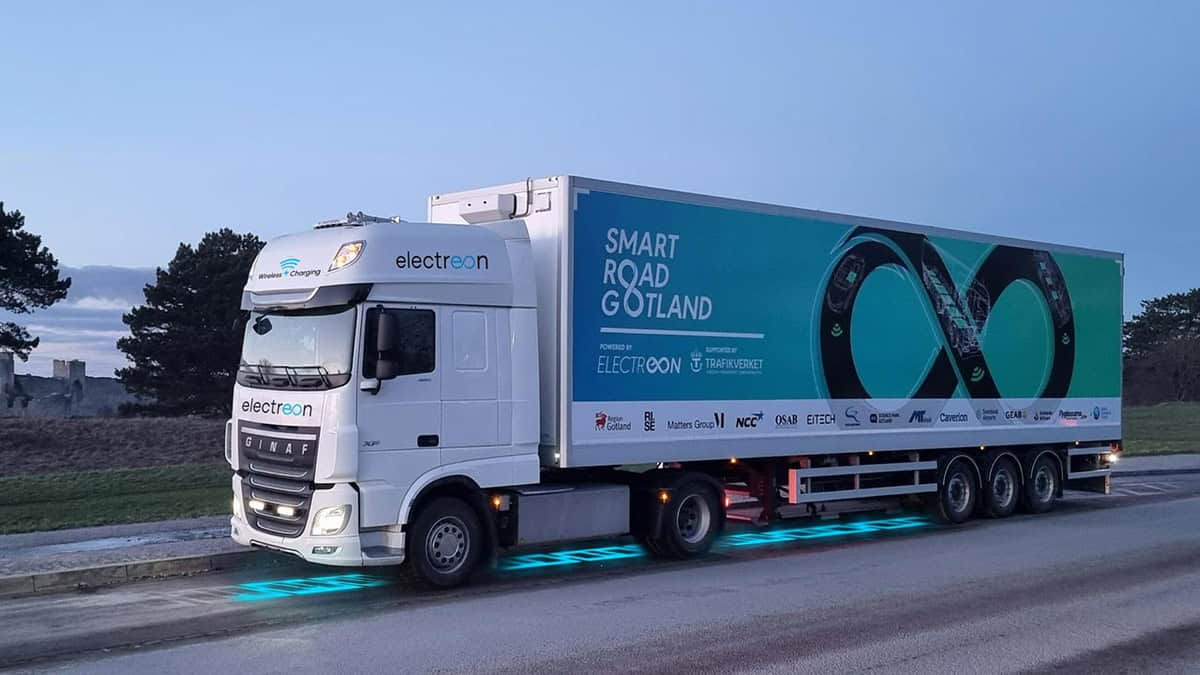
France has officially launched the world’s first operational road capable of wirelessly charging electric vehicles while in motion, marking a significant experiment in the evolution of EV infrastructure. The 1.5-kilometre stretch, located near Paris along the A10 motorway, allows multiple vehicles — including cars, buses, and trucks — to recharge as they drive, without the need to stop or plug in.
The project, verified by independent researchers at Gustave Eiffel University, can deliver continuous power of up to 200 kilowatts, with peaks reaching 300 kW — comparable to the output of top-tier fast chargers like Tesla’s V3 Supercharger. The system uses copper coils embedded beneath the asphalt to create a magnetic field that transfers energy to compatible vehicles equipped with special receivers. This inductive power transfer is similar to the way smartphones charge wirelessly, though scaled to handle industrial-level energy loads and remain functional in rain, snow, or ice.
By recharging vehicles on the move, the highway could reduce one of the main limitations of current EVs: battery capacity and range. Continuous charging may allow for smaller, lighter batteries and fewer charging stops on long-distance trips. Early tests, as reported by ArenaEV, indicate that vehicles can gain significant range within just a few minutes of travel, suggesting the potential for a more efficient and less resource-intensive EV ecosystem.
The project was developed by Electreon, a company that has been testing similar systems in Israel, Sweden, and Italy. France’s Ministry of Transport has integrated the technology into its broader goal of establishing 9,000 kilometres of wireless charging roads across the country by 2035. Unlike static charging stations, this approach embeds the power infrastructure directly into the road surface, eliminating exposed components and reducing mechanical wear.
If scaled effectively, France’s wireless charging highways could redefine how electric mobility is powered, reducing dependence on massive roadside chargers and enabling continuous, seamless energy transfer for both private and commercial vehicles. The initiative represents a pragmatic move toward infrastructure that supports cleaner transport without compromising convenience or speed.