

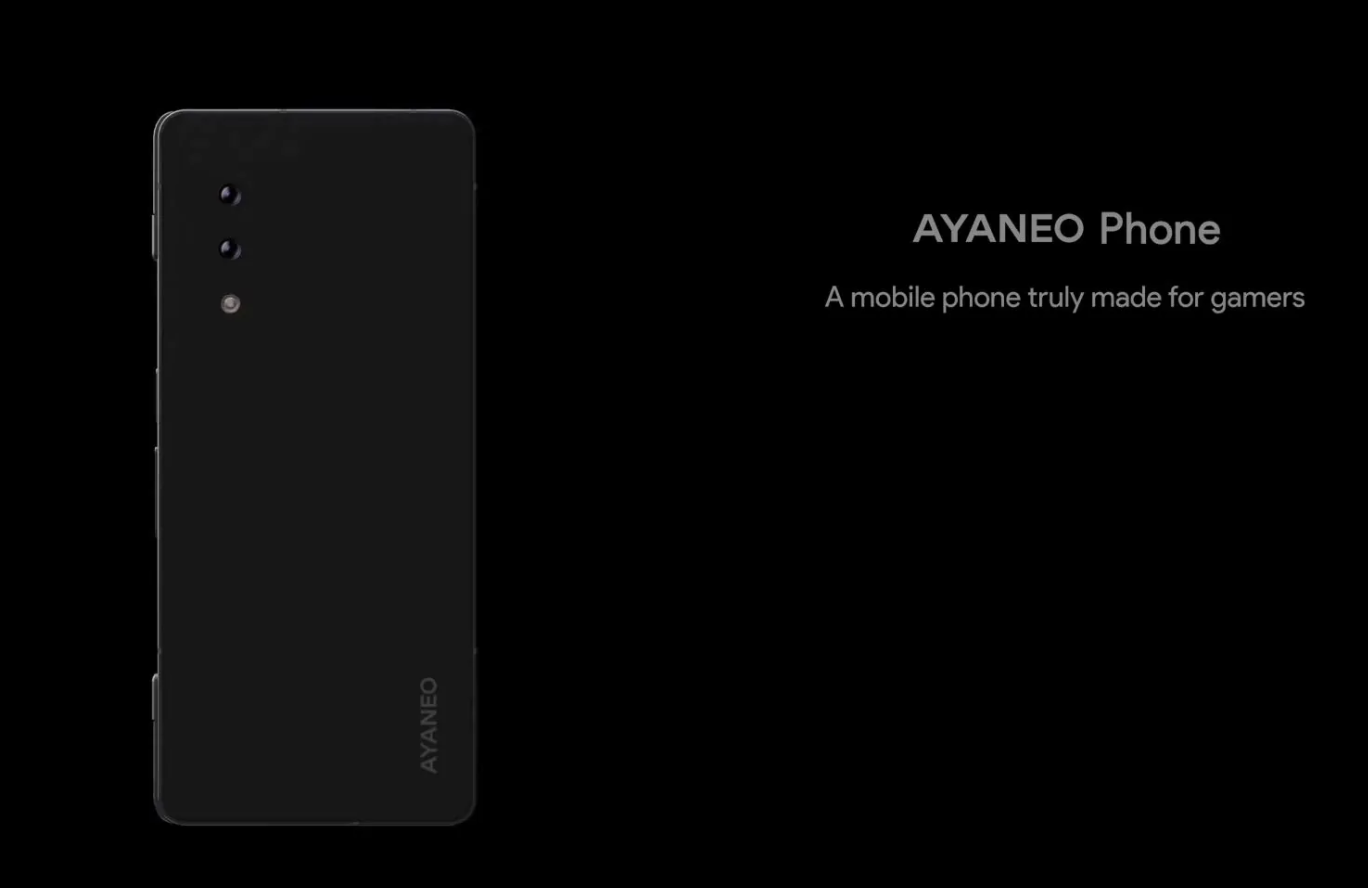
AYANEO is teasing its first smartphone, and the pitch is simple: the AYANEO Phone aims to merge a standard Android experience with the control-first mindset of a handheld gaming device. The brief teaser shows the back of the phone with a dual-camera array and hints at shoulder buttons for horizontal gameplay. There’s no specification sheet, no confirmed launch window, and no price guidance. For now, the AYANEO Phone is a concept in public, shaped by a few frames of video and a promise that it’s “coming soon.”
The company previewed the idea earlier this year, suggesting a sliding design reminiscent of the Xperia Play era. That approach, if real, would allow hidden controls or a different grip without growing the device’s footprint. The new teaser is more restrained; it does not show a slide mechanism, which suggests the AYANEO gaming phone may instead rely on fixed shoulder buttons and a clean slab design. That would make sense for durability and weight, though it also raises questions about how AYANEO plans to deliver reliable, console-style inputs without adding bulk or compromising on battery capacity.
A gaming phone lives or dies by fundamentals: sustained performance, heat management, battery life, input quality, and software support. The AYANEO Phone will have to sustain high frame rates without throttling, and that means serious thermal design in a chassis that still feels like a phone. Shoulder buttons—if implemented—need crisp actuation, low latency, and minimal accidental presses. Haptics and audio matter, too; they anchor feedback when on-screen controls get busy. On the software side, custom game launchers and control mapping can help Android titles and emulators, but long-term updates are just as important. If the AYANEO gaming phone is to be more than a niche novelty, clear update commitments and controller compatibility will count as much as raw speed.
The larger context is crowded but not impenetrable. Brands like Asus, RedMagic, and Black Shark have kept the “gaming phone” category alive with higher-refresh displays, tuned thermals, and haptic triggers. AYANEO, known for handheld PCs, brings a different perspective: controls first, ecosystem second. Translating that approach to a phone could work if the company resists gimmicks and focuses on endurance, ergonomics, and an input system that adds value in mainstream games, not just in marketing copy. The AYANEO Phone will also need accessories that make sense—cases that preserve the feel of shoulder buttons, chargers that support long sessions, and perhaps a dock for display-out without turning the device into a pocket furnace.
The teaser’s dual-camera setup is not a headline feature for a gaming-centric device, but a competent camera is table stakes in 2025. If AYANEO keeps the imaging ambitions modest and puts resources into thermals, battery, and controls, it would be a pragmatic trade-off for its intended audience. Equally important is network performance. A gaming phone should prioritize stable Wi-Fi and mobile connectivity, with antenna placement that doesn’t suffer when the phone is held in landscape and with radios that can handle crowded environments without spiking latency.
Right now, the most useful takeaway is that the AYANEO Phone exists as a project with a clear angle: a gaming phone with the soul of a handheld. The teaser points to a dual-camera design and possible shoulder buttons, while the earlier hints about a slider remain unconfirmed. There are no leaks to fill the gaps, and no official specs or dates to anchor expectations. Until AYANEO publishes concrete details, treat the AYANEO Phone as an idea with potential rather than a guaranteed rival to established gaming phones. If the company can deliver reliable controls, strong thermals, and steady software support at a sensible price, it could carve out a spot in a segment that values function over flash.