
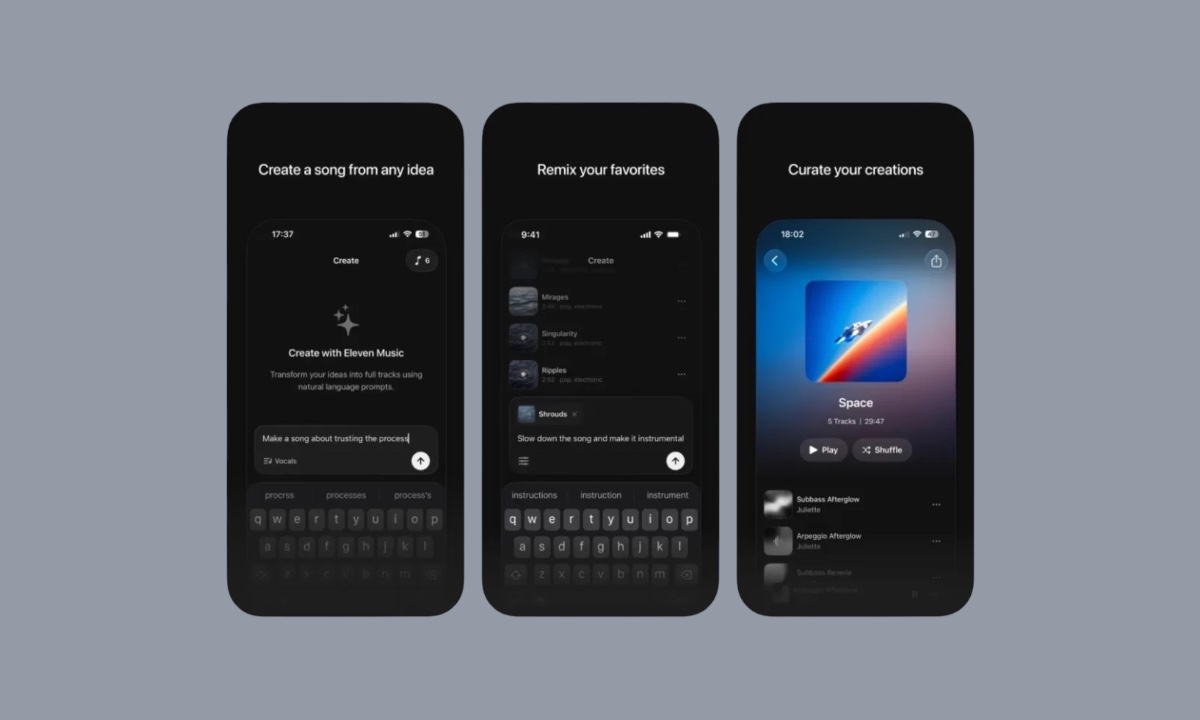
ElevenLabs has expanded beyond synthetic voice technology with the release of a new iOS app focused on AI-generated music. The app, called ElevenMusic, allows users to create full-length songs using text prompts, reflecting a broader shift in generative AI tools from single-purpose outputs toward more complex creative formats.
The concept is familiar: users describe what they want, and the system produces a result. In this case, prompts can define mood, genre, lyrical themes, and structure. The app can generate songs up to three minutes long, positioning it closer to conventional music formats rather than short experimental clips. This puts it in more direct competition with tools that are beginning to treat AI music as a consumer-ready product rather than a novelty.
The timing of the release is notable. Google recently expanded its own music-generation capabilities through Lyria 3 and Lyria 3 Pro, with the latter supporting tracks of similar length and offering more detailed creative controls. As a result, AI-generated music is quickly becoming a contested space, with multiple companies trying to establish early dominance in both quality and usability.
ElevenMusic includes a set of features that will feel familiar to users of streaming platforms. There are curated playlists, mood-based stations, and a discovery feed where users can explore and remix tracks created by others. This approach blends content creation with consumption, suggesting the app is designed not just as a tool but as a platform with its own internal ecosystem.
The free version allows users to generate a limited number of songs per day, while a paid subscription increases that cap significantly. The $9.99 monthly tier offers up to 500 tracks per month, expanded storage, and access to additional styles and generation modes. This pricing structure aligns with a growing trend in AI services, where basic experimentation is free but consistent use requires a subscription.
Where ElevenLabs may have an advantage is in its background in voice synthesis. Its earlier work in realistic speech generation could translate into more natural-sounding vocals compared to competitors, though this will ultimately depend on how well the system handles musical phrasing, emotion, and variation over longer compositions.
Still, the broader questions around AI-generated music remain unresolved. Issues such as originality, copyright, and the role of human creativity continue to surface as these tools become more accessible. For casual users, the appeal is clear: quick, customizable music without needing technical skills. For professional creators, however, the value may be more limited, serving as a sketching tool rather than a replacement for traditional production.
As AI music platforms continue to evolve, the distinction between creator tools and entertainment platforms is starting to blur. ElevenMusic reflects that shift, combining elements of both while entering a space that is becoming increasingly competitive.