
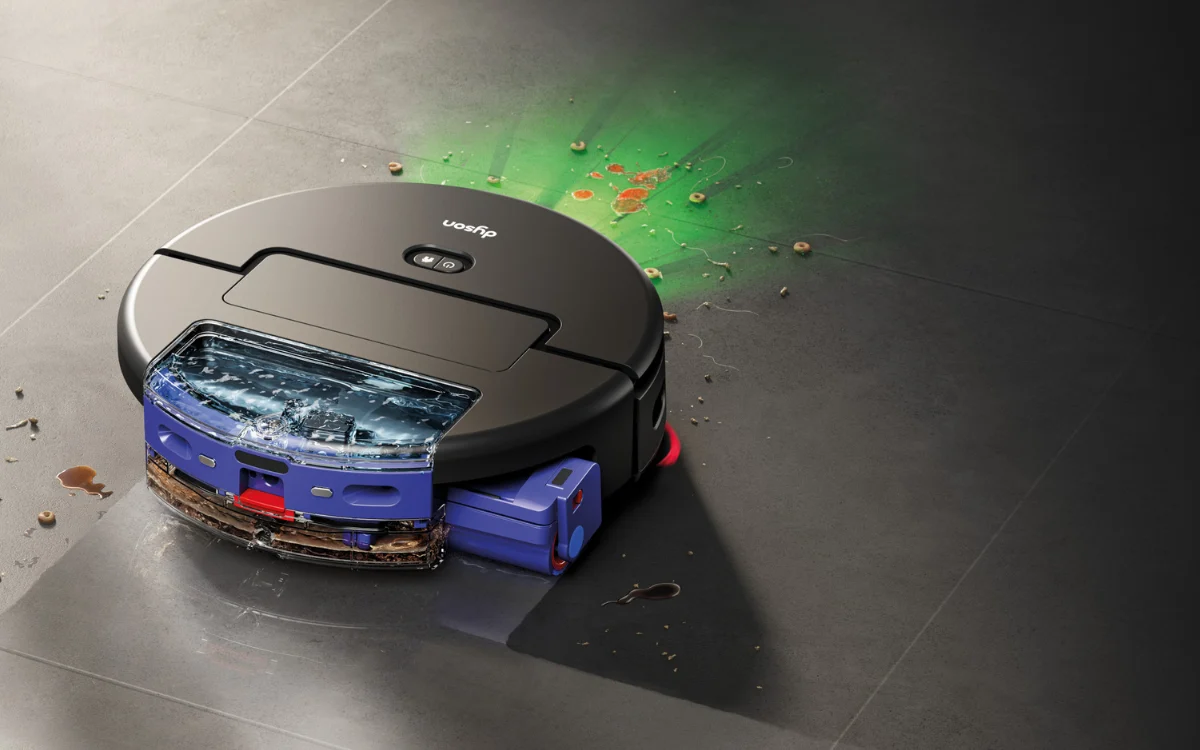
Dyson has introduced the Spot+Scrub AI robot vacuum in China, a premium home-cleaning device aimed at users who want stronger suction, more accurate mapping, and a largely hands-off maintenance system. Priced at 5,499 yuan (about $778), the model continues the trend of high-end robots that rely on onboard processing rather than cloud services to manage navigation and environmental awareness.
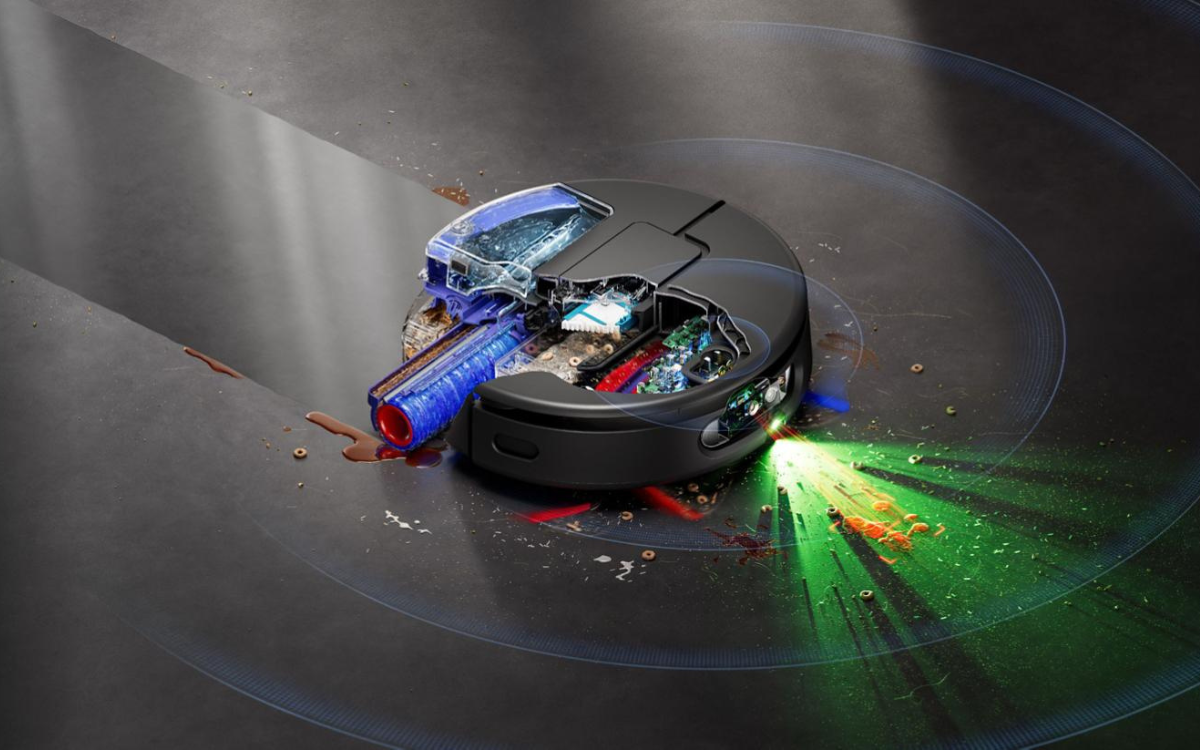
The Spot+Scrub AI features a compact 373 x 370 x 110 mm design and uses a rollers-over-wheels layout intended to reduce the chance of debris being redistributed across the floor. Its 27-centimeter cleaning roller works with an integrated processor capable of handling large volumes of data in real time, allowing the robot to adapt as room conditions shift. Dual-line LiDAR and an HD camera scan surroundings multiple times per second, identifying nearly 200 object categories; low-light recognition has been upgraded over earlier Dyson models, though the practical benefit of such improvements will depend on how consistently the system performs in lived-in spaces.
The robot’s navigation logic is built around what the company describes as a strict cleanliness threshold, meaning it will not advance until a given patch of flooring meets its programmed standard. It can generate up to 18,000Pa of suction and increases power automatically when it encounters carpets. Additional hardware includes a rotating edge brush, a roller designed to minimize tangles, and a 10mm lifting mechanism intended to keep carpets dry during mopping sessions.
For mopping, the Spot+Scrub AI uses 12 hot-water jets that reach 60°C, with the roller washing itself during operation so that only clean water moves across surfaces. The system attempts to prevent cross-contamination when transitioning between hard floors and carpeted areas—an ongoing challenge across the broader robot vacuum category.
Battery life reaches up to 200 minutes, covering an estimated 240 square meters per charge, though real-world performance typically varies with floor type, suction levels, and obstacle density. A companion app offers mapping tools, room segmentation, zoning controls, and no-go boundaries. All AI processing is handled on-device without cloud upload or image storage, a design choice that echoes the increasing emphasis on local data handling in smart home products.
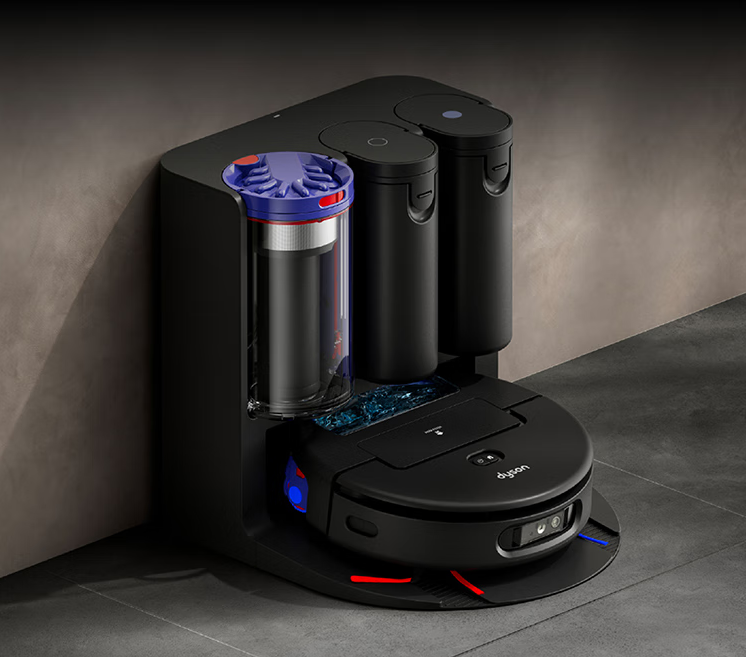
The base station includes a 3-liter bin that can support roughly 100 days of debris collection. It uses a cyclone-based system instead of disposable bags and automates several maintenance tasks: hot-water roller cleaning at 60°C, warm-air drying at 45°C, detergent dosing, and silver-ion antibacterial treatment inside the water tank. How well these automated systems hold up over long-term use remains something buyers will have to evaluate, but the inclusion of so many self-care features reflects the broader industry push toward minimizing user intervention.