

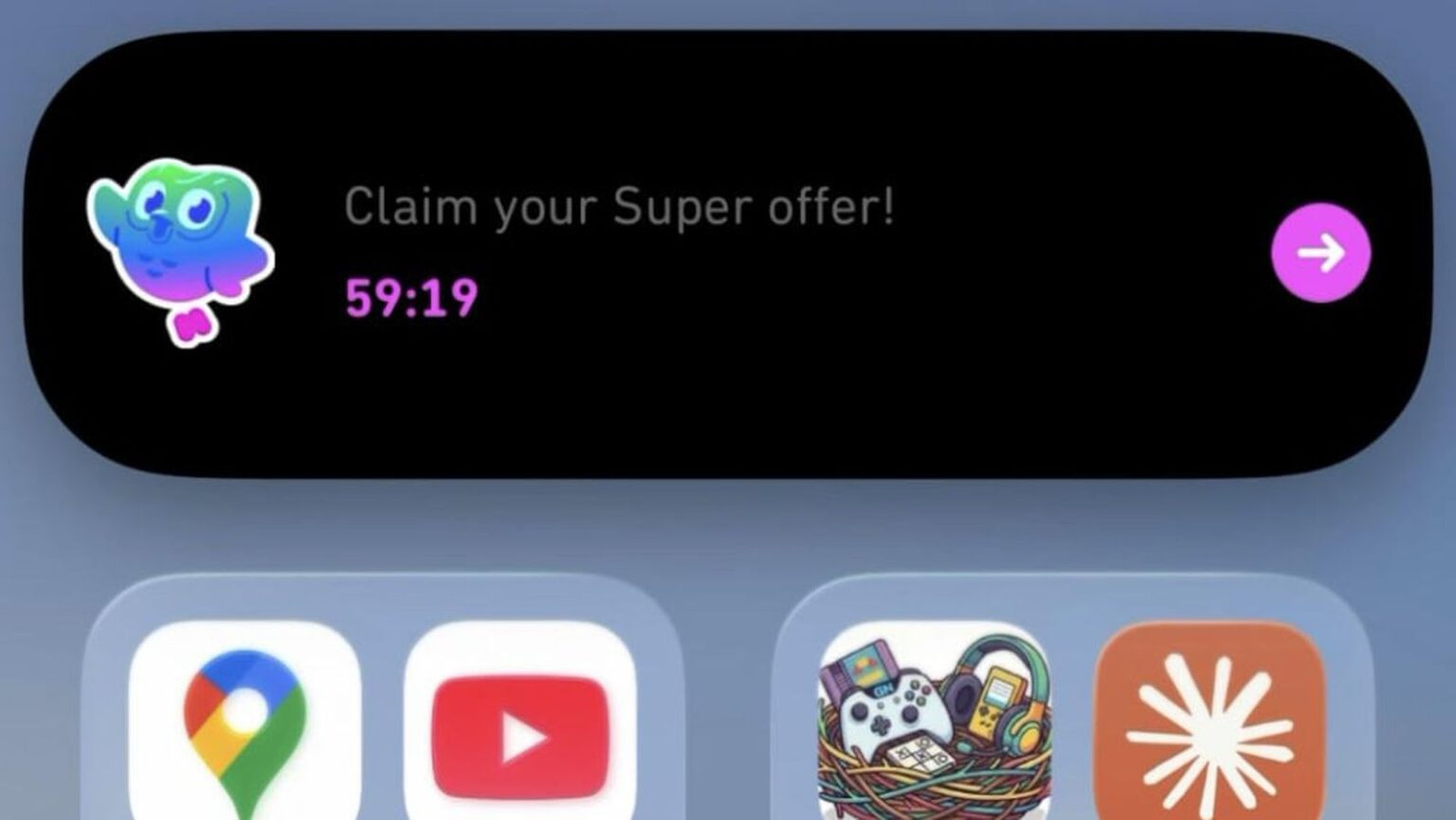
Duolingo found itself at the center of criticism this week after users reported seeing promotional messages for its paid “Super” subscription appear in places normally reserved for system-level information on iPhones. Screenshots shared on social platforms showed Duolingo-related prompts surfacing inside the Dynamic Island and as Live Activities on the Lock Screen, features that Apple positions as tools for timely, task-focused updates rather than marketing.
The reaction was swift largely because of what those features represent to iPhone users. Live Activities and the Dynamic Island were introduced to surface real-time, glanceable information such as food delivery progress, ride-hailing updates, timers, or live sports scores. They are intentionally limited in scope, and users generally trust that anything appearing there is directly tied to something they initiated and still care about in that moment. When a subscription promotion appeared instead, it broke that expectation.
Apple’s developer guidelines are unusually explicit on this point. Live Activities are not allowed to display ads, promotions, or marketing messages, regardless of whether the content is for third-party products or the app’s own paid tiers. Apple’s rationale is consistency and user trust: system-level surfaces should feel predictable and free from commercial pressure. Violations can result in app rejections or, in more serious cases, removal from the App Store.
That clarity is what made the Duolingo incident stand out. Even without a public statement from Apple, the rules leave little room for interpretation. Using Live Activities or the Dynamic Island to upsell a subscription crosses a line Apple has drawn clearly since the feature launched.
Shortly after complaints spread, reports suggested the behavior could no longer be reproduced. This indicates Duolingo likely disabled or rolled back the functionality once it became clear how negatively it was being received. While the company has not offered a detailed public explanation, the apparent quick reversal suggests an attempt to limit further fallout rather than challenge Apple’s interpretation of its own platform rules.
The broader reaction from users went beyond frustration with a single app. Many expressed concern that if one high-profile app tested these boundaries successfully, others might follow. Ads in system-reserved areas feel different from in-app promotions or banners; they are harder to ignore and feel more invasive because they appear in places users associate with the operating system itself, not individual developers.
For developers, the episode serves as a reminder that Apple’s enforcement around newer iOS features remains strict, especially when those features are closely tied to the overall user experience. Even well-established apps with large user bases are not insulated from consequences if they push against platform guidelines. For Apple, incidents like this reinforce why those rules exist in the first place, and may lead to closer scrutiny of Live Activity implementations going forward.
For users, the situation underscores an unspoken contract at the heart of iOS. System features are expected to prioritize usefulness and restraint, not monetization. When that balance shifts, even briefly, it draws attention quickly. Duolingo’s apparent retreat suggests that, at least for now, that line still matters.